The Black Dahlia: Elizabeth Short's Unsolved 1947 Murder
Elizabeth Short, 22, was found bisected in a Los Angeles lot in January 1947 and nicknamed the Black Dahlia. The timeline, the suspect theories and the cold case in 2026.
Elizabeth Short, 22, was found bisected in a Los Angeles lot in January 1947 and nicknamed the Black Dahlia. The timeline, the suspect theories and the cold case in 2026.

Ross Ulbricht created the dark-web drug market Silk Road, was convicted on all seven counts in 2015 and sentenced to life, then pardoned in 2025. The court record, the corrupt agents and the timeline.
A Las Vegas jury convicted Duane "Keffe D" Davis of orchestrating Tupac Shakur's 1996 murder. The shooting, the stalled investigation, the 2026 trial, the sentence and the theories the verdict did not settle.
Andrew and Abby Borden were killed on August 4, 1892. Lizzie was tried and acquitted in 1893. The morning, the evidence, the exclusions, the verdict, and the rhyme that outran the record.
Trump commuted Larry Hoover's federal life sentence in 2025, but the Gangster Disciples founder is still serving 150 to 200 years in Illinois. The petition, the opposition, the April hearing, and why Gov. Pritzker has no deadline to decide.
A few hundred members, most locked up for life, and a system that taxes nearly every Latino street gang in Southern California. How the Mexican Mafia was built, from Tracy in 1957 to the October 2026 Pomona charges.
A prison gang on top, street sets underneath, and colors that traveled the country. The layered history of how Los Angeles earned its worst nickname.
Most of Texas's biggest gangs were born inside its prisons. A guide to Tango Blast, the Texas Mexican Mafia, Barrio Azteca, MS-13 and the rest of the state's threat list.

Dark Alliance overreached and still got more right than the backlash admitted. The series, the Ceppos letter, the Kerry report, and what the CIA and DOJ inspectors general actually wrote.
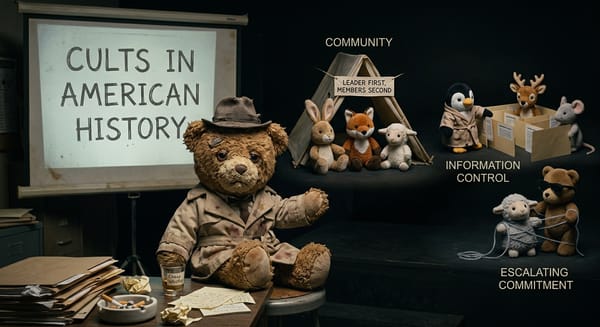
America has produced more destructive cults than any other Western democracy. This section covers thirteen articles on seven groups — Jonestown Waco Heaven's Gate NXIVM and more — plus the mechanics of how cults control people.
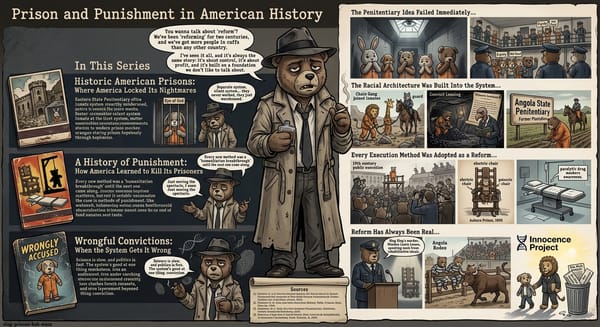
The US incarcerates more people than any country on earth. This section traces two centuries of deliberate choices — about who gets locked up, how they're punished, and what it costs.
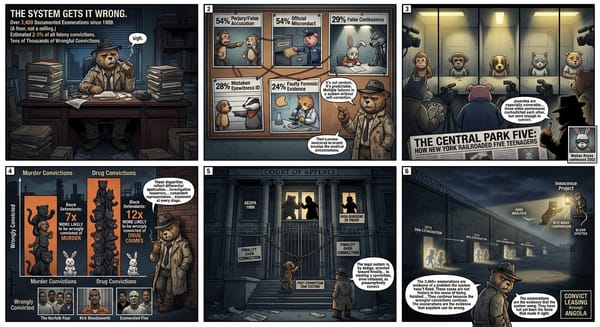
3400 documented wrongful convictions since 1989 — and that is only the cases that got reviewed. Black defendants are seven times more likely to be wrongly convicted of murder.
Prison & Punishment
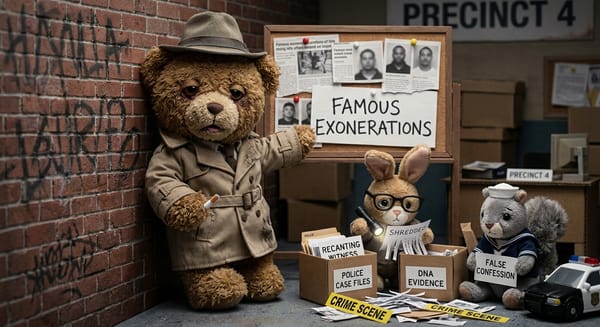
More than 3400 people have been exonerated in the US since 1989. Randall Dale Adams spent 12 years on death row. The Norfolk Four were convicted despite DNA that excluded all four.
Prison & Punishment
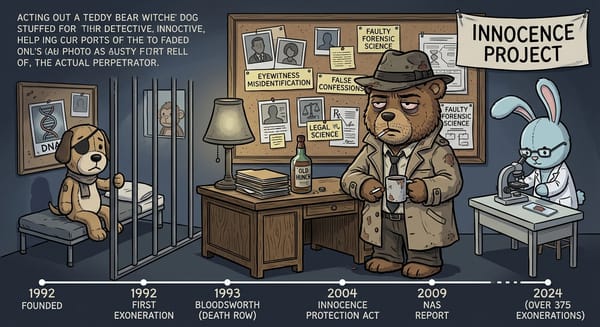
The Innocence Project has freed 375 wrongly convicted people since 1992 — including 21 from death row. Their data shows faulty forensic science contributed to nearly half the cases.
Prison & Punishment
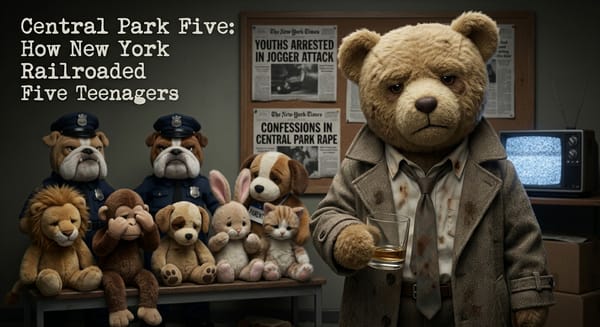
Five teenagers were interrogated for up to 30 hours in 1989 and convicted of a rape the DNA excluded them from. The actual perpetrator confessed in 2002. No one was held accountable.
Prison & Punishment
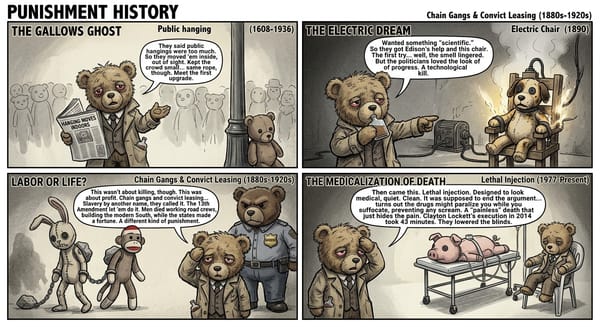
Every method in this series was introduced as an improvement. Public hanging gave way to the electric chair. The chair gave way to lethal injection. The act never changed — only the visibility.
Prison & Punishment
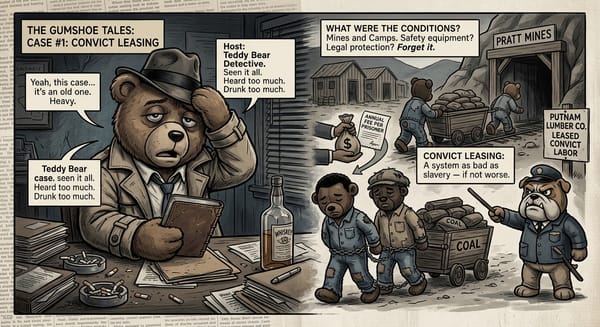
After 1865 Southern states leased Black prisoners to coal mines and lumber camps that worked them to death. Annual mortality at some Alabama operations exceeded 30 percent.
Prison & Punishment
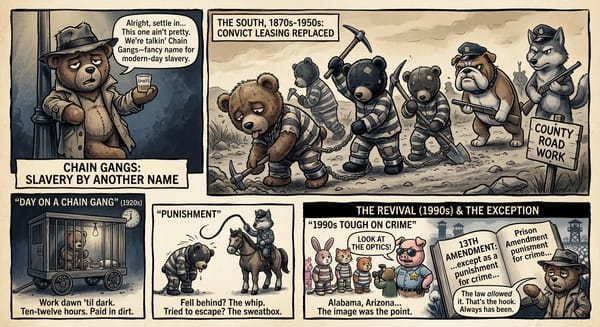
What chain gangs were, why the South created them after convict leasing, when Georgia ended them, and how Alabama's 1995 revival ended in 1996.
Prison & Punishment
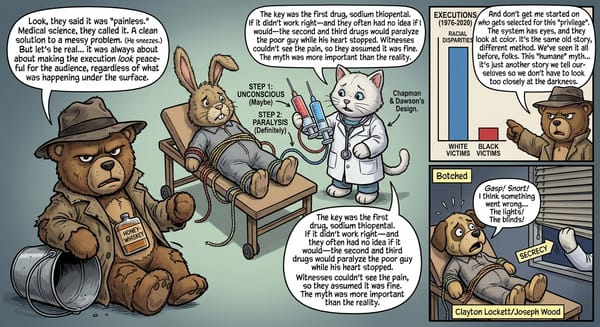
Lethal injection was designed in 1977 by someone who admitted he had no idea if it would work. A 2005 Lancet study found 43% of prisoners may have been conscious during execution.
Prison & Punishment
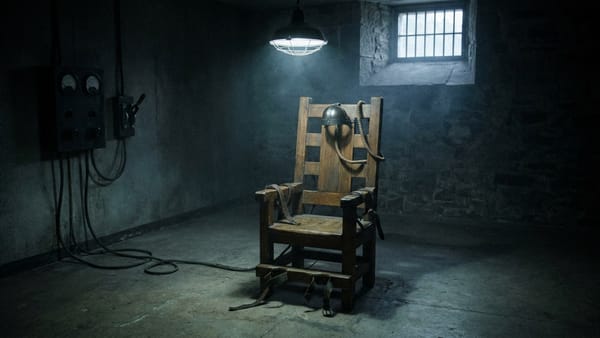
A dentist's idea, Edison's business war and a botched first execution. The full timeline of America's electric chair, from Kemmler to Willie Francis, with the court records and where it is still legal.
Prison & Punishment
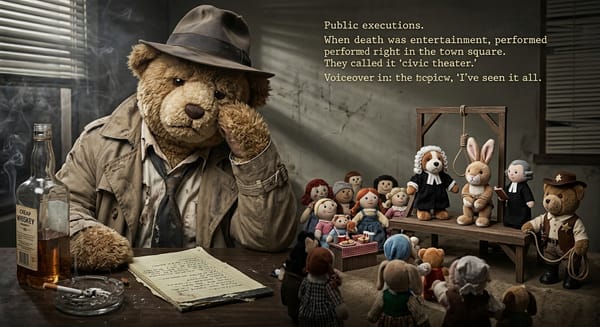
For most of American history executions were public events. The last one drew 20000 people to Owensboro Kentucky in 1936. The crowd's behavior ended the practice — not the act itself.
Prison & Punishment
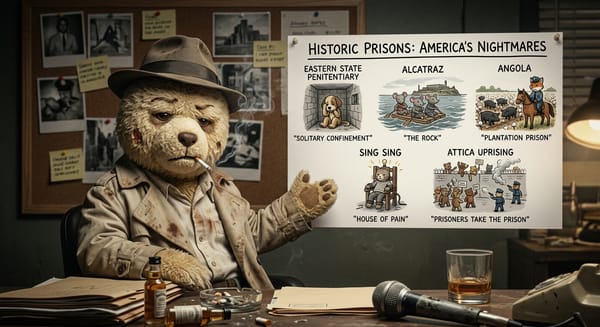
Five institutions — Eastern State, Alcatraz, Angola, Sing Sing, Attica — each called a solution in its time. The pattern across all five is the same tools called by different names.

Prison & Punishment
In September 1971, 43 people died at Attica — every one killed by state gunfire. The state blamed the prisoners. It was a lie documented before the tear gas cleared.

Prison & Punishment
Angola was a slave plantation before it was a prison. Today 73% of its 5700 inmates are Black and 75% will die there — on the same 18000 acres Isaac Franklin assembled in the 1850s.