A History of Punishment: How America Learned to Kill Its Prisoners
Every method in this series was introduced as an improvement. Public hanging gave way to the electric chair. The chair gave way to lethal injection. The act never changed — only the visibility.
Punishment History: How America Learned to Kill Its Prisoners
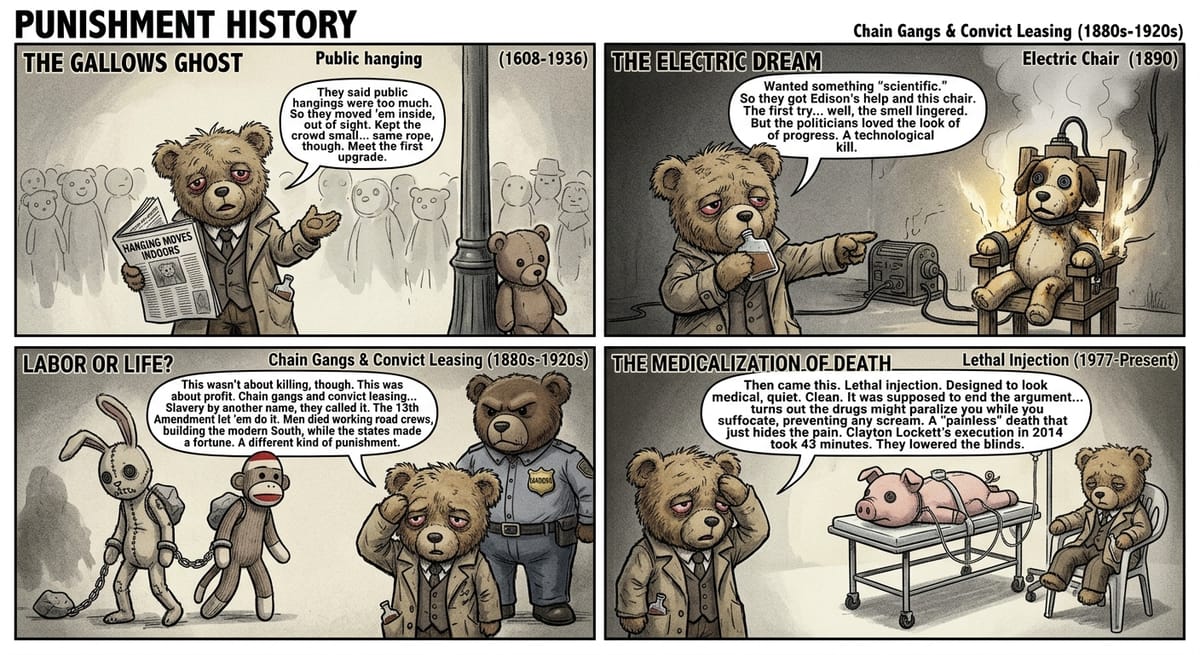
Every method in this series was introduced as an improvement on what came before. Public hanging was replaced by the electric chair because hangings were seen as brutal. The electric chair was replaced by the gas chamber and then by lethal injection because electrocution looked barbaric. Lethal injection was supposed to be the final answer — a medical procedure that would produce death so clean and calm that the act of execution would cease to be controversial. All of these improvements made the act easier to maintain politically. None of them resolved the foundational question.
In This Series
- Public Executions: When Death Was Entertainment
- The Electric Chair: America’s Experiment in Humane Killing
- Lethal Injection: The Myth of Painless Death
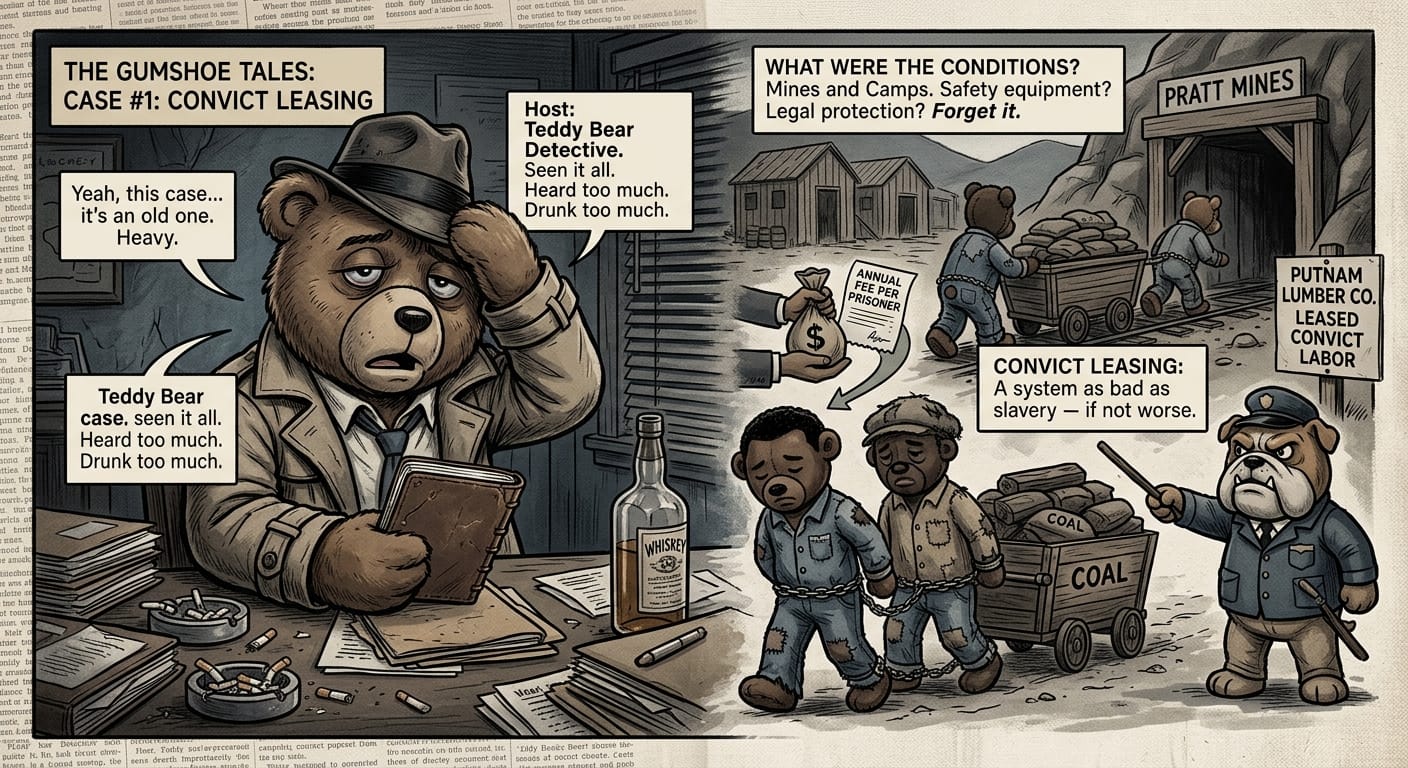
- Chain Gangs: Slavery by Another Name
- Convict Leasing: The System That Made Prisons Profitable
Every New Method Promised to Make Execution Acceptable
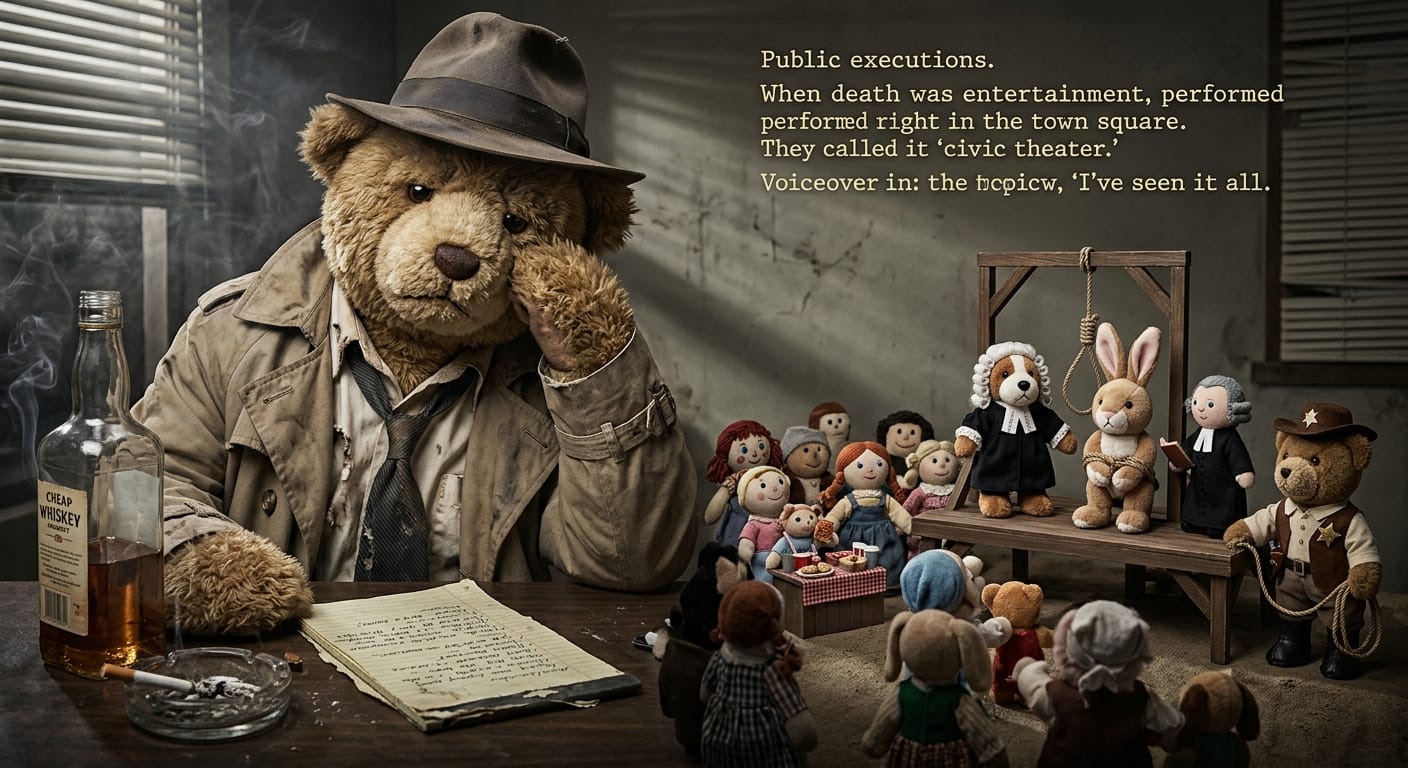
The first recorded execution in the English colonies of North America was in 1608. For most of the following three centuries, execution was a public event. The crowd was the point. When Rainey Bethea was hanged in Owensboro, Kentucky on August 14, 1936 — the last public execution in the United States — somewhere between 10,000 and 20,000 people watched. Newsreel cameras filmed it. The national press reacted with horror, not at the hanging but at the size and behavior of the crowd. Kentucky moved executions inside prison walls three months later.
What changed was the visibility, not the act. The audience was reduced from thousands to a controlled witness list. The method was medicalized. The condemned’s last words were still reported. The execution was still a social event — it had simply moved from the town square to a chamber with a small window and a list of approved observers.^1^
The Science of Execution Was Never Science
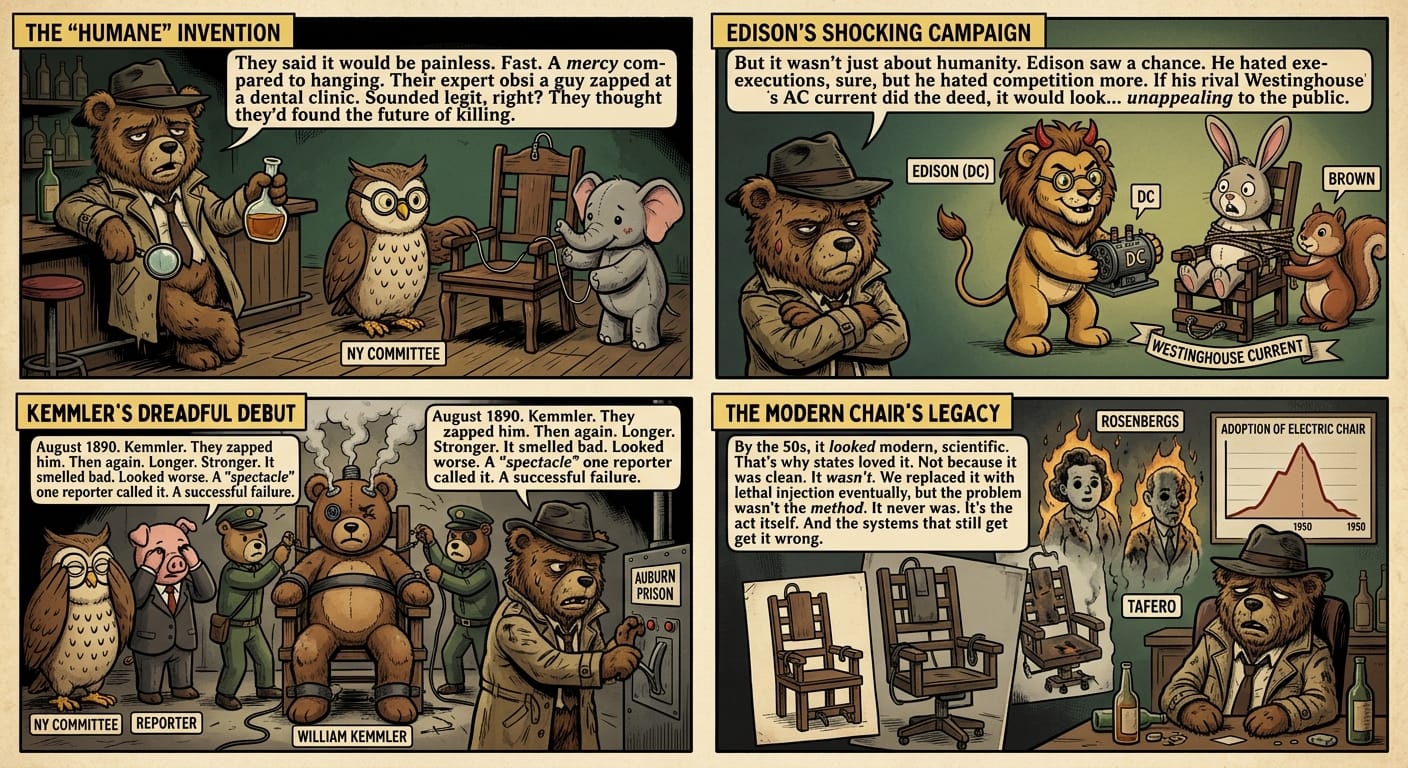
The electric chair was adopted because Thomas Edison’s laboratories helped Harold P. Brown demonstrate its lethality, and because the New York legislature in 1888 wanted something that looked technological rather than physical. The first execution, of William Kemmler at Auburn Prison on August 6, 1890, required two charges and produced the smell of burning flesh. The state called it a success.
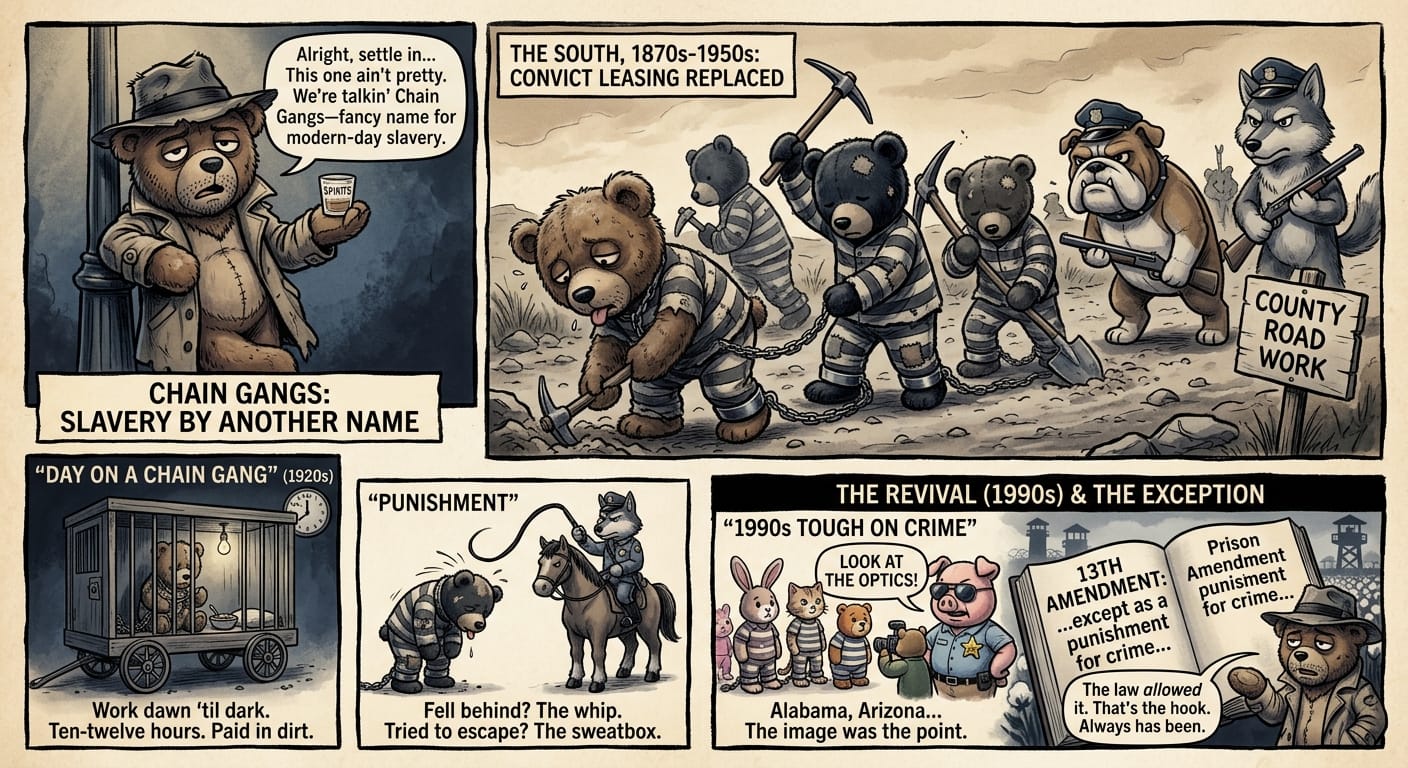
Chain gangs and convict leasing occupied a different register — not methods of execution but methods of punishment-as-labor-extraction. Chain gangs in Georgia and Florida in the 1920s worked men ten to twelve hours a day on road construction, shackled together, under armed guards, for no wages. The mortality rates at some convict leasing operations in Alabama in the 1880s exceeded 30 percent per year — meaning roughly a third of the leased workforce died annually. These were not failures of the system. They were the system operating as designed: the Thirteenth Amendment’s exception for criminal punishment allowed coerced labor to continue after slavery’s formal abolition, and the Southern states used that exception immediately and comprehensively.^2^
Lethal Injection Was Designed to Look Painless, Not to Be Painless
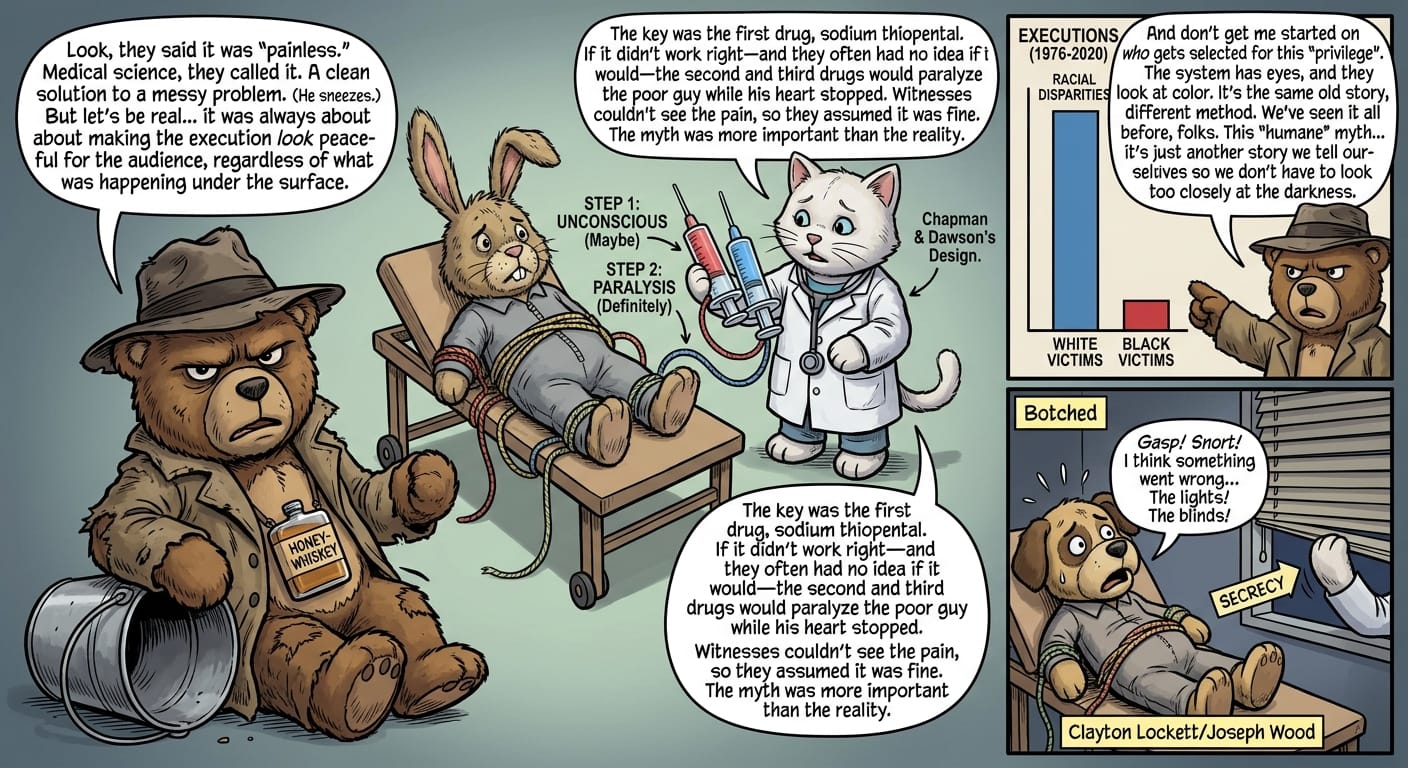
Jay Chapman, the Oklahoma medical examiner who designed the three-drug lethal injection protocol in 1977, later admitted he had “no idea” whether the protocol would work as intended. It became the standard method in every state that practices capital punishment. The protocol’s design ensures that if the sedative fails to work adequately, the paralytic drug prevents the prisoner from showing visible distress. A Lancet study published in 2005 found that 43 percent of prisoners in four states had blood levels of anesthetic consistent with possible awareness during execution. The method that was supposed to make execution uncontroversial turned out to be capable of concealing suffering rather than preventing it.
Clayton Lockett’s execution in Oklahoma on April 29, 2014 took 43 minutes. The IV had been improperly placed. He regained consciousness and tried to speak. The chamber’s blinds were lowered to prevent witnesses from seeing the end. Arizona’s execution of Joseph Wood on July 23, 2014 lasted nearly two hours. The state’s corrections director called both executions “textbook.”^3^
What This History Shows About Who Punishment Is For
Public execution gave way to private execution for political reasons, not moral ones. The chain gang was abolished not because of what it did to the men on it but because free labor markets created competing economic pressures and civil rights-era politics made the spectacle of shackled Black men building Southern roads too costly to maintain publicly. Convict leasing ended state by state when the combination of reform pressure, free labor competition, and occasional public outrage over specific cases — like Martin Tabert, the white 22-year-old beaten to death at a Florida lumber camp in 1921 — became sufficient.
The reforms were real. Conditions improved. The most overt brutality was reduced or hidden. But the populations targeted by punishment remained the same, the racial disparities in who was executed and who was incarcerated deepened rather than narrowed through the twentieth century, and the constitutional exception that permitted forced labor as criminal punishment was never removed from the text of the law.
The history of punishment in America is a history of finding better ways to do the same things while being able to say the old things were behind us.
← Back to Prison and Punishment in American History
─────────
Sources:
- Death Penalty Information Center. Execution Methods in the United States. 2023.
- Blackmon, Douglas A. Slavery by Another Name: The Re-Enslavement of Black Americans from the Civil War to World War II. Doubleday, 2008.
- Oklahoma Department of Public Safety. Investigation Into the Execution of Clayton D. Lockett. November 2014.
The Series