Political Corruption: America's Oldest Tradition
From Boss Tweed's $4 billion theft from New York City to Rod Blagojevich's wiretapped Senate seat sale — American political corruption is not a periodic aberration but a persistent feature of how power and money interact.
Political Corruption: America’s Oldest Tradition
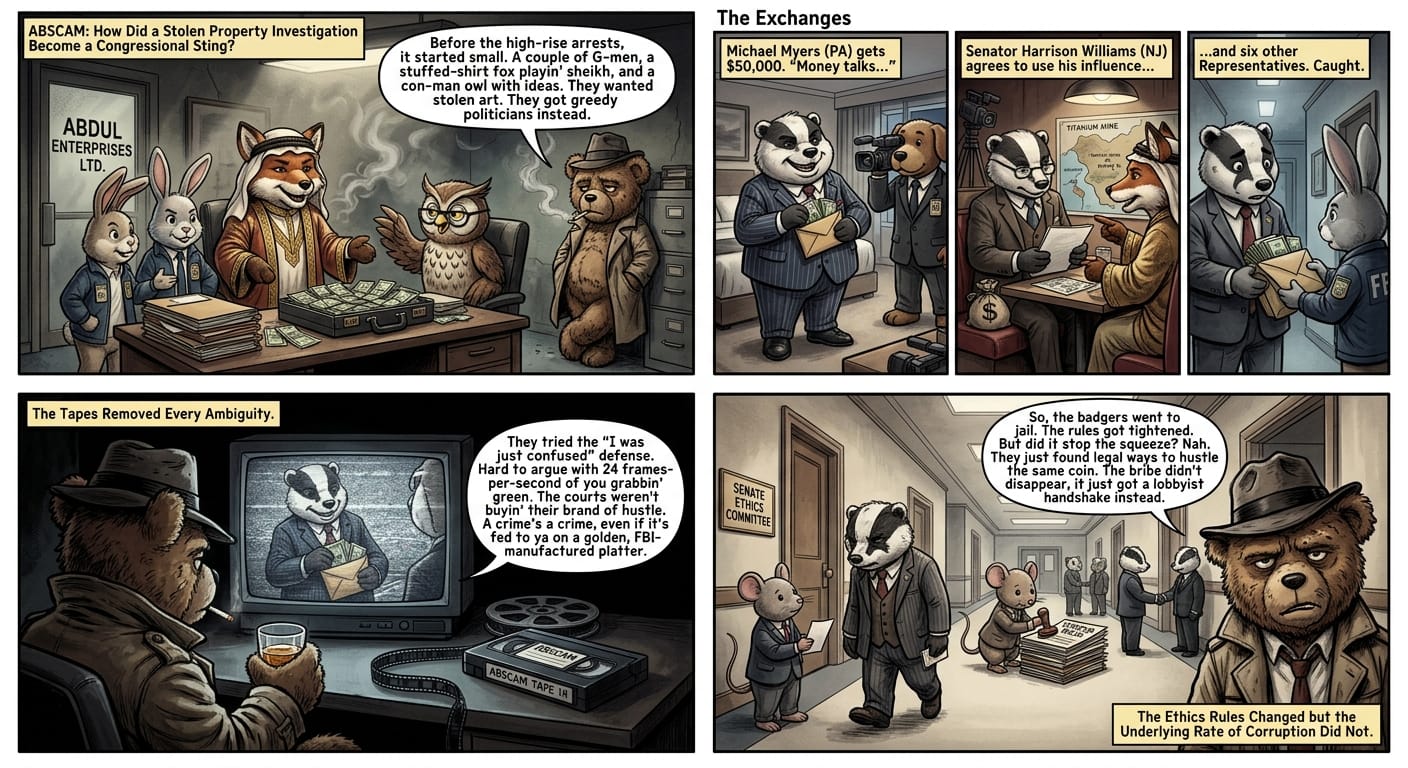
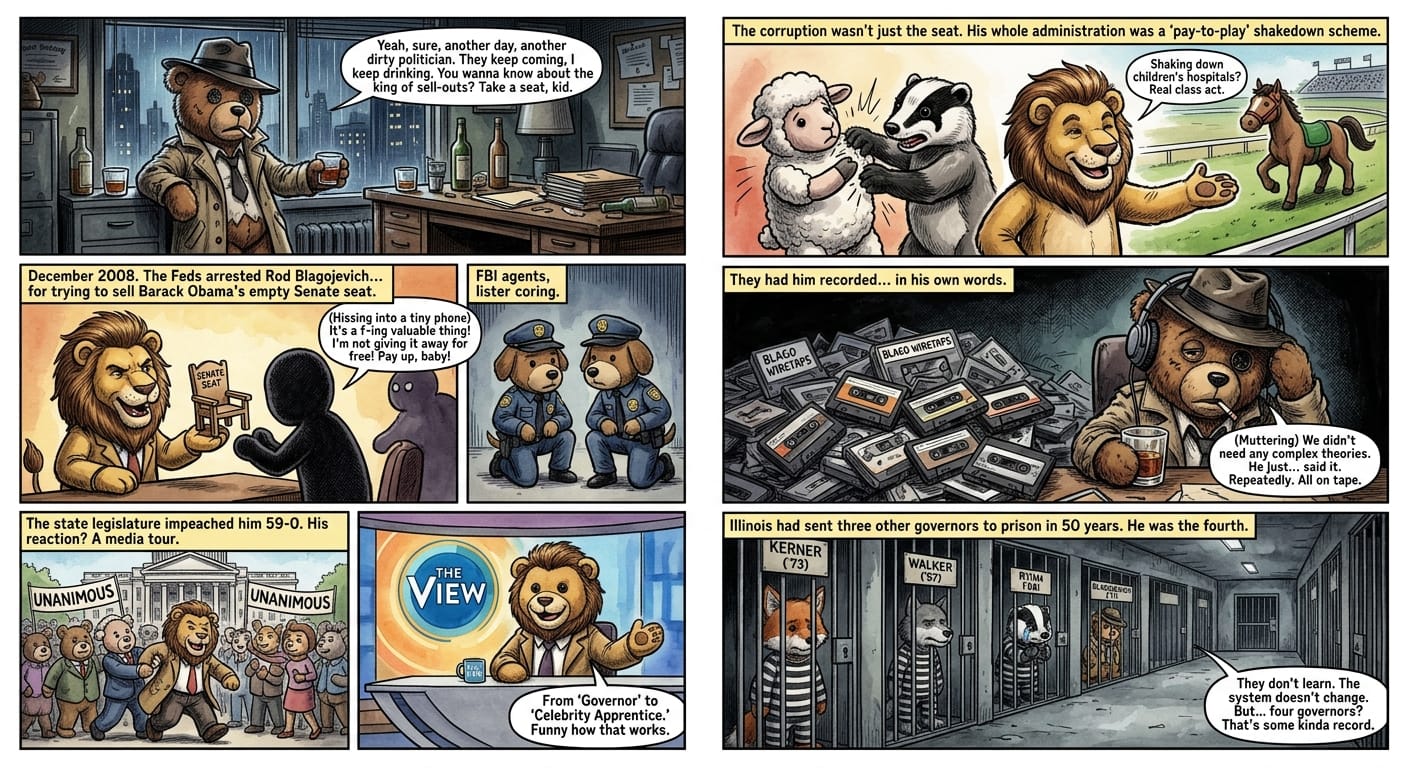
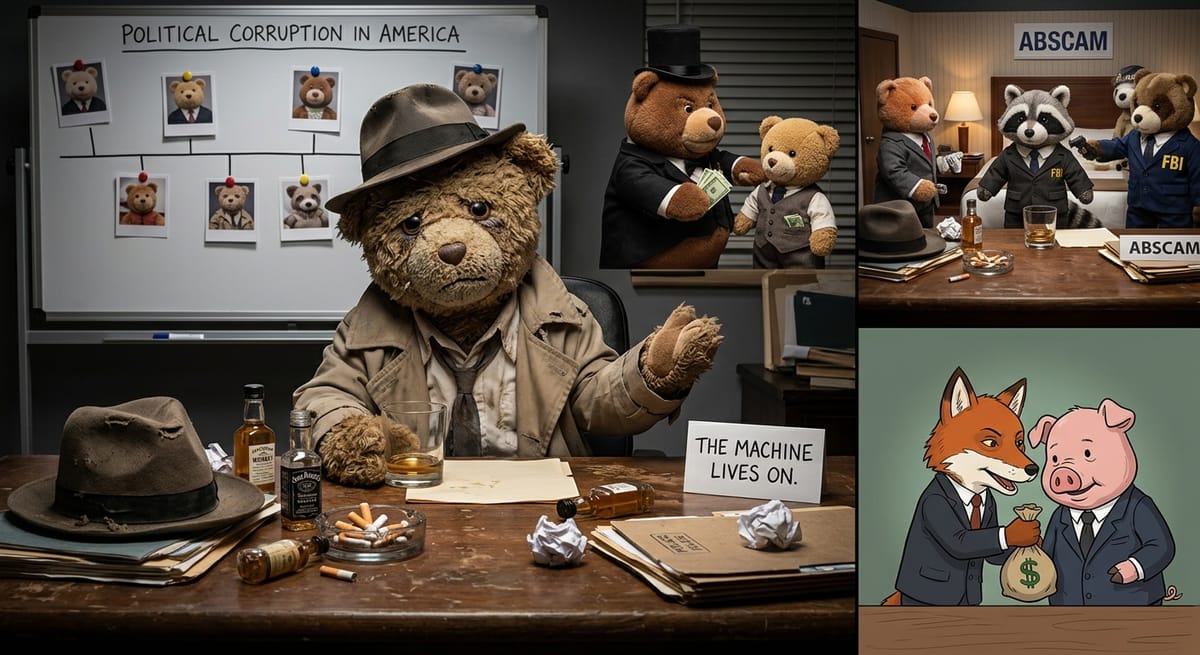
American political corruption is not a periodic aberration. Boss Tweed stole between $30 million and $200 million from New York City in the 1860s and 1870s. A century later, six members of Congress took cash from an FBI agent in a hotel room and went to prison for it. In 2008, a sitting Illinois governor was recorded trying to sell a Senate seat. Duke Cunningham kept a handwritten bribe menu listing his rates. Jack Abramoff took tribal casino clients for $85 million, spent it on golf trips to Scotland and skyboxes and meals for officials who delivered what he needed, and cooperated with investigators who convicted 20 more people. The exchange between political power and private money is continuous across American history, varying in visibility and form but not in structure.
Part of White Collar Crime — ← Back to section hub
In This Series
- Boss Tweed: The Man Who Owned New York City
- Abscam: When the FBI Caught Congress Taking Bribes
- Rod Blagojevich: The Governor Who Tried to Sell a Senate Seat
- Duke Cunningham: The Most Corrupt Congressman
- Modern Lobbying Scandals: Legal Corruption
The Mechanism Is Ancient; Only the Regulatory Environment Changes
The cases in this series are separated by more than a century, but the underlying mechanism is identical: someone with political power sells it to someone who wants it. Tweed sold city contracts. Cunningham sold defense subcommittee influence. Blagojevich tried to sell an appointment. The members caught in ABSCAM sold their votes on immigration legislation they had no particular stake in. Abramoff sold access and legislative outcomes on behalf of clients who paid him to deliver.
What changes across these cases is not the structure of the exchange but the institutional environment in which it occurs — the regulations, oversight mechanisms, enforcement agencies, and cultural expectations that make some forms of the exchange illegal and others legal.
The Most Important Structural Fact Is That Most Corruption Is Legal
The lobbying industry spent $4.1 billion in 2022 to influence federal government decisions. Campaign contributions from industries regulated by the officials who receive them are legal up to specified limits. Hiring a former official to leverage their relationships and knowledge is legal after a waiting period. The Supreme Court’s 2016 decision in McDonnell v. United States — which reversed the corruption conviction of former Virginia Governor Bob McDonnell on the grounds that “official acts” must involve formal government decisions, not mere access or meetings — narrowed federal bribery law in ways that made prosecuting many forms of political corruption more difficult.^5^
The cases in this series are the ones where participants crossed into clearly illegal territory: cash payments, disguised transactions, explicit quid pro quo arrangements with documented evidence. They are not the cases where the line is ambiguous. The ambiguous cases outnumber them.
Corruption Survives Enforcement Because the Incentive Is Structural
Political corruption survives enforcement because politicians need money to run campaigns, and organized interests have money and want decisions. The two need each other. The legal system sets rules for how this exchange can occur, but it cannot eliminate the exchange without eliminating politics as it is currently practiced. Each corruption scandal produces reforms that constrain specific mechanisms, and each new generation of operators finds mechanisms that the reforms didn’t reach.^1^
Tweed’s downfall produced audit reforms in New York. ABSCAM produced more rigorous House and Senate ethics rules. The Abramoff scandal produced the Honest Leadership and Open Government Act. Cunningham’s prosecution tightened some defense contract oversight. None of these reforms changed the underlying relationship between money and political decisions; they adjusted the specific forms it took.
The Direct Victims Are Harder to Name Than in Financial Fraud
The direct victims of political corruption are harder to name than the victims of financial fraud. Tweed’s theft was paid by New York City taxpayers who received inflated bills for public works. Cunningham’s corruption funded defense contracts that Pentagon officials testified had little military value. The Native American tribal clients Abramoff defrauded paid tens of millions in fees for lobbying services they largely didn’t receive, while Abramoff told them they needed to pay more to fight opponents he had secretly helped fund.^2^
The wider harm is the erosion of the legitimacy of government as a mechanism for serving the public rather than organized private interests. That harm is real, diffuse, and unmeasurable, which is part of why it’s so durable. Compare to Healthcare and Religious Fraud for a different sector where the same dynamic — legal structures protecting conduct that causes real harm — operates.
Illinois will produce another corrupt governor. Congress will produce another Duke Cunningham. Lobbying will produce another Abramoff. The pattern across this series is not that enforcement failed — enforcement worked in all these cases. The pattern is that enforcement removes individuals from positions they’ve abused without changing the conditions that produced them. Tweed died in jail and Tammany Hall kept running. Cunningham went to prison and the defense contractor relationship to Congress kept running. The machine is not the individual. It is the incentive structure the individual operates within, and that structure remains after the individual is gone.
─────────
Sources:
- Ackerman, Kenneth D. Boss Tweed. Carroll & Graf, 2005.
- Greene, Robert W. The Sting Man. E.P. Dutton, 1981.
- Simpson, Dick. Corrupt Illinois. University of Illinois Press, 2015.
- Abramoff, Jack. Capitol Punishment. WND Books, 2011.
- Center for Responsive Politics. Lobbying Database. opensecrets.org, 2022.
The Series