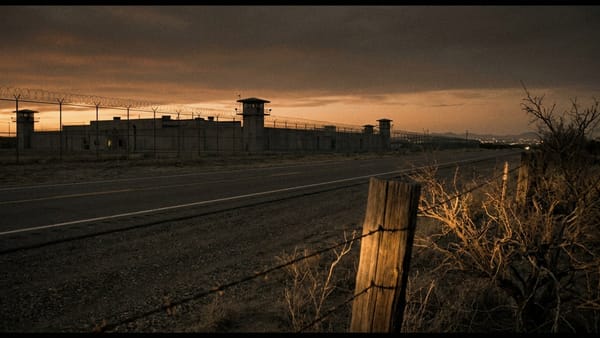
Sing Sing: New York's Most Famous House of Pain
Sing Sing executed 614 people in its electric chair between 1891 and 1963 — including the Rosenbergs — in a prison built by convicts quarrying their own marble in 1828.

Sing Sing: New York’s Most Famous House of Pain
The phrase “sent up the river” comes from Sing Sing. When New York City courts sentenced men to this prison in Ossining, New York — 30 miles north of Manhattan on the Hudson — they were literally sending them up the river. For two centuries, Sing Sing has been New York’s primary maximum-security prison, absorbing the men the city decided it couldn’t handle, and it has been a site of execution, experimentation, and reform movements that reveal as much about the city that built it as about the prisoners it held.
Convicts Quarried the Marble and Built Their Own Cage
Sing Sing opened in 1828, built by 100 convicts transported from Newgate Prison in Greenwich Village. They quarried the marble on-site and constructed the building around themselves — a detail that encapsulates something about the prison system’s relationship with the people it holds. The site was chosen for its marble deposits, which were valuable, and for its location on the Hudson, which allowed cheap transport of materials. Convenience for commerce was a higher priority than any particular theory of punishment.
Warden Elam Lynds oversaw the construction and became the prison’s first warden. Lynds operated on a theory of discipline centered on the whip. He believed — and stated openly — that convicts were beyond moral reasoning and could only be managed through fear and pain. Flogging was routine at Sing Sing under his administration. The silence rule was absolute: men who spoke to each other without permission were beaten. Lynds was removed from Sing Sing in 1838 amid corruption allegations, returned briefly in 1843, and was removed again.^1^
The physical structure Lynds supervised became inadequate almost immediately. By the 1850s, Sing Sing was overcrowded and deteriorating. New cell blocks were built in 1865. The cycle of construction, overcrowding, and further construction continued through the nineteenth century and into the twentieth, producing a layered physical plant that reflected the prison’s inability to ever quite solve the problem of what to do with the people it held.
Why Did New York Execute 614 People at Sing Sing?
Sing Sing became New York’s primary site of execution in 1891, the year the state converted from hanging to the electric chair. The first use of the electric chair in New York had occurred at Auburn Prison on August 6, 1890, when William Kemmler was executed in a procedure so botched — two charges, lasting minutes, with witnesses describing burns and apparent suffering — that newspapers declared it worse than hanging. Despite that beginning, New York made the electric chair its official method and concentrated executions at Sing Sing.^2^
Between 1891 and 1963, when New York’s last execution took place, 614 people were executed in Sing Sing’s electric chair. Of the people executed, a significant proportion were poor, immigrant, or non-white, reflecting both the demographics of who was charged with capital crimes and who could afford adequate legal defense. Julius and Ethel Rosenberg were executed at Sing Sing on June 19, 1953, convicted of conspiracy to commit espionage for the Soviet Union. Their execution drew international protest; Albert Einstein, Pope Pius XII, and Jean-Paul Sartre were among those who publicly called for clemency. President Dwight Eisenhower declined to intervene.
The execution chamber at Sing Sing was called the “Dance Hall” by prisoners — gallows humor that named the terror without flinching from it. Death row prisoners were housed in a separate unit called the Condemned Cells, adjacent to the execution chamber, where they could hear everything.
Lewis Lawes Proved Reform and Execution Could Coexist
Warden Lewis Lawes ran Sing Sing from 1920 to 1941 and became, in that period, the most publicly visible prison administrator in America. He was a vocal opponent of capital punishment — remarkable for the warden of a prison that carried out executions — and wrote several books about prison reform, including 20,000 Years in Sing Sing (1932), which was made into a film starring James Cagney. Lawes allowed journalists inside, instituted rehabilitation programs, and tried to manage the prison on something closer to a therapeutic model than a punitive one.^3^
Lawes did not eliminate violence or dramatically reduce recidivism. What he did was change the public conversation about what prisons were supposed to do. His tenure produced genuine improvements in conditions — better food, education programs, a prison newspaper — and also made Sing Sing famous enough that its name became synonymous with New York’s prison system in the popular imagination of the mid-twentieth century.
After Lawes left in 1941 following his wife’s death in a car accident on prison grounds, Sing Sing cycled through administrators without any comparable reform vision. The prison population grew, conditions deteriorated, and the institution returned to something closer to its default mode.
The Hudson Still Runs Past the Same Building
Sing Sing Correctional Facility, as it’s been officially named since 1970, held approximately 1,700 people as of 2023. New York’s last execution occurred in 1963, and the state has not carried out an execution since. The electric chair is gone. The Condemned Cells where Julius and Ethel Rosenberg spent their last months are gone. The physical plant has been substantially rebuilt since the nineteenth century, though the location on the Hudson and the basic function remain.
In recent years, Sing Sing has been the site of several notable programs: a documentary film program called Rehabilitation Through the Arts, a legal clinic that has helped prisoners research their own cases, and a college education partnership. Governor Kathy Hochul signed legislation in 2023 renaming the facility to the Mount Pleasant Correctional Facility, though the change was not yet implemented as of early 2024 and faced opposition from some community members who felt the name change obscured rather than addressed the institution’s history.
The river still runs past. The marble the first prisoners quarried still forms the walls of the oldest sections of the building. Whatever name it carries, the institution on the Hudson has been doing the same essential thing for nearly two centuries: holding the people New York decided it couldn’t handle, under conditions that have varied from brutal to merely austere, waiting for a consensus on what prisons are actually supposed to accomplish that has never fully arrived.
The wrongful convictions section documents what happens when these institutions process the wrong people — a recurring failure the system has rarely corrected on its own. See also Eastern State Penitentiary, which pioneered the isolation logic that shaped every American prison that followed.
─────────
Sources:
- Christianson, Scott. With Liberty for Some: 500 Years of Imprisonment in America. Northeastern University Press, 1998.
- Moran, Richard. Executioner’s Current: Thomas Edison, George Westinghouse, and the Invention of the Electric Chair. Knopf, 2002.
- Lawes, Lewis E. 20,000 Years in Sing Sing. Ray Long & Richard R. Smith, 1932.
Part of Historic American Prisons — ← Back to series hub