Duke Cunningham: The Most Corrupt Congressman
Randy Cunningham accepted $2.4 million in defense contractor bribes and kept a handwritten price list — convicted of the largest congressional bribery scheme at the time and sentenced to 8 years.
Duke Cunningham: The Most Corrupt Congressman
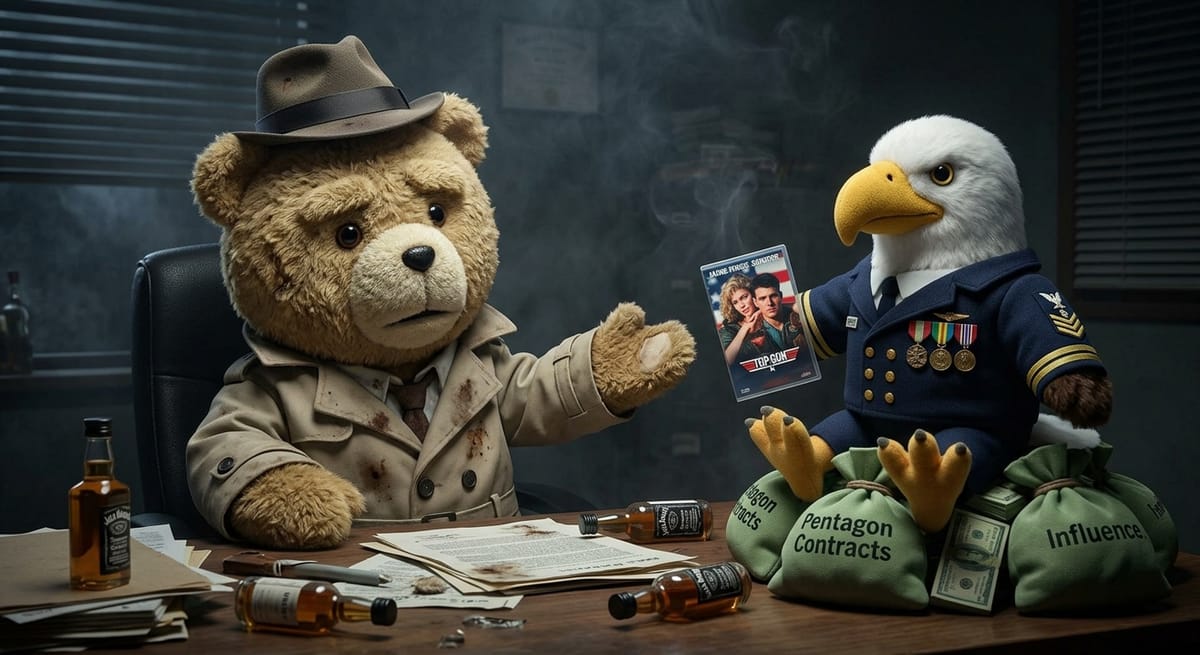
Randy “Duke” Cunningham pleaded guilty in November 2005 to accepting at least $2.4 million in bribes from defense contractors in exchange for his influence on military spending contracts — the largest bribery scheme ever prosecuted against a sitting congressman at the time of his conviction, and he left behind a handwritten price list.^2^ He had represented California’s 50th congressional district since 1991 and was a decorated Vietnam War fighter ace — the first American ace of the Vietnam War — who had been elected on a record of patriotism and service. He sat on the House Appropriations Defense Subcommittee, the body that allocates billions of dollars in Pentagon contracts. He was sentenced to eight years and four months in federal prison.
Part of Political Corruption — ← Back to series hub
How Did a Vietnam War Hero End Up With a Written Bribe Menu?
Randy Cunningham’s Vietnam War record was genuine. He shot down five North Vietnamese MiGs, became the first American ace of the Vietnam conflict, and was awarded the Navy Cross. He was the model for the character Viper in the 1986 film Top Gun.^4^ He retired from the Navy as a commander, then ran for Congress in 1990 with a campaign built entirely around that record and a conservative social message that resonated in the San Diego suburbs he represented. His congressional career was largely unremarkable until he landed on the Appropriations Committee and, specifically, the defense subcommittee — a position that gave him influence over which defense contractors received which contracts, and some of those contractors were willing to pay for favorable treatment.
The Bribe Menu Was the Central Evidence
Federal prosecutors found, among Cunningham’s effects, what they called a “bribe menu” — a written document in Cunningham’s own handwriting specifying the dollar amounts of bribes he expected in exchange for various levels of contract assistance. The menu listed amounts from $140,000 for a $16 million contract up to $250,000 additional for each successive increment of contract value.^1^ The existence of a written price list — treating the purchase of official acts as a commercial transaction with standard rates — was unusual enough that it became a central exhibit in the public understanding of the case.
The primary contractor in the case was Brent Wilkes, a defense contractor from San Diego who had received approximately $90 million in Pentagon contracts, including for a document digitization program that military officials later testified had little operational value. Wilkes paid for Cunningham’s mortgage on a house in Rancho Santa Fe, California, paid for antique furnishings, expensive rugs, and a used Rolls-Royce, and hosted Cunningham in suites at Washington hotels where, prosecutors alleged, prostitutes were provided. Wilkes was convicted in 2007 of bribery, fraud, and conspiracy and sentenced to 12 years in prison.
A second contractor, Mitchell Wade of MZM Inc., purchased Cunningham’s house in Del Mar, California for $1.675 million — approximately $700,000 more than market value — as a disguised bribe. Wade subsequently sold the house at market value and lost the difference; the transaction was structured so that Cunningham received the overpayment as the proceeds of an apparently legitimate real estate sale. Wade pleaded guilty in 2006 and cooperated with prosecutors.^3^
The Tearful Resignation Was Unambiguous
Cunningham resigned from Congress on November 28, 2005, the same day he entered his guilty plea. His resignation statement was remarkable: he wept openly and said, “I broke the law, concealed my conduct, and disgraced my office. I know that I will forfeit my freedom, my reputation, my worldly possessions, and most importantly, the trust of my friends and family.” He left no ambiguity. He served seven years and four months of his sentence, receiving credit for good behavior, and was released in June 2013. His Navy pension was revoked as a result of his felony conviction.
The Defense Contractor Relationship to Congress Goes Beyond Cunningham
Cunningham’s case exposed something broader than one corrupt congressman: the relationship between defense contractors, the members of Congress who control defense spending, and the lobbying infrastructure that connects them.^4^ The Appropriations Committee members who control defense contracts are among the most heavily lobbied figures in Washington. The line between legitimate political fundraising — contractors and their employees contributing to the campaigns of members who influence their business — and bribery is partly definitional and partly a matter of directness. For how ABSCAM captured the same exchange on camera in a different context, see that article. For how lobbying scandals operate the legal version of the same transaction, see that one.
Cunningham crossed that line unambiguously: he took personal payments in exchange for official acts, which is illegal regardless of the industry. The broader question his case raises — whether the campaign finance and lobbying system creates a legal version of the same exchange — is one that his prosecution didn’t resolve. Cunningham served real time. So did Brent Wilkes. But the structural relationship between defense contractors, lobbying, and congressional appropriators has not changed. Duke Cunningham took bribes in a hotel suite; the more common form of the transaction takes place in fundraisers and political action committee checks. The former is a crime. The latter is the system.
─────────
Sources:
- Fineman, Howard. “Duke’s Descent.” Newsweek, November 28, 2005.
- United States v. Cunningham, No. 05-cr-2137 (S.D. Cal. 2005).
- Hartung, William D. Prophets of War: Lockheed Martin and the Making of the Military-Industrial Complex. Nation Books, 2011.
- Vise, David A. “Cunningham Guilty; Resigns Seat.” The Washington Post, November 29, 2005.