American Race Massacres: A History of Organized Slaughter
From Colfax in 1873 to Tulsa in 1921 every American race massacre shared three features: Black economic success as the trigger state complicity during the killing and complete impunity for the perpetrators. This series covers six of them.
American Race Massacres: A History of Organized Slaughter
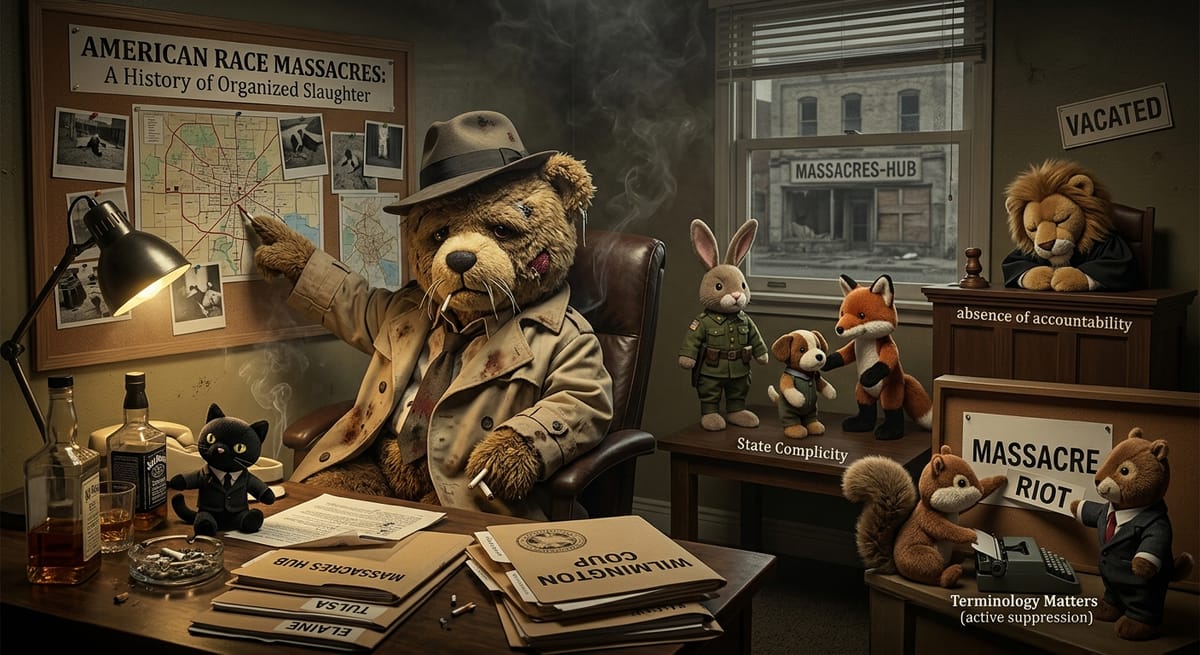
The word “riot” appears in the historical record of almost every massacre covered in this series. Tulsa Race Riot. Wilmington Race Riot. Elaine Race Riot. The word “riot” implies mutual combat, shared culpability, chaos without direction. In every case covered here, the historical record shows organized white violence against Black communities that were either defending themselves or not armed at all. The terminology mattered because it determined what followed — trials, prosecutions, compensation, memory. When you call a massacre a riot, the perpetrators become participants in disorder rather than architects of murder.
In This Series
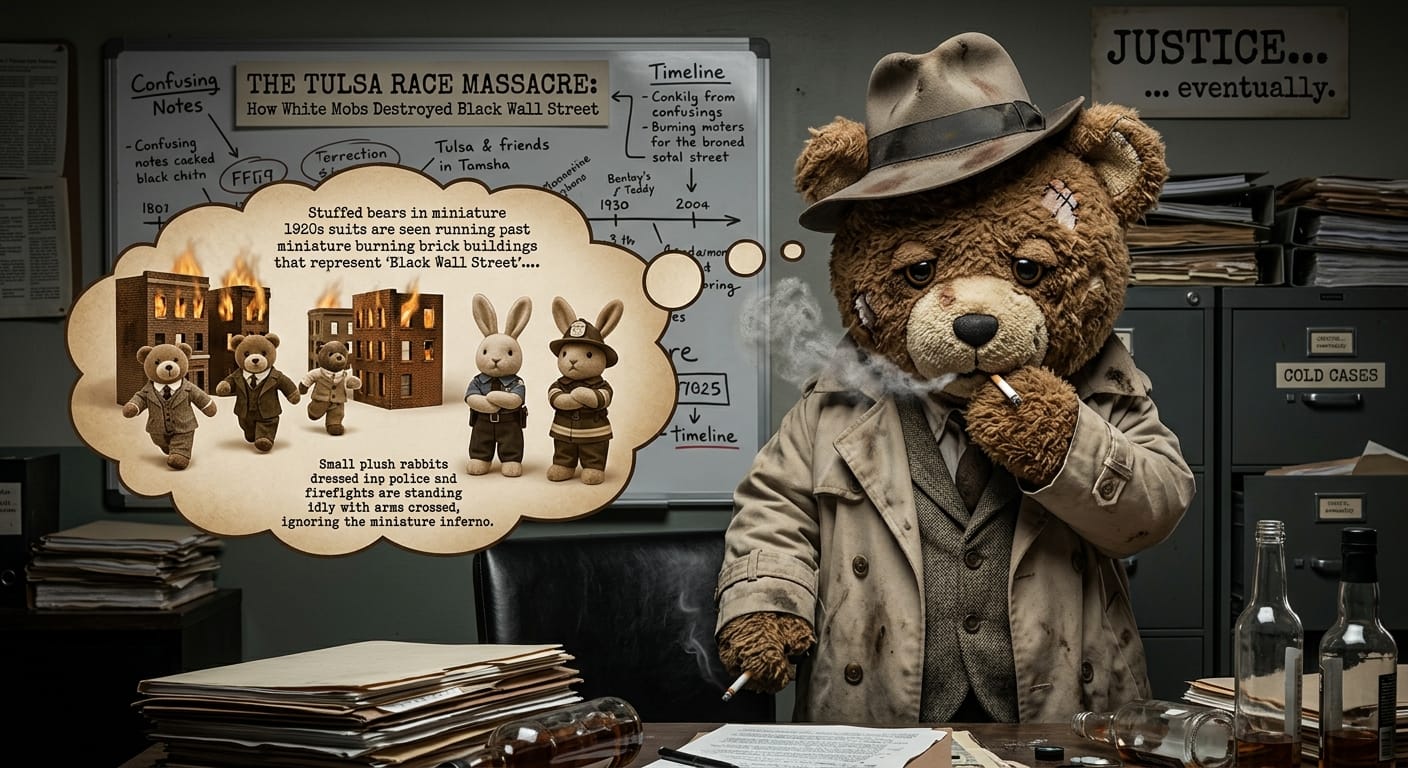
- The Tulsa Race Massacre: How White Mobs Destroyed Black Wall Street
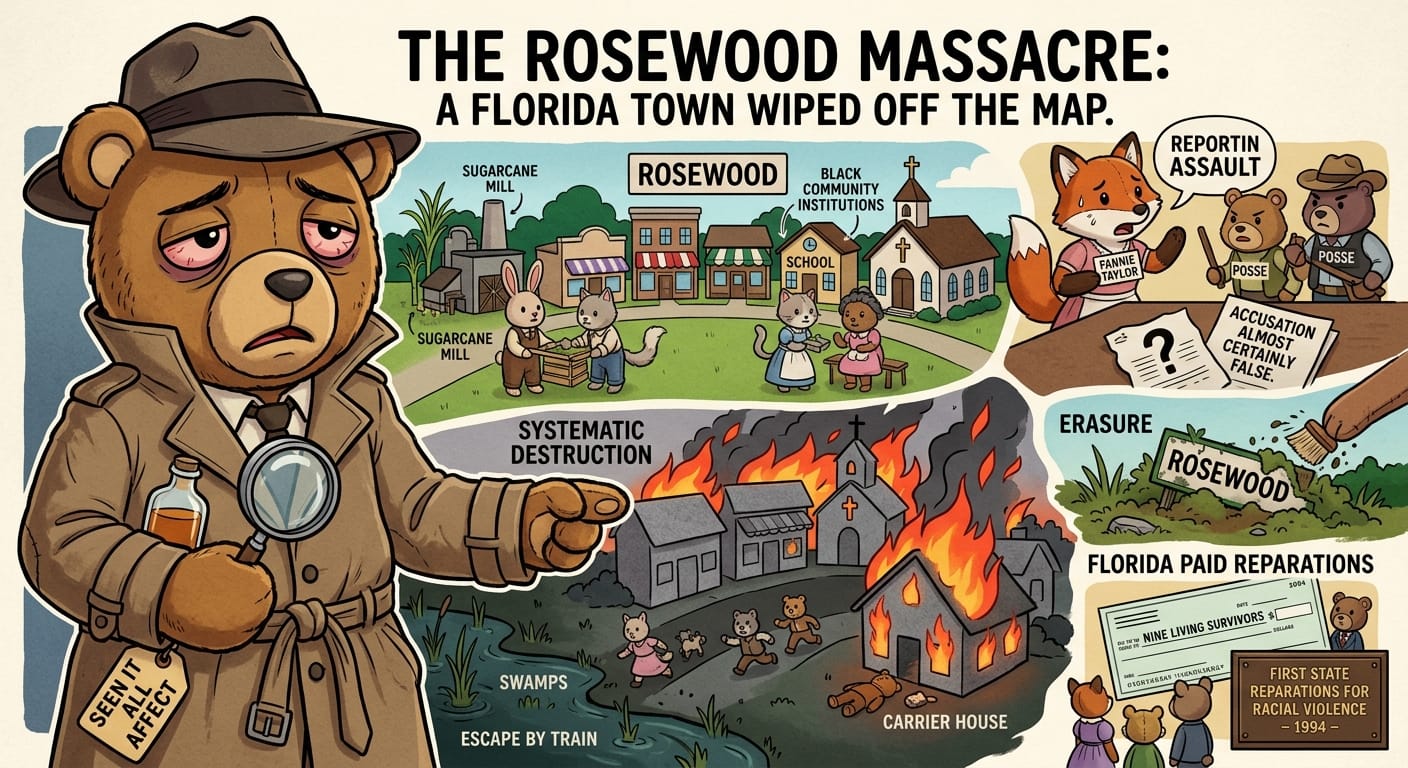
- The Rosewood Massacre: A Florida Town Wiped Off the Map
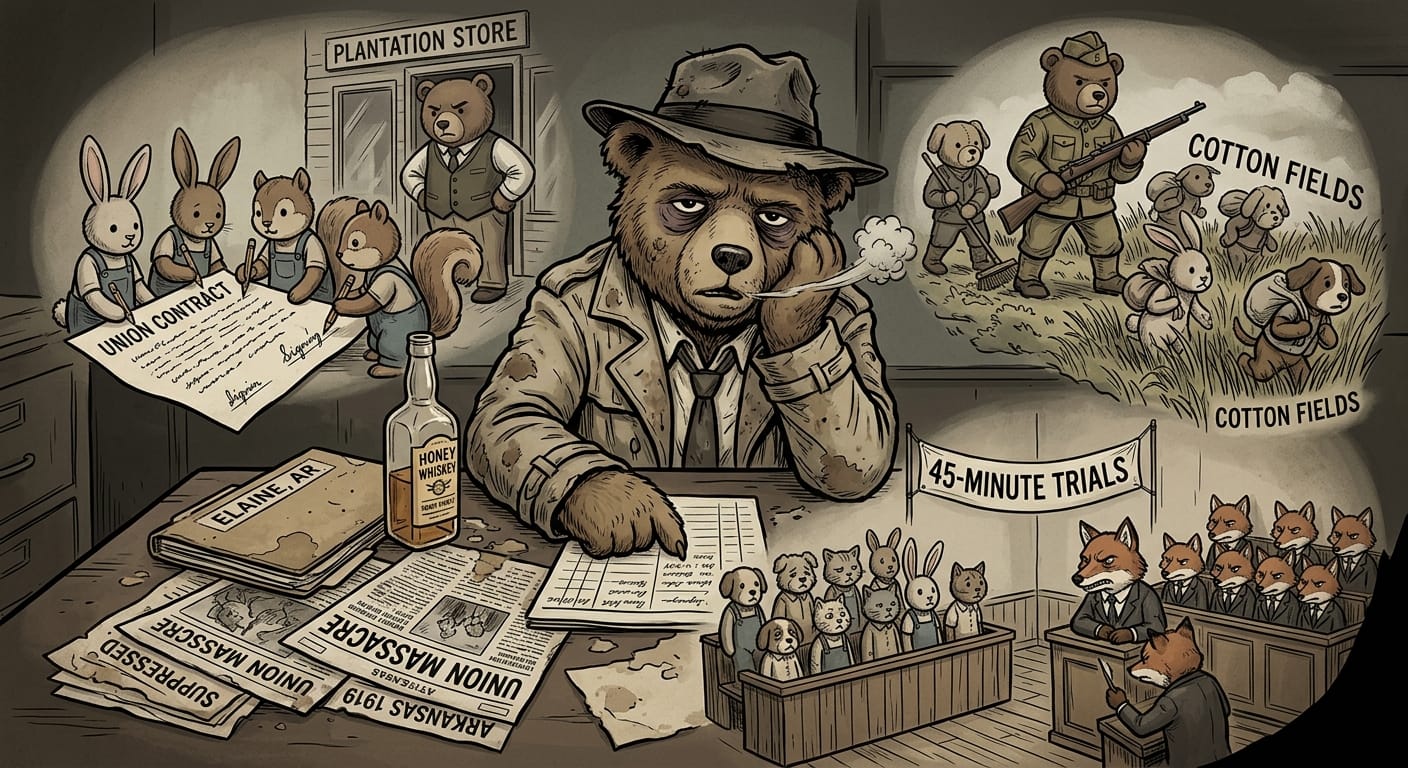
- The Elaine Massacre: Arkansas’s Forgotten Bloodbath
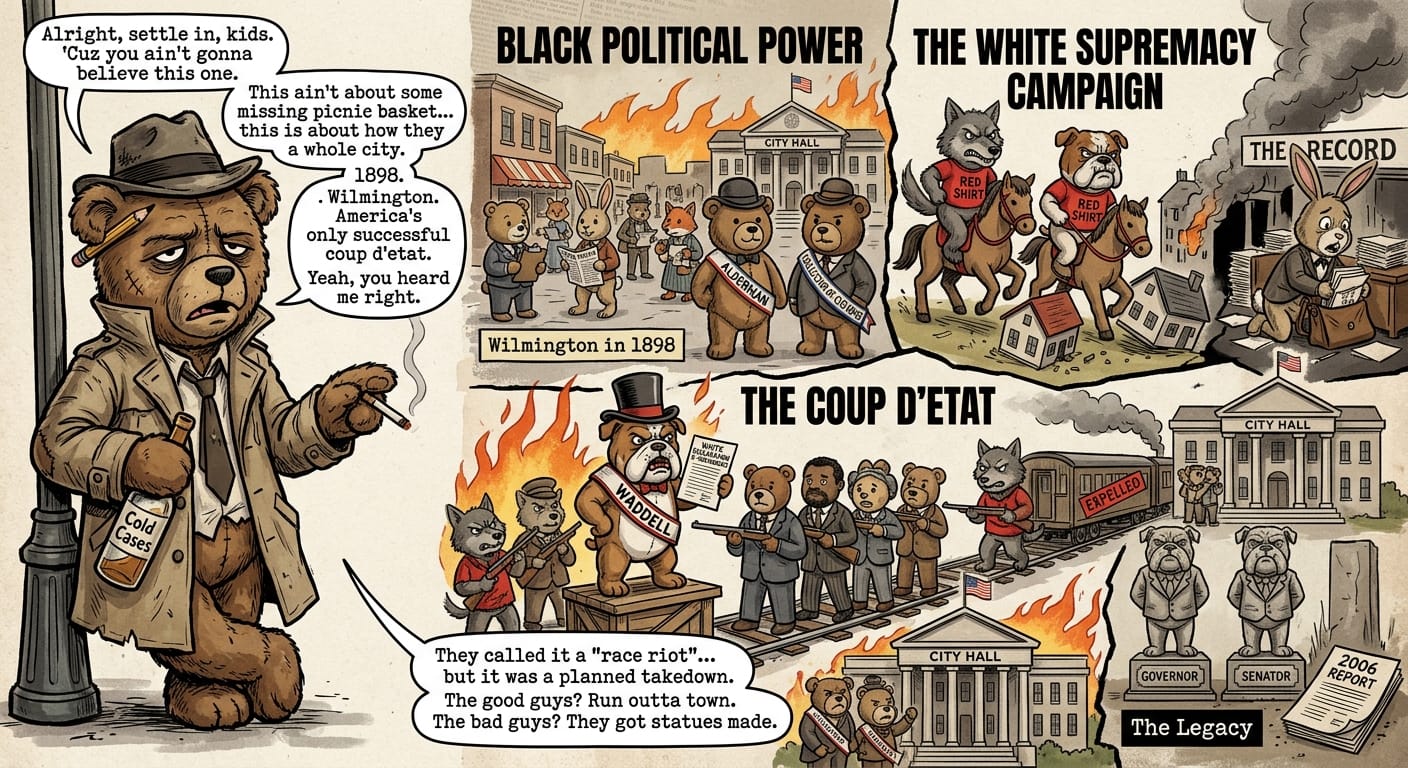
- The Wilmington Coup of 1898: America’s Only Successful Coup d’Etat
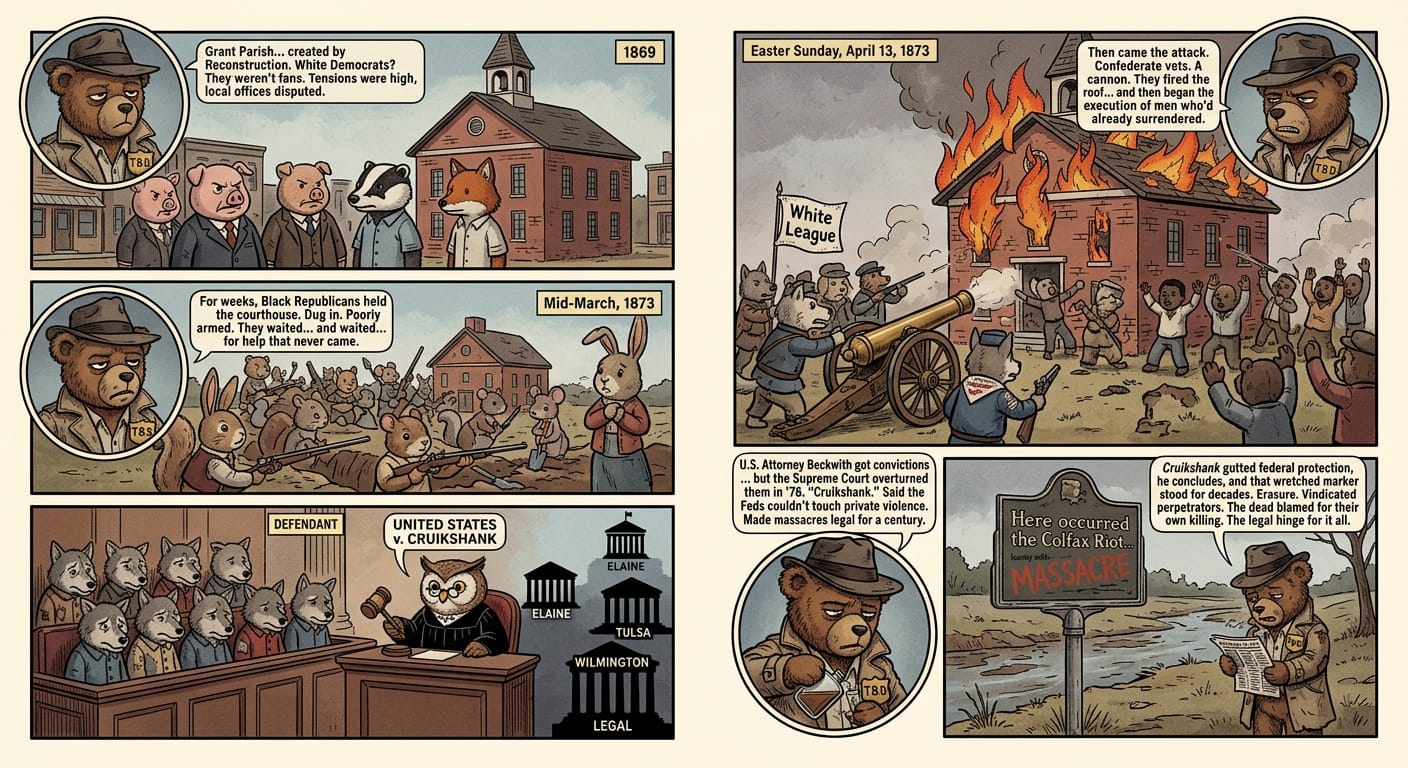
- The Colfax Massacre: Reconstruction’s Bloodiest Day
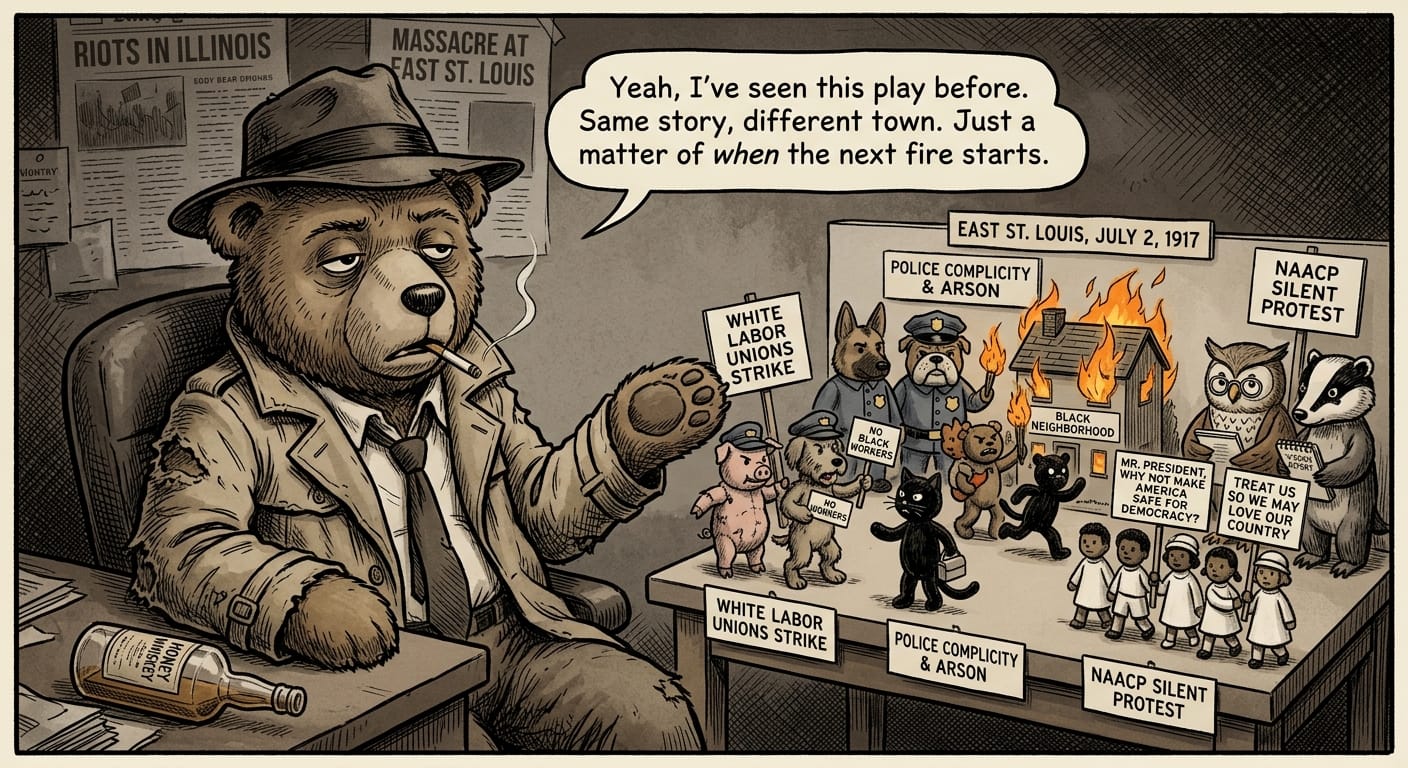
- The East St. Louis Riots: When a City Tried to Purge Its Black Population
Every Massacre in This Series Had the Same Structural Cause
The massacres in this series span 55 years — from Colfax in 1873 to the ongoing suppression of Greenwood’s history into the twenty-first century. They happened in different states, at different scales, triggered by different proximate events. What they shared was structural:
White economic competition as a trigger. The Tulsa massacre targeted the Greenwood District — “Black Wall Street” — which had built the most prosperous Black community in America. The East St. Louis massacre was organized around white workers’ fear that Black workers were taking factory jobs. The Wilmington coup targeted a Black-owned newspaper and a Black professional class that had built political and economic power during Reconstruction. The Elaine massacre began when Black sharecroppers tried to organize collectively to negotiate cotton prices. In every case, Black economic achievement or solidarity triggered organized destruction.
State complicity. In Tulsa, the city deputized members of the mob and gave them weapons while Greenwood burned. In Wilmington, the coup was organized by the Democratic Party apparatus, led by former Confederate officers, and the state government watched and then installed the new government the coup created. In Elaine, the federal Army deployed against the Black community, not the armed white posse that had killed dozens of people. In Colfax, the federal government prosecuted the attackers, won convictions, and then watched the Supreme Court void them. In every case, the machinery of the state was either directing the violence or declining to stop it.
The absence of accountability. No one was prosecuted for the Tulsa massacre. No one was prosecuted for the Rosewood massacre, the East St. Louis massacre, or the Elaine massacre. The Colfax convictions were vacated by the Supreme Court. In Wilmington, the coup’s leaders became governor and senator. The pattern is not a pattern of impunity as an anomaly. It is impunity as the designed outcome — the message that the violence communicated to the next community that might consider organizing, voting, or building wealth.
What the Numbers Look Like Together
The aggregate numbers are staggering if you look at them together: at least 100 to 300 killed in Tulsa; 100 to 856 in Elaine; 62 to 153 in Colfax; at least 39 to 150 in East St. Louis; at least 8 confirmed in Rosewood; at least 14 in Wilmington. These numbers have wide ranges because no systematic investigation occurred in most of these cases at the time, and because the people responsible for counting the dead were often the same people who had killed them.
The true aggregate count of people killed in organized racial massacres in American history runs into the thousands. Most of them are anonymous in the historical record, their names not preserved, their deaths not investigated, their communities not compensated.
The Suppression Was Active, Not Passive Forgetting
These massacres were not secret while they were happening. They were covered in newspapers. Federal authorities were notified. Congress held hearings about some of them. Survivors gave testimony. The suppression that followed was active and deliberate: local newspapers stopped covering them, school curricula excluded them, official records were sealed or destroyed, and survivors were threatened into silence.
The Tulsa massacre was not taught in Oklahoma schools until 2020 — 99 years after it happened. The Elaine massacre was described as a “negro insurrection” in official records until historians and journalists began challenging that framing in the 1980s and 1990s. The Wilmington coup was called a “race riot” in North Carolina textbooks until the state legislature’s own commission report in 2006 forced a confrontation with the historical record.
The suppression was not passive forgetting. It was active maintenance of a false history, because the true history required asking who had benefited from the destruction and who was owed accountability for it.
Accountability Has Barely Begun
Florida’s 1994 Rosewood Claims Bill — $150,000 to direct survivors or their heirs, scholarships for descendants — is the only case in which a U.S. government paid any form of compensation for a racial massacre. The Oklahoma commission recommended reparations for Tulsa in 2001; the legislature did not act on the recommendation. The Elaine massacre has no official acknowledgment at the state level. The Colfax massacre’s historical marker, placed in 1950, still refers to the event as a “riot” in which “three white men and 150 negroes were slain.”
Accountability is incomplete. It is also possible, which the ongoing litigation around Tulsa — where descendants of massacre survivors are suing the city of Tulsa for reparations — demonstrates. The outcome of those cases will determine whether the historical pattern of impunity holds or whether something different becomes possible. The broader context for all of these massacres — the era of lynching, the Black Codes, the first Ku Klux Klan — is documented in the companion series From Reconstruction to Jim Crow.
─────────
The Series