From Reconstruction to Jim Crow: How Terror Replaced Slavery
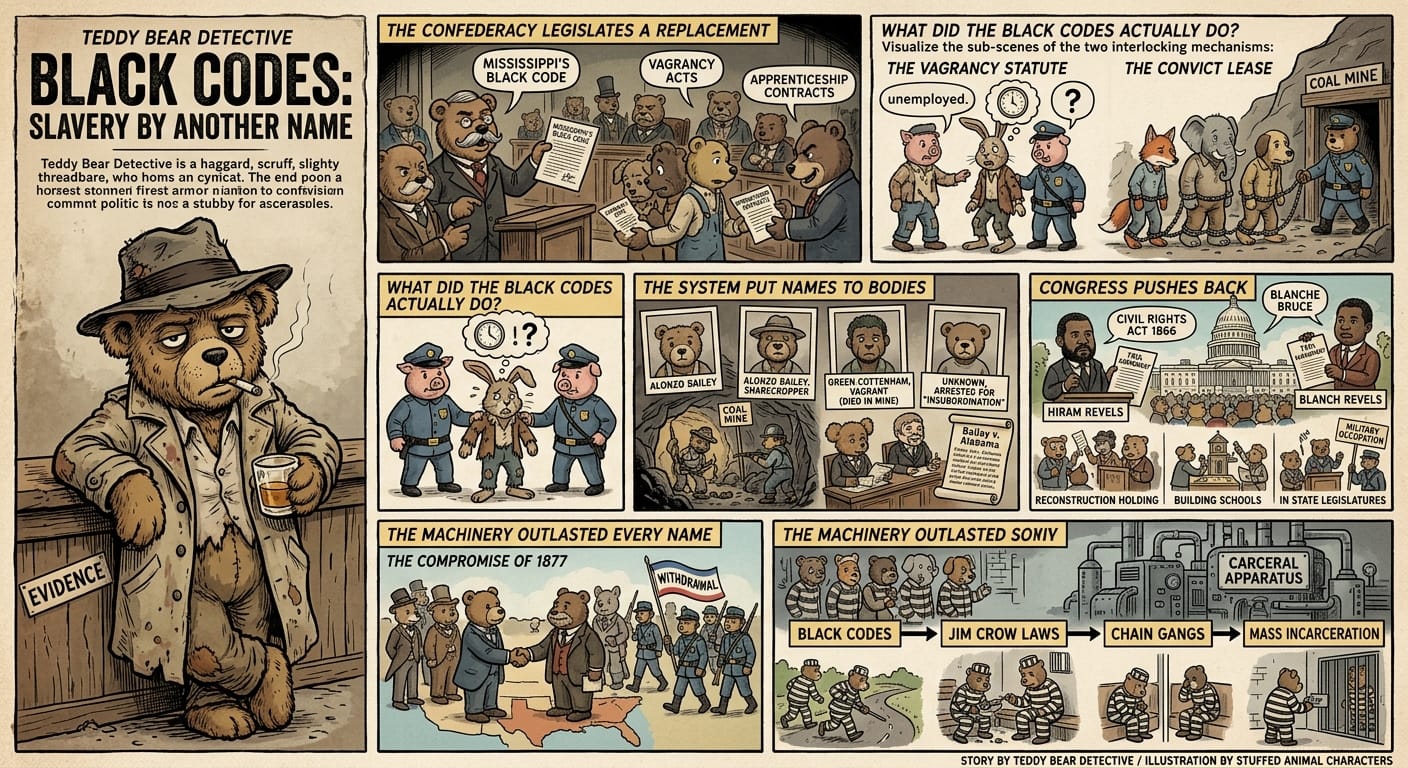
The Confederacy lost the Civil War and within months legislated a replacement system. Black Codes convict leasing the KKK lynching and sundown towns were not separate incidents — they were one coordinated project across six decades.
From Reconstruction to Jim Crow: How Terror Replaced Slavery
The Confederacy lost the Civil War. What it won in the decades after was something more durable: a replacement system that achieved the same economic and social outcomes as slavery without using the name. Understanding how that happened requires understanding that it was not inevitable, accidental, or the product of vague “social forces.” It was organized. It was legislated. It was enforced with specific acts of violence against specific people. And it succeeded because the federal government chose to let it.
In This Series
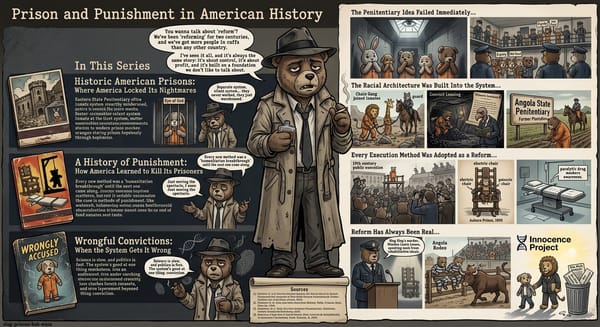
- Black Codes and Convict Leasing: Slavery by Another Name
- The First Ku Klux Klan: Terrorism in White Hoods
- Lynching in America: The Scope of Racial Terror
- Ida B. Wells: The Woman Who Counted the Dead
- Sundown Towns: The Places Where Black People Couldn’t Stay After Dark
- Red Summer: The 1919 Race War That Swept America
Slavery Ended and the Replacement System Appeared Within Months
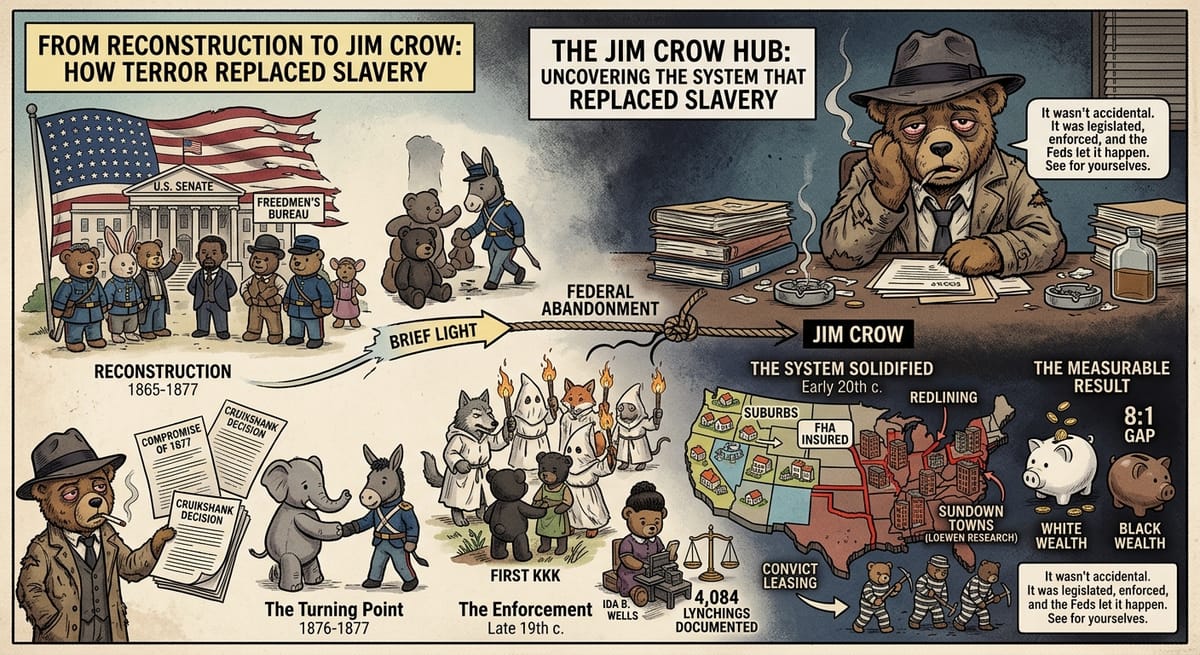
The Black Codes appeared within months of Confederate surrender — Mississippi’s in November 1865, South Carolina’s the same month. They were not subtle. They assigned criminal penalties to unemployment, restricted land ownership, created a system of “apprenticeship” that allowed courts to assign Black children to white employers without parental consent, and prohibited Black workers from leaving their employers. The mechanism was transparent: recreate the labor and social control of slavery within a legal framework that didn’t use the word.
Congress dismantled the Black Codes through the Reconstruction amendments and the Civil Rights Acts of 1866 and 1875. For roughly a decade — the period historians call Radical Reconstruction — federal enforcement backed those laws with troops and federal prosecutors. More than 2,000 Black men served in elected office during Reconstruction. Fourteen served in Congress. Hiram Revels and Blanche Bruce served in the U.S. Senate from Mississippi.
Then enforcement stopped. The Compromise of 1877 withdrew federal troops. The Supreme Court issued United States v. Cruikshank in 1876 and the Civil Rights Cases in 1883, which effectively ruled that the federal government could not prosecute private racial violence or private discrimination. The Black Codes were gone in name; their replacement — convict leasing, vagrancy law, debt peonage — did the same work.
Terror Functioned as Explicit Policy, Not Social Disorder
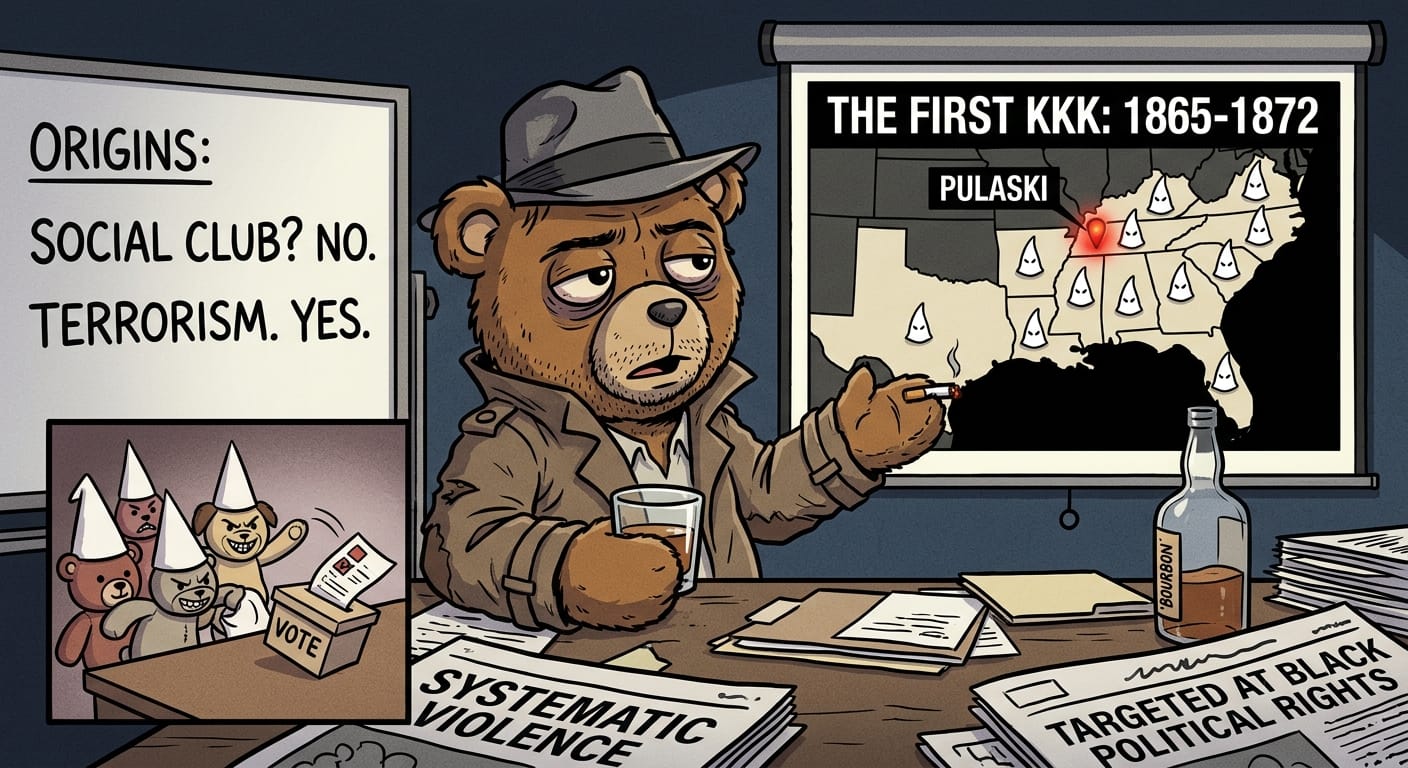
The first Ku Klux Klan, founded in December 1865 in Pulaski, Tennessee, was the enforcement arm of the project that the Black Codes were the legislative arm of. It operated with military precision — many of its members were Confederate veterans — and with clear strategic objectives: suppress Black voting, destroy Black economic independence, and remove from office any official who supported Black political participation.
Congressional investigations documented thousands of incidents of Klan violence between 1866 and 1871. The federal prosecution campaign of 1871–1872, under Attorney General Amos Akerman, produced hundreds of convictions and temporarily suppressed the Klan. Then political will dissipated and the violence continued under different organizational names: the White League in Louisiana, the Red Shirts in the Carolinas, the rifle clubs everywhere.
Lynching was the system’s ultimate enforcement mechanism. Between 1877 and 1950, the Equal Justice Initiative documented at least 4,084 lynchings of Black people in the South. These were not spontaneous outbursts. They were tactical: they targeted people who voted, who owned land, who testified in court, who competed economically with white businesses. They were announced in advance. They drew crowds. They were photographed and the photographs were sold. No federal anti-lynching law passed for 140 years.
The System Extended Across the Entire Country Through Geography and Finance
Sundown towns extended the project into the North. James Loewen documented more than 10,000 American municipalities that excluded Black residents through ordinance, intimidation, or organized expulsion. The Federal Housing Administration built these exclusions into its underwriting standards, ensuring that the postwar suburban expansion — the primary vehicle for American middle-class wealth accumulation between 1945 and 1975 — was racially segregated by design and by subsidy.
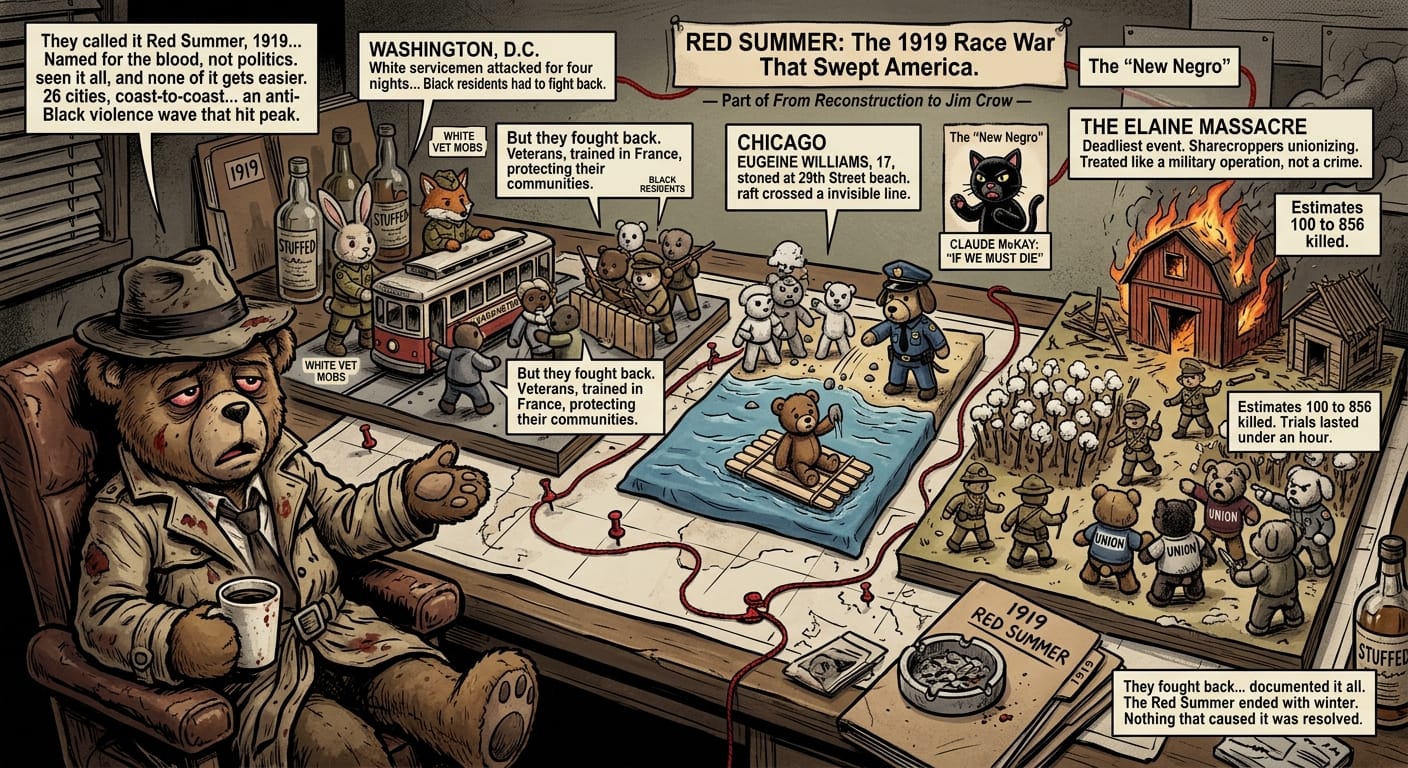
The Great Migration, which moved approximately six million Black people out of the South between 1910 and 1970, did not carry them into open opportunity. It carried them into a different geography of the same system — urban neighborhoods that banks redlined, unions excluded, and city governments allowed to deteriorate while investing in white suburbs. The Red Summer of 1919 was the violent response to that migration arriving in Northern cities: white mobs in at least 26 cities attacked Black communities over eight months.
What the Era Actually Produced Is Measurable Now
The gap between Black and white wealth in America today — estimated at approximately 8 to 1 by Federal Reserve data — is not a residue of slavery alone. It is the compound accumulation of deliberate deprivation across six post-slavery decades: stolen labor through convict leasing, stolen land through Klan-enforced expulsions, stolen economic opportunity through sundown towns and redlining, stolen political power through systematic disenfranchisement.
The era from Reconstruction to Jim Crow is not a historical period that ended when the civil rights movement arrived. Its material consequences are present, documented, and measurable. Its mechanisms were legal, institutional, and enforced by the same government that had promised something different.
What Reconstruction revealed was that the project of Black political and economic equality was achievable — it happened, briefly, with federal backing. What the post-Reconstruction era revealed was the price of withdrawing that backing. The country ran that experiment twice, and both times it got the same answer. Ida B. Wells spent her career building the evidentiary record of what that answer cost.
─────────
The Series