Controversial Military Actions: The Moral Gray Zone
Five cases where the harm is documented but the moral verdict isn't settled: internment firebombing atomic bombs POW camps and drone warfare.

Controversial Military Actions: The Moral Gray Zone
Not all of American military history divides cleanly into right and wrong. This series covers the harder cases — the decisions and events that serious people have disagreed about for decades, where the historical evidence is genuine and the moral conclusions are not. The Japanese internment, the firebombing of Japan, the atomic bombs, the POW system, and drone warfare share the quality of being genuinely contested: not because the facts are hidden, but because the facts pull in more than one direction.
Why These Cases Are Harder Than My Lai or Abu Ghraib
The events in this series are not gray because the harms are ambiguous. They are gray because the alternative harms were also real. The atomic bombs killed between 130,000 and 226,000 civilians; an invasion of Japan’s home islands was projected to kill far more on all sides. The firebombing of Japanese cities killed between 300,000 and 500,000 people; it was also destroying the war-making capacity of a military that had killed millions across Asia and the Pacific. Japanese internment imprisoned 120,000 American citizens without charge; it took place six weeks after an attack on Pearl Harbor that had genuinely destabilized the West Coast’s sense of security. Drone warfare kills civilians and sets legal precedents for executive killing power; it also targets individuals who plan operations that would kill more civilians if carried out.
The moral weight of an alternative — what would have happened otherwise — is not a get-out-of-jail-free card. It is, however, a genuine consideration that honest engagement with these events has to account for. The cases in this series are harder than My Lai or Abu Ghraib not because the people who made the decisions were better people, but because the decisions were made under conditions of genuine uncertainty about consequences.
The Structural Feature That Connects All Five Cases
What connects the Japanese internment of 1942, the German POW camps of 1942–1946, the firebombing of 1945, the nuclear decisions of August 1945, and the drone warfare of 2001 to the present is this: in each case, the United States government made a unilateral decision to harm or kill people — civilians, citizens, or combatants — on a calculation of security or military necessity, with limited external review and with accountability for errors either delayed by decades or never completed.
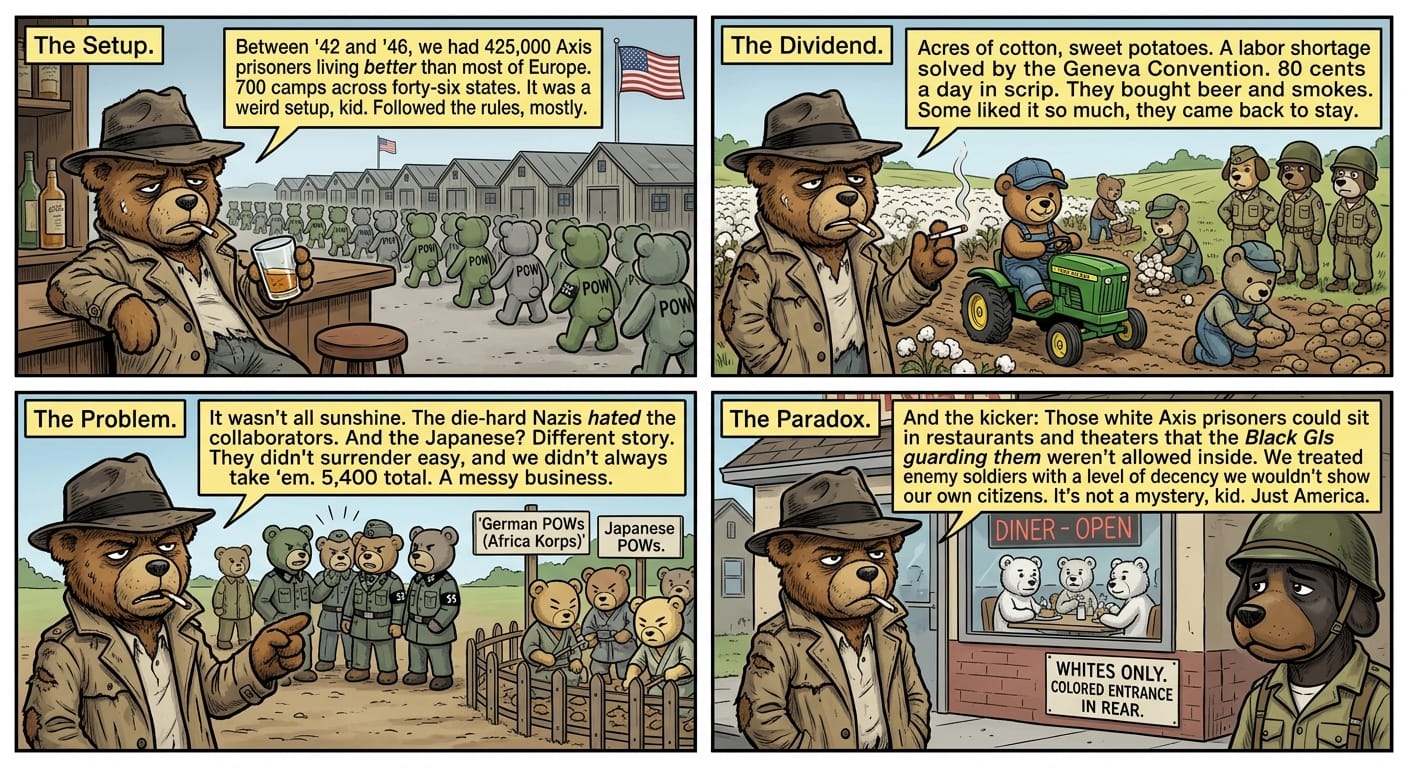
The POW camps are the partial exception: the United States largely followed the Geneva Conventions with Axis prisoners, and the moral complexity there comes from the racial paradox of treating German prisoners better than Black American soldiers in the same states. But even the POW system contained its own accountability failures — the psychological abuse of prisoners deemed insufficiently anti-Nazi, the intelligence exploitation of prisoners whose cooperation was secured under conditions they hadn’t anticipated — that don’t appear in the triumphalist version of the story.
The Contested Histories
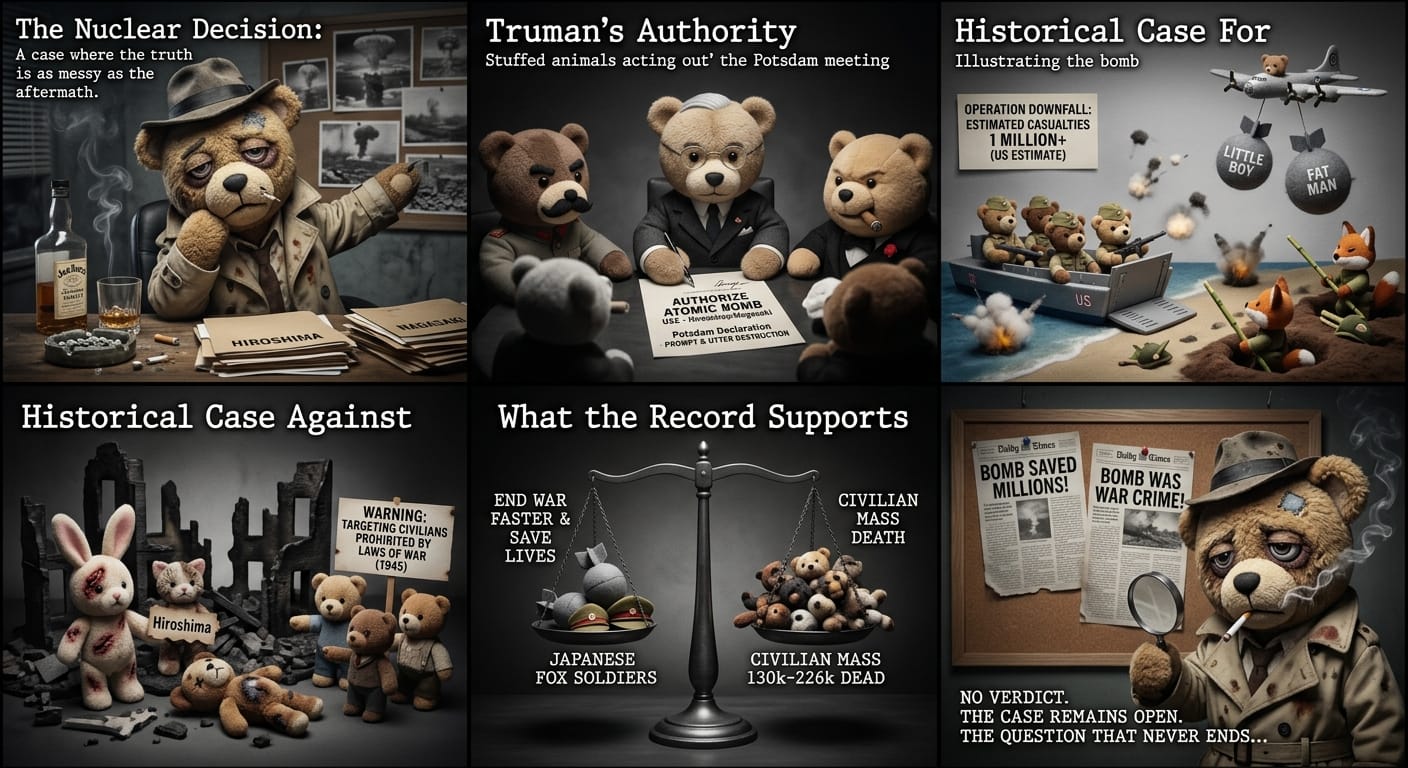
The firebombing of Japan and the nuclear decisions have generated more serious historical debate than almost any other events in American military history, and that debate has not resolved into consensus. Historians like Richard Frank and Conrad Crane make strong cases that the alternatives to strategic bombing and nuclear weapons would have been worse. Historians like Tsuyoshi Hasegawa and Gar Alperovitz make strong cases that Japan was closer to surrender than American planners admitted, and that atomic diplomacy against the Soviet Union shaped Truman’s decision. Both sides are working from the same documents and reaching genuinely different conclusions about how to weigh them.
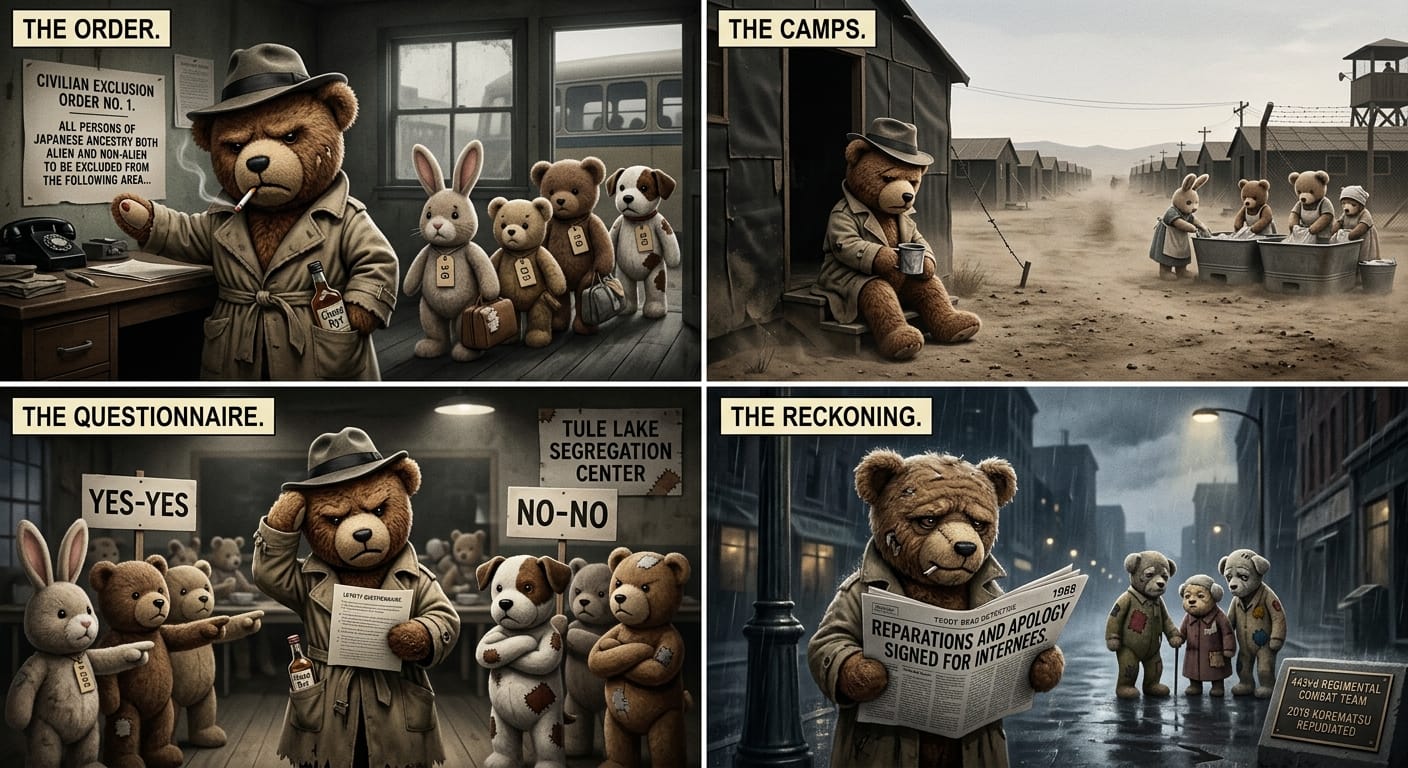
Japanese internment has produced less historical controversy about the facts — the Commission on Wartime Relocation concluded definitively in 1983 that it was driven by “race prejudice, war hysteria, and a failure of political leadership” — but the legal history has continued to develop, with the Supreme Court’s formal repudiation of Korematsu in 2018 leaving unresolved the question of how to evaluate security decisions made under uncertainty when those decisions later prove to have been based on false premises.
In This Series
Japanese Internment — Executive Order 9066 and the imprisonment of 120,000 Japanese Americans. The legal challenges, the camps, the redress.
POW Camps on American Soil — 425,000 Axis prisoners in 700 American camps. What the system got right, what it couldn’t escape.
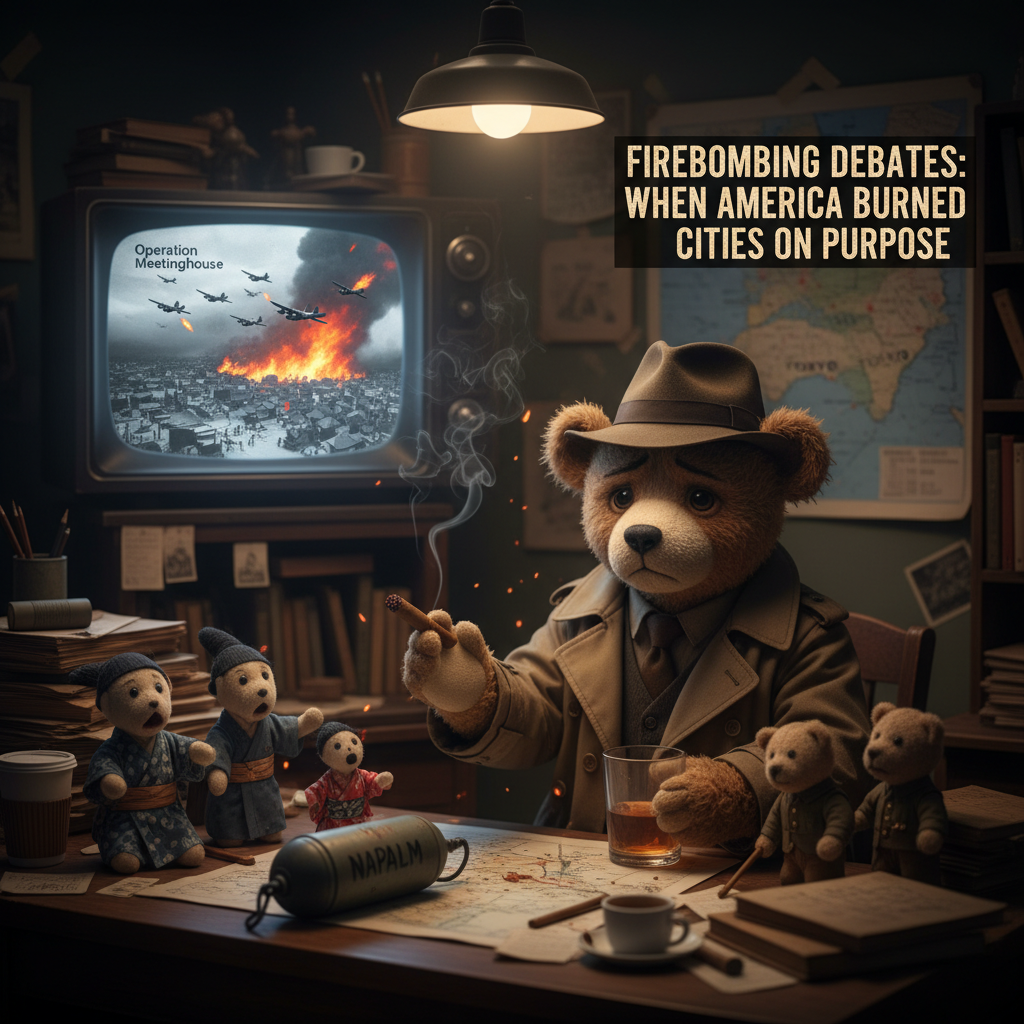
Firebombing Debates — Operation Meetinghouse and the burning of 67 Japanese cities. The case for, the case against, and the silence around it.
The Nuclear Decision — Hiroshima, Nagasaki, and the question that has been debated ever since.
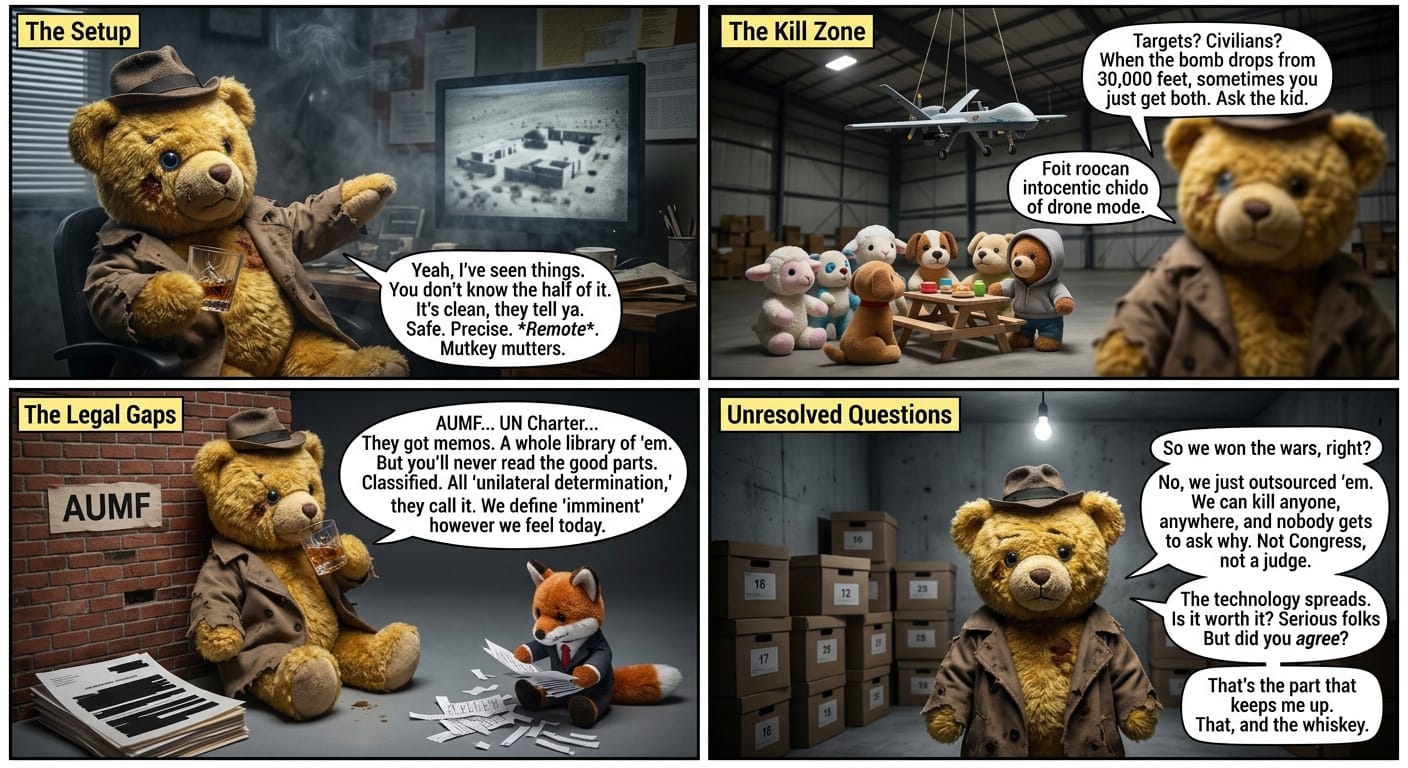
Drone Warfare Ethics — Remote killing, legal frameworks that don’t quite hold, and the two American citizens killed without trial.
← Back to War Crimes & Military Atrocities
Containment
The moral gray zone is not comfortable to occupy, and there is a temptation to resolve it by picking a side — to decide that the bombs were justified and the debate is over, or to decide that the bombs were a war crime and the military necessity argument was always a rationalization. Neither resolution holds up to the evidence. What the evidence supports is sitting with the discomfort: that human beings making decisions under genuine uncertainty, with real stakes on both sides, can produce outcomes that are simultaneously understandable and terrible. The goal of this series is not to provide verdicts but to present the actual record — the numbers, the names, the decisions, and the debates — clearly enough that readers can form their own.
─────────
Sources:
- Frank, Richard B. Downfall: The End of the Imperial Japanese Empire. Random House, 1999.
- Daniels, Roger. Prisoners Without Trial: Japanese Americans in World War II. Hill and Wang, 1993.
- Scahill, Jeremy. Dirty Wars: The World Is a Battlefield. Nation Books, 2013.
The Series