Fighting Back: Slave Resistance in America
From the 1739 Stono Rebellion to the Underground Railroad — six articles on the people who fought American slavery from inside it. Series hub.
Fighting Back: Slave Resistance in America
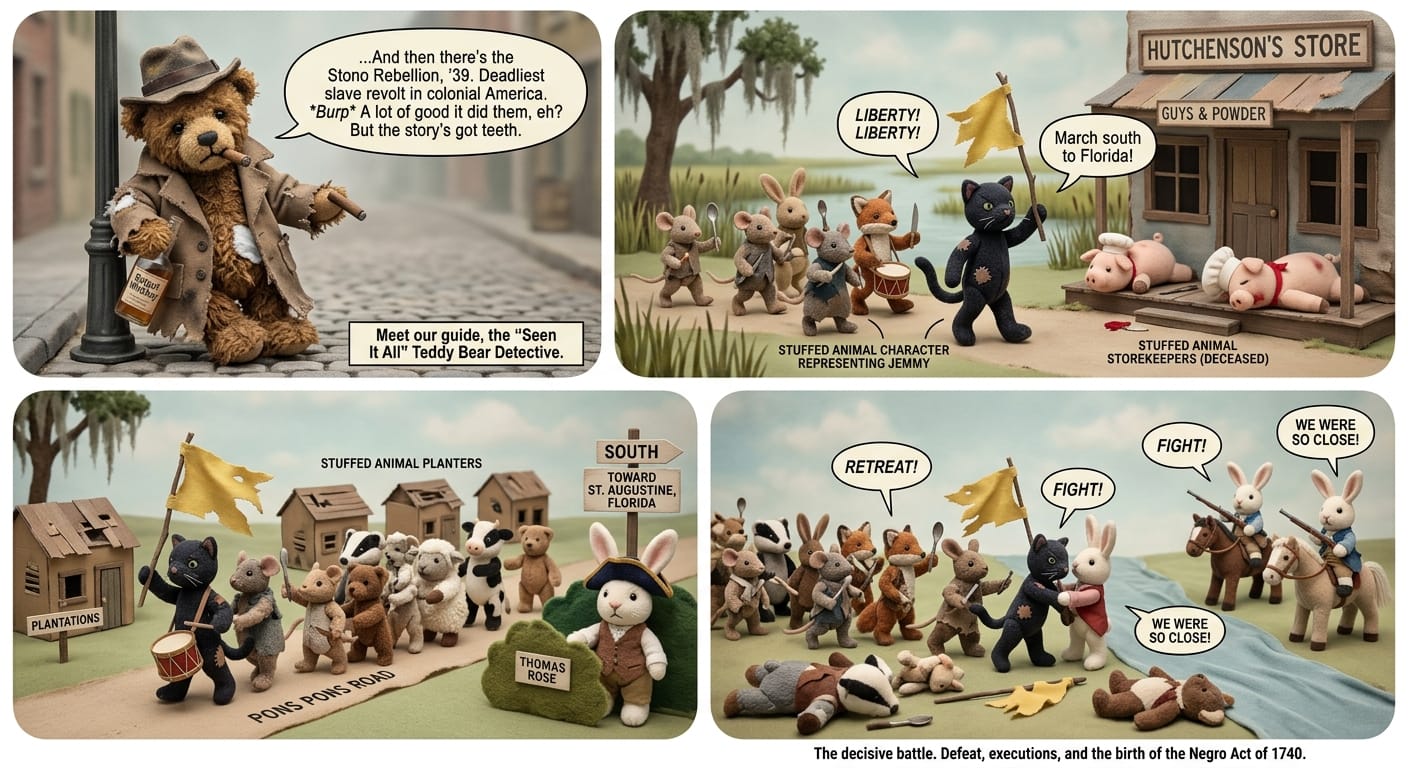
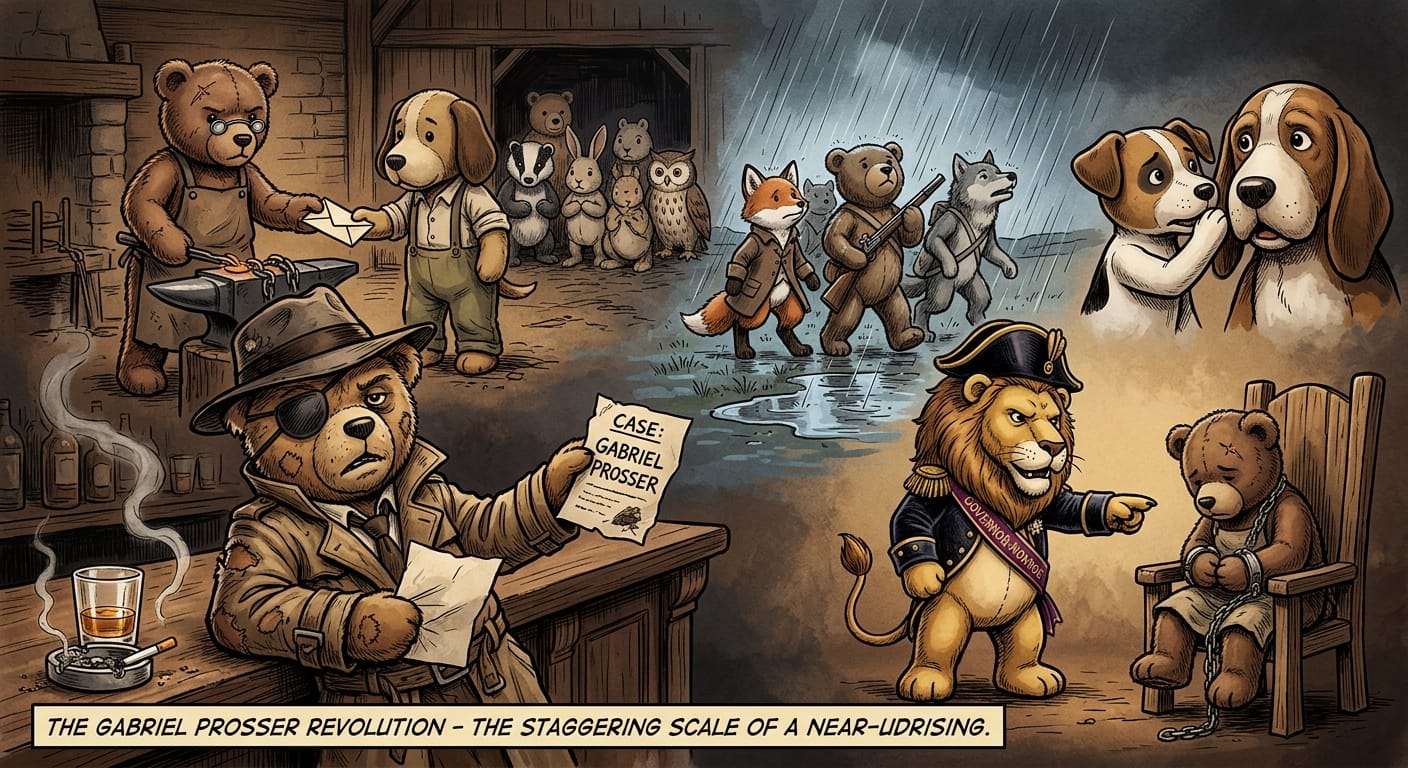
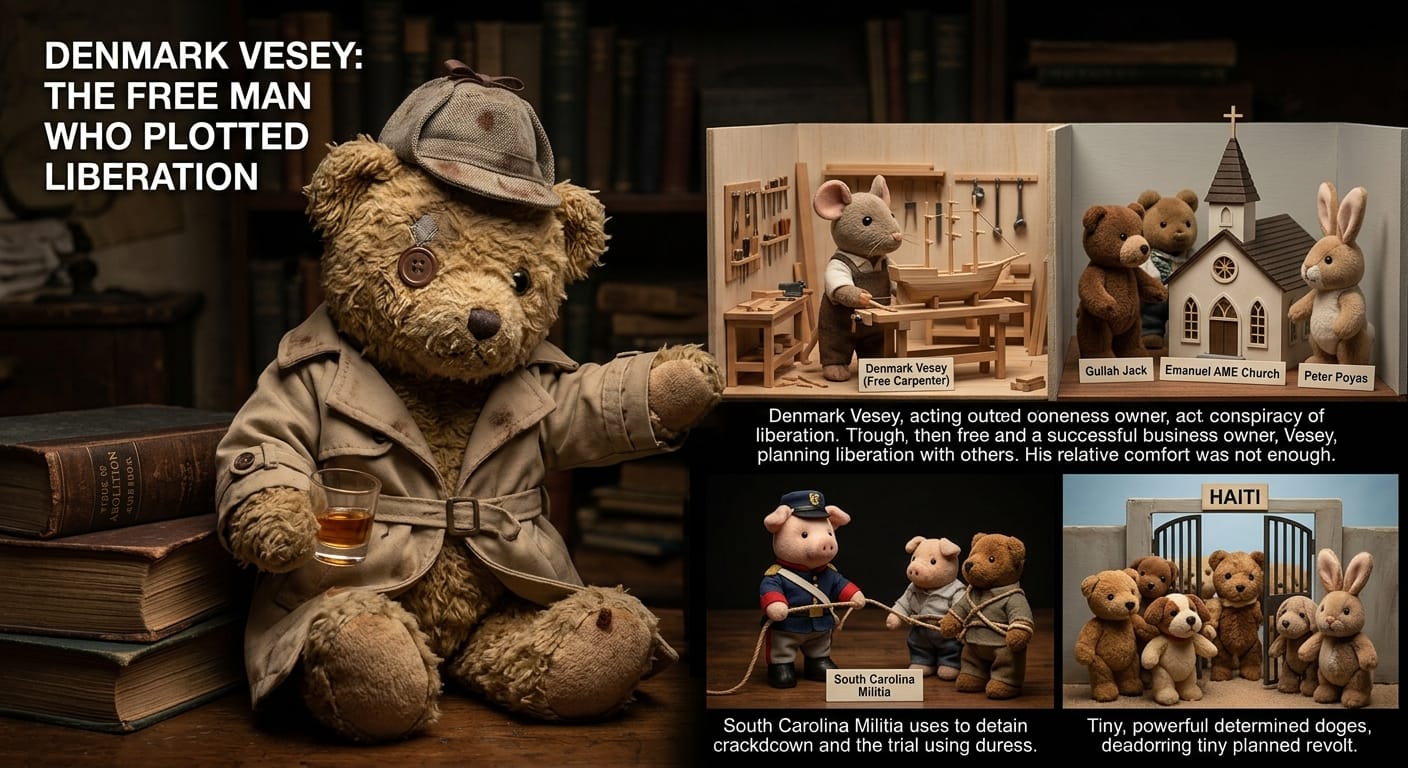
Slave resistance in antebellum America was not a series of isolated incidents — it was a persistent, organized pattern that ran parallel to the slave system for its entire duration. In 1739, Jemmy led 20 men to a store near the Stono River, broke in, took weapons, and marched toward Spanish Florida shouting “Liberty.” In 1800, Gabriel Prosser organized hundreds of recruits into six militia companies and planned to seize Richmond’s arsenal before a thunderstorm and two informants ended it two days before launch. In 1822, Denmark Vesey set July 14 — Bastille Day — as the date to take Charleston. In 1831, Nat Turner moved through Southampton County for 48 hours before anyone stopped him. In the decades between and after, the Underground Railroad moved tens of thousands of people to freedom through a network that ran entirely on trust, darkness, and the willingness to break federal law. These stories, taken together, tell you something about both the people who were enslaved and the system that enslaved them.
Part of Slavery in American History — ← Back to section hub
In This Series
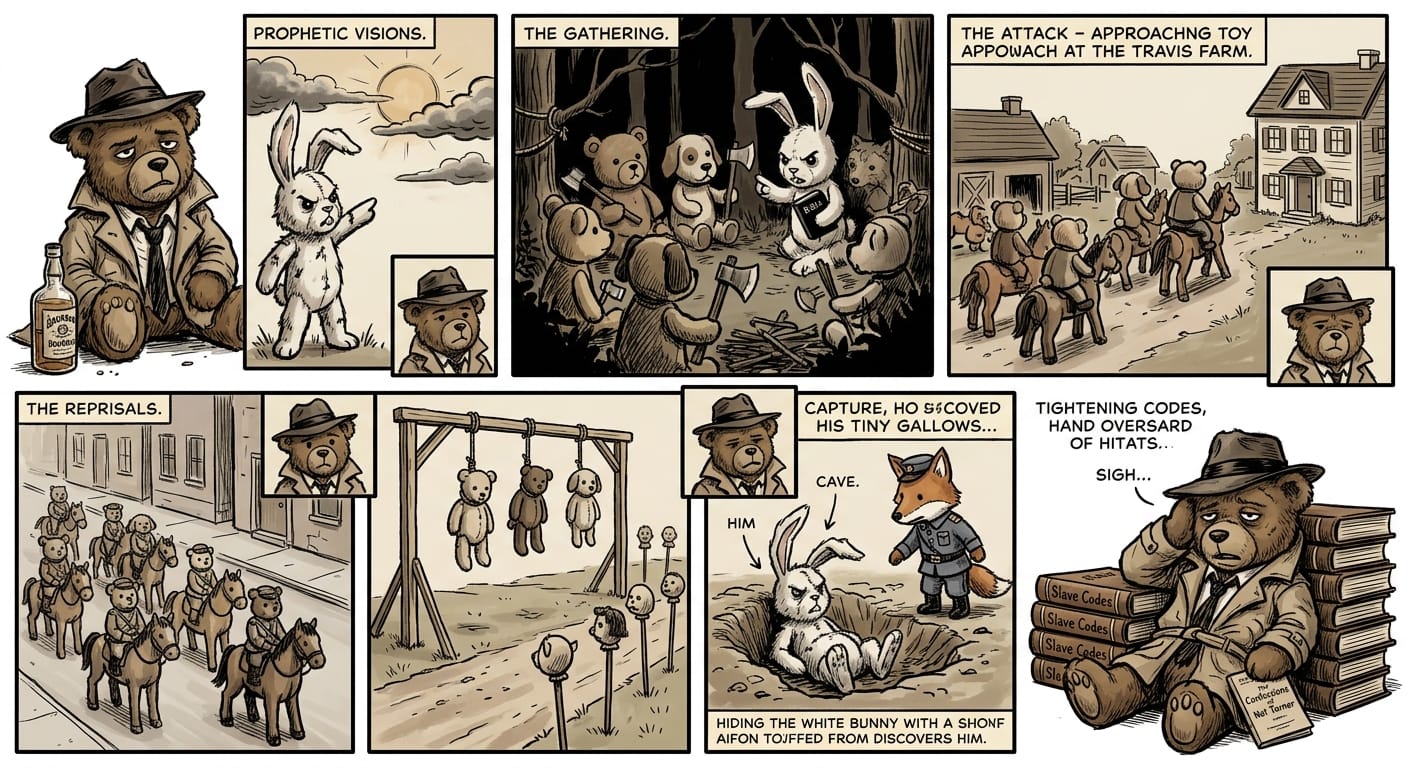
- Nat Turner’s Rebellion — The 1831 uprising that killed 55 people, sent Virginia toward an emancipation debate, and triggered a continent-wide crackdown on Black literacy and religious assembly.
- The Stono Rebellion — The 1739 colonial revolt that reshaped South Carolina’s slave code for the next century and revealed the structural trap of building an economy on terrorized labor.
- Gabriel Prosser — The 1800 Richmond conspiracy that came closer to success than most people know, organized by a literate blacksmith who used the slave economy’s own labor system against it.
- Denmark Vesey — The 1822 Charleston conspiracy organized by a free man with nothing to gain except other people’s freedom, dismantled by torture-extracted testimony and the demolition of Emanuel AME Church.
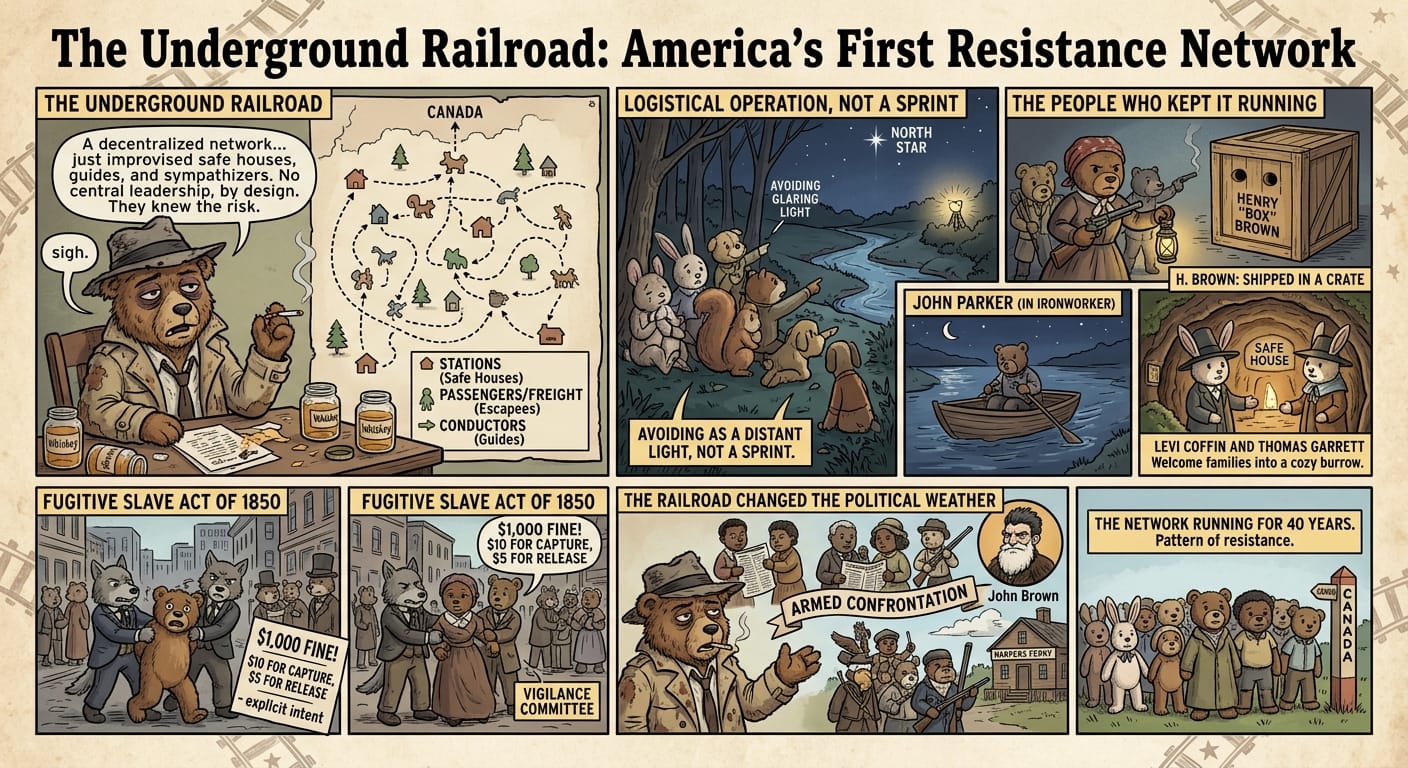
- The Underground Railroad — The decentralized network that moved tens of thousands of people to freedom over 40 years, proved that federal law could be defied at scale, and shaped the abolitionist movement into something more than moral argument.
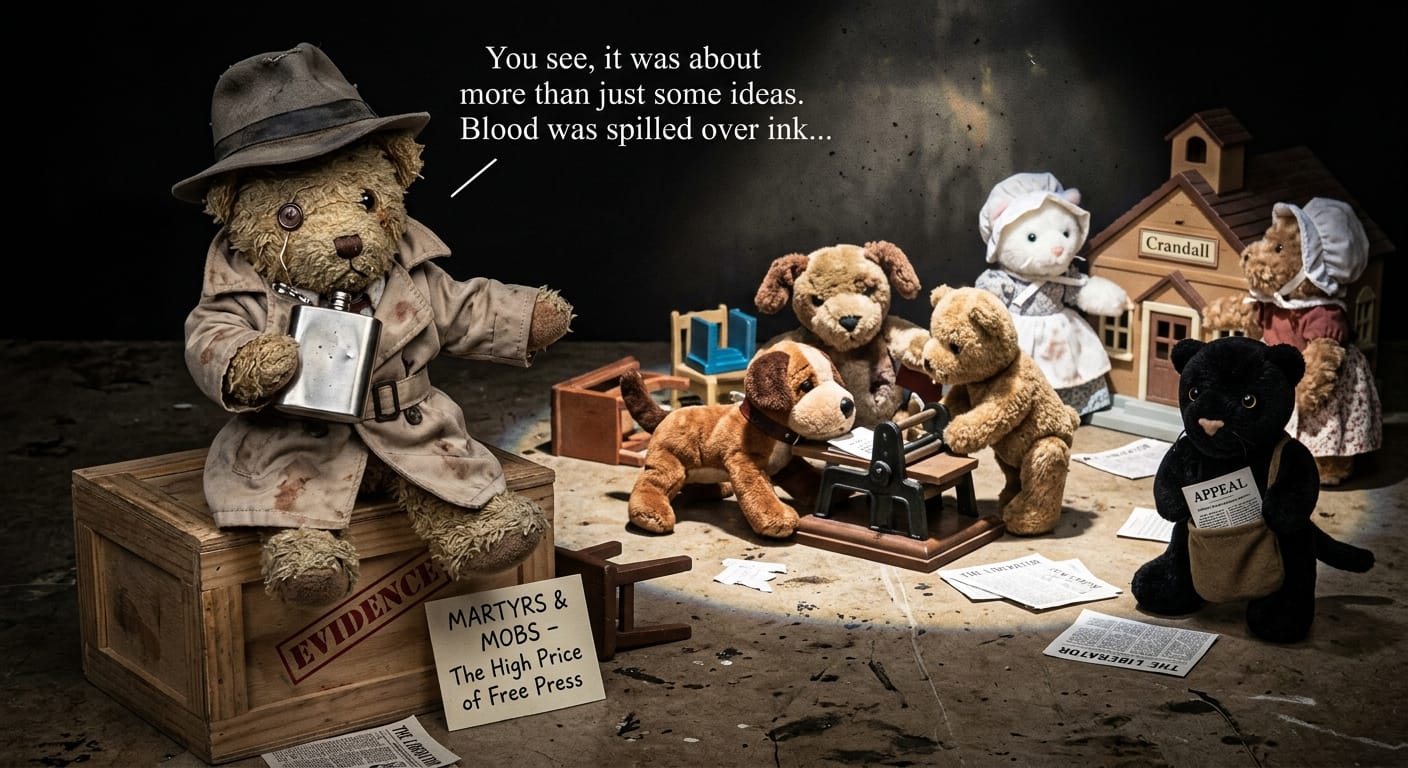
- Abolition’s Martyrs — The movement that built the moral and political infrastructure for emancipation — and what it cost Elijah Lovejoy, David Walker, Prudence Crandall, and the others who paid for it.
Every Episode of Resistance Shared the Same Core Refusal
The figures in this series came from different places, different skill sets, different circumstances. Jemmy was an Angolan man with military training from central Africa. Gabriel Prosser was a literate blacksmith who had absorbed the rhetoric of the American Revolution. Denmark Vesey was a free man who could have spent his remaining years in relative security. Nat Turner was a preacher who believed he was divinely commanded. Harriet Tubman was a fugitive who kept walking back toward the thing she had escaped. The abolitionists were a coalition of free Black men, Quakers, escaped enslaved people, and white ministers who couldn’t agree on anything except that slavery had to end.
What they shared was a refusal to accept the foundational premise of the system: that the people inside it were property rather than persons, and that resistance was therefore not only futile but incomprehensible. The entire legal, cultural, and theological architecture of American slavery was built to make resistance seem impossible and even irrational. Each of the people in this series looked at that architecture and concluded — correctly — that it was a lie.
The Crackdowns Were Admissions
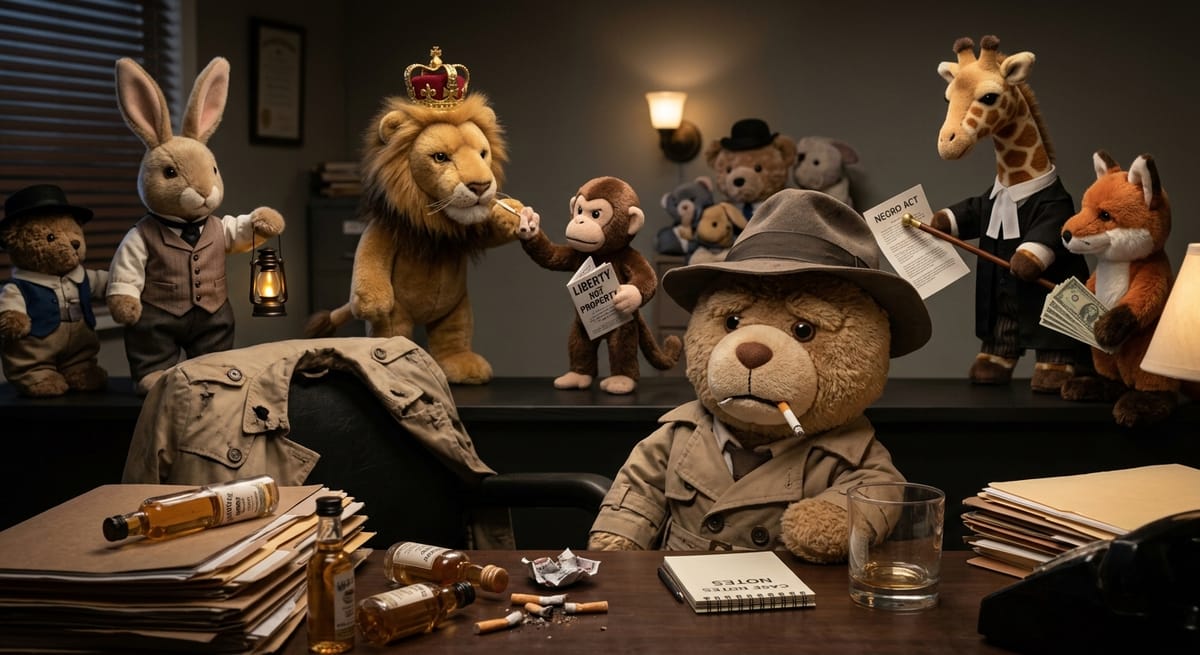
The response to each episode of resistance is as revealing as the resistance itself. After the Stono Rebellion in 1739, South Carolina passed the Negro Act of 1740, one of the most comprehensive slave codes in colonial American history. After Gabriel’s conspiracy in 1800, Virginia restricted the hiring-out of skilled enslaved workers and increased militia patrols. After Denmark Vesey in 1822, South Carolina demolished the Emanuel AME Church and passed the Negro Seamen Act. After Nat Turner in 1831, every Southern state tightened its slave codes, banned Black literacy, and restricted Black religious assembly.
Every crackdown was an admission. The legislators who drafted these laws understood that the conditions they were restricting — literacy, mobility, religious community, skilled work — were the conditions that made resistance possible. They also understood, but could not say, that the conditions making resistance possible were inseparable from the conditions making slavery profitable. You needed skilled enslaved workers. Skilled workers moved around. Moving around meant contact, conversation, and organization. The system contained the seeds of its own disruption and spent 200 years trying to prune them out without admitting they existed.
What the Informants and Betrayers Actually Reveal
Almost every major conspiracy in this series was undone by informants — Pharoah and Tom ended Gabriel’s plan, unnamed informants ended Vesey’s, and the Stono rebels were intercepted because word reached Lieutenant Governor William Bull in time. This is often cited as evidence that solidarity among enslaved people was weak or impossible. The opposite reading is more accurate.
The fact that most of these conspiracies recruited hundreds of people and held their secrets for months is extraordinary. The social and psychological pressure to inform was immense — freedom could be purchased with betrayal, and death was the alternative. That the secrets held as long as they did, across as many people as they did, speaks to the depth of the networks these organizers built and the degree of trust they had earned. The betrayals, when they came, were the exception, not the rule.
The Uprisings That Failed Still Changed the Outcome
None of the armed uprisings in this series achieved their stated military objectives. Gabriel never reached the Richmond arsenal. Vesey never fired a shot. Nat Turner never reached Jerusalem. Jemmy’s column was broken at the Edisto River. By the conventional measure of success — did they win? — the answer is no.
But the Underground Railroad moved between 30,000 and 100,000 people to freedom. The abolitionist movement went from 63 founding members in 1833 to a faction absorbed into the Republican Party by the 1850s. Frederick Douglass, who escaped enslavement in 1838, spent the next 50 years as the most prominent Black political figure in the United States. The moral vocabulary that abolitionists developed in the 1830s and 1840s became the frame through which the Civil War was eventually understood — not at first, but by the time Lincoln issued the Emancipation Proclamation in January 1863, the argument Garrison had been making since 1831 had become official U.S. policy.
The armed uprisings that failed contributed to that trajectory not by succeeding militarily but by making the stakes undeniable. Every time enslaved people organized and fought, they disproved the claim that slavery was natural, accepted, and stable. They forced the question onto the public. They terrified the slaveholding class into revealing the violence at the system’s foundation. They made it harder for the North to remain uninvolved.
The question these stories collectively pose is not whether the people who fought back were justified. They were fighting a system that the United States government itself later declared to be wrong, ended by war, and explicitly abolished in the Thirteenth Amendment. The question is why it took so long, what it cost, and who paid.
The answers are still uncomfortable.
─────────
Sources:
- Steven Hahn. A Nation Under Our Feet: Black Political Struggles in the Rural South from Slavery to the Great Migration. Harvard University Press, 2003.
- Eugene D. Genovese. From Rebellion to Revolution: Afro-American Slave Revolts in the Making of the Modern World. Louisiana State University Press, 1979.
- Eric Foner. The Fiery Trial: Abraham Lincoln and American Slavery. Norton, 2010.
The Series