Regional Mobs: Organized Crime Beyond New York
The Chicago Outfit Philadelphia mob Detroit Partnership Kansas City mob and Winter Hill Gang operated for decades as nodes in a national criminal network. This series covers organized crime as a national system.
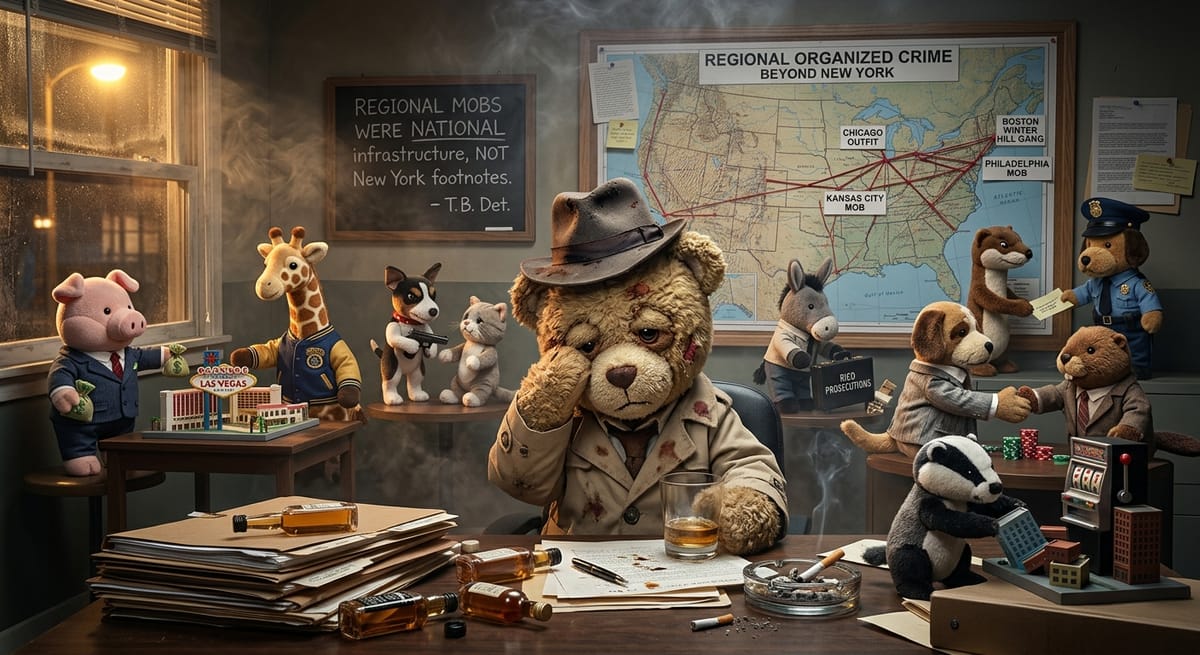
Regional Mobs: Organized Crime Beyond New York
The New York families get most of the coverage, most of the prosecutions, most of the films. The regional organizations — Chicago, Philadelphia, Detroit, Kansas City, Boston — operated alongside them for decades, often in close coordination, generating comparable revenue in their own territories and contributing directly to the national organized crime infrastructure that the New York families couldn’t have maintained alone. Understanding the regional organizations means understanding organized crime as a national system rather than a New York story with footnotes.
← Back to the Organized Crime section
In This Series
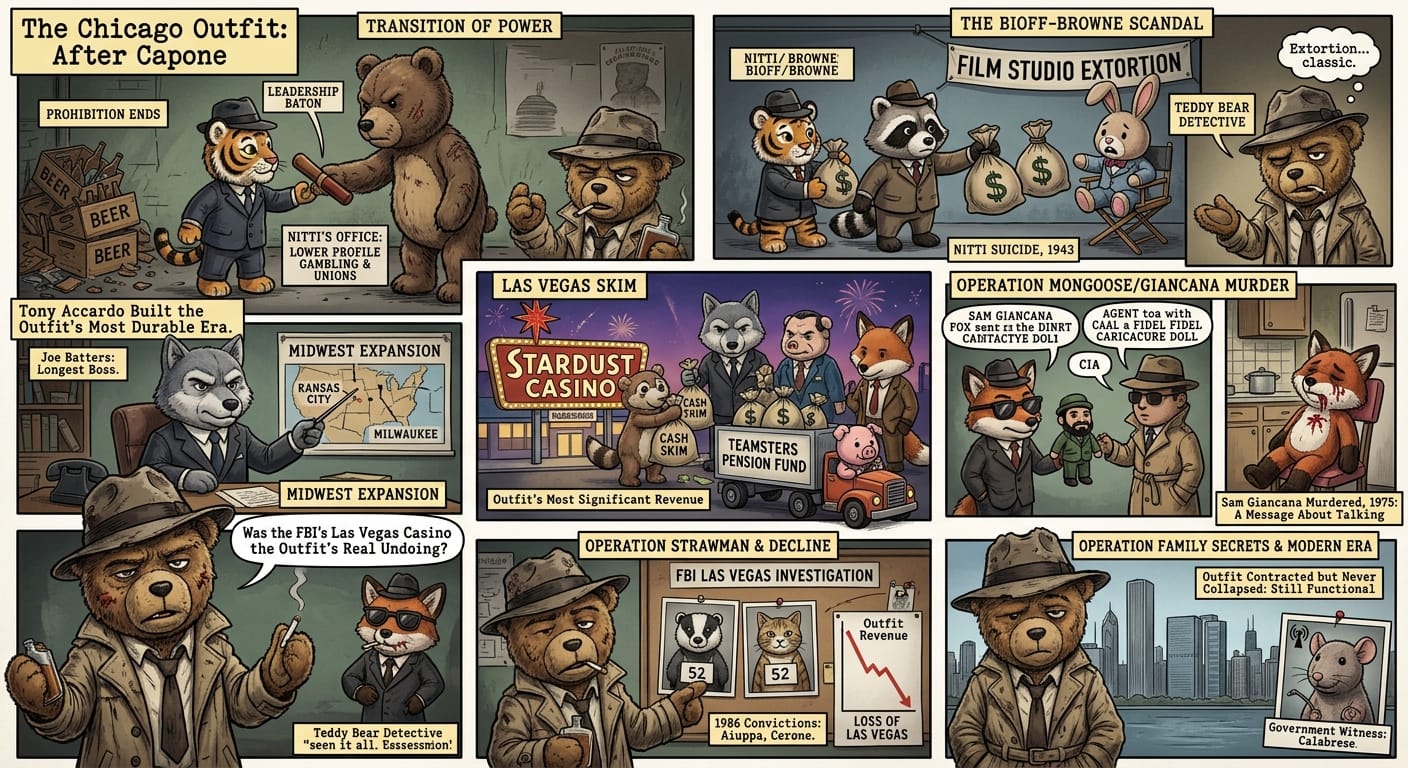
- The Chicago Outfit: After Capone — Six decades of continuous operation, from Capone’s imprisonment through the Las Vegas skim prosecutions
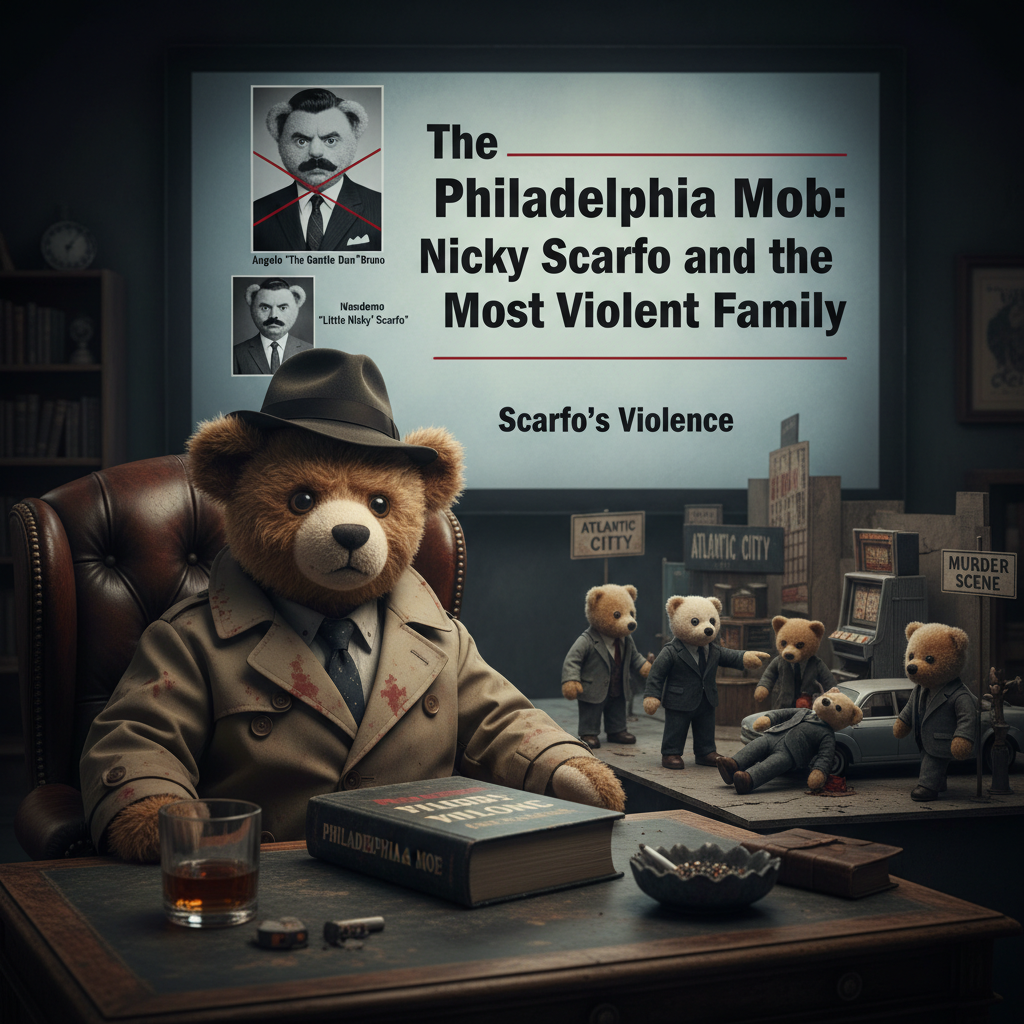
- The Philadelphia Mob: Nicky Scarfo and the Most Violent Family — How excessive violence generated the cooperating witnesses that dismantled the family
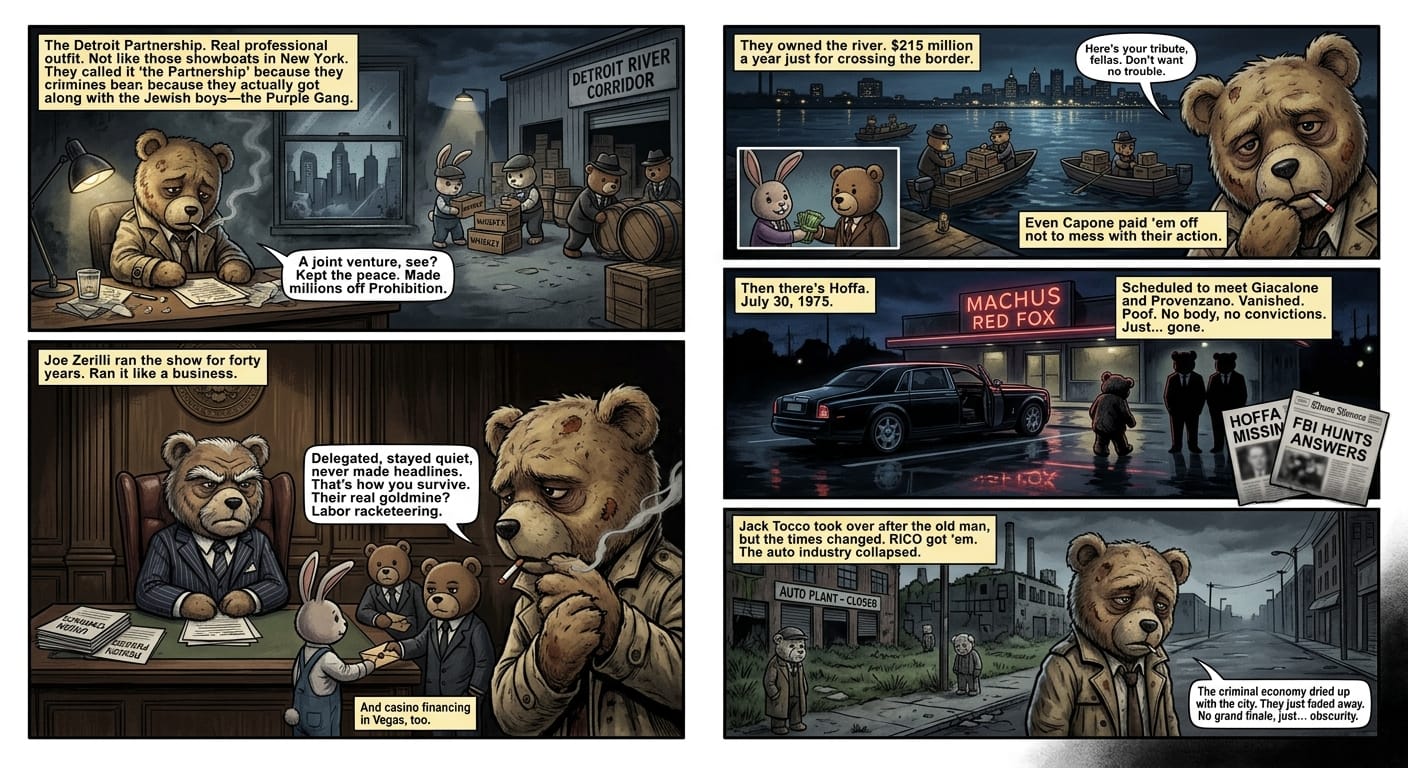
- The Detroit Partnership: Motor City’s Mafia — The joint Italian-Jewish criminal enterprise that ran Detroit’s criminal economy for fifty years
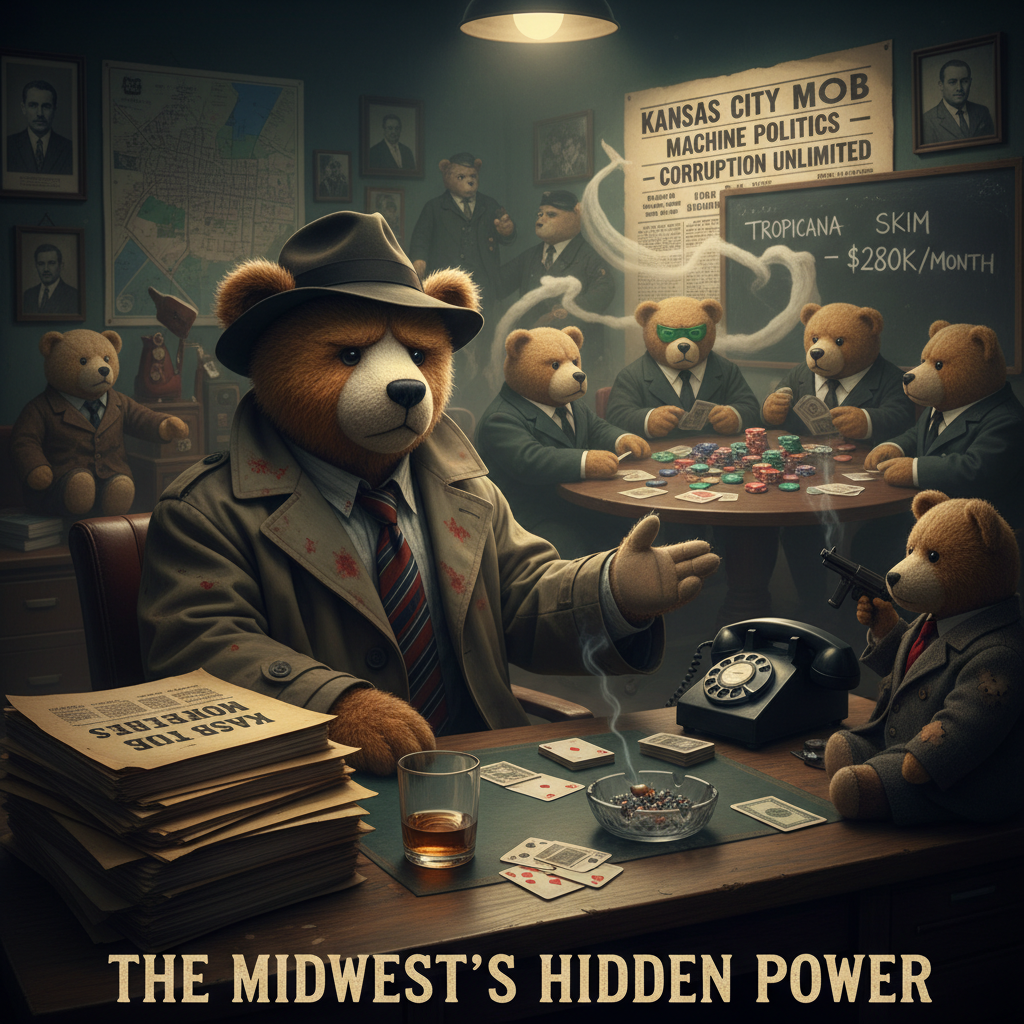
- The Kansas City Mob: The Midwest’s Hidden Power — The organization that managed the Tropicana skim and ended the mob’s Las Vegas era
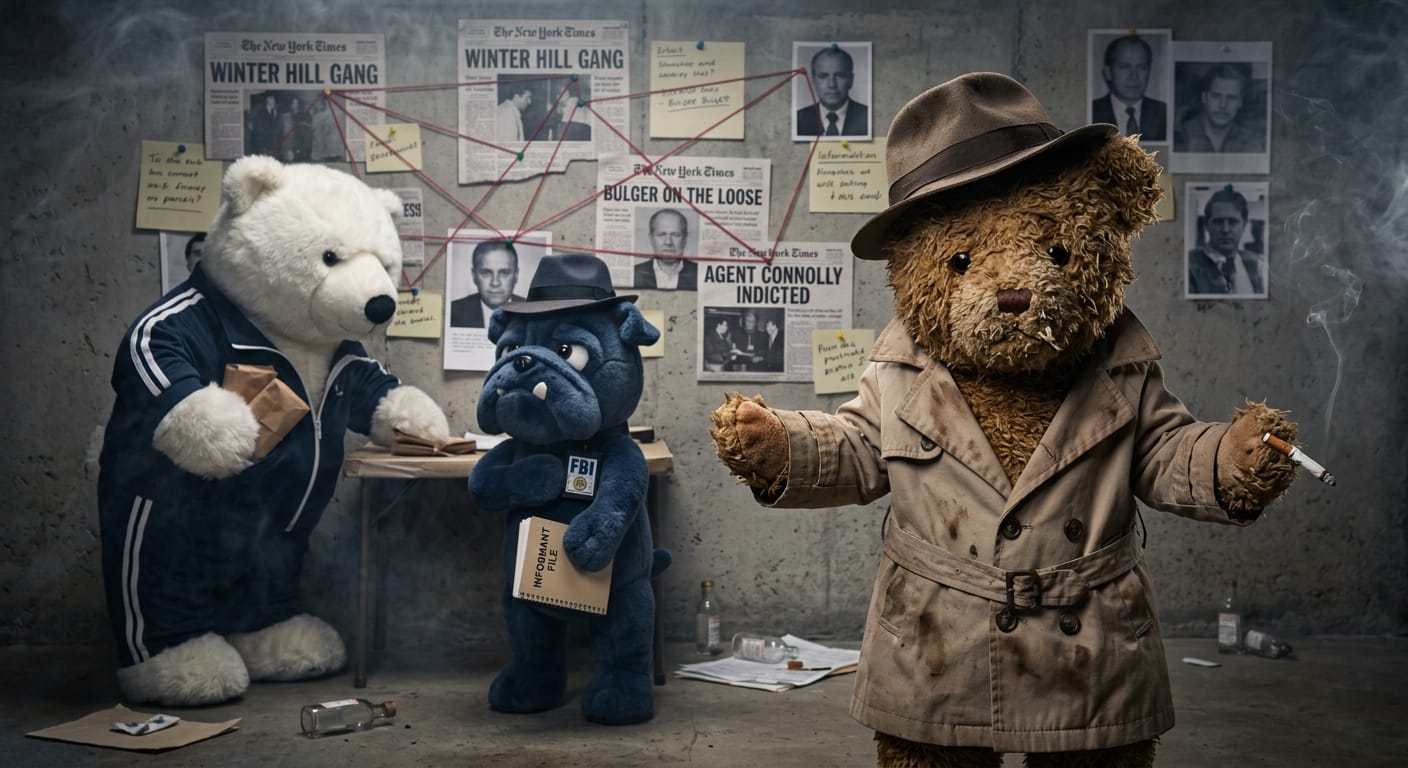
- Whitey Bulger: The Gangster Who Was an FBI Informant — The FBI corruption case that began as law enforcement strategy and ended with $100 million in wrongful death settlements
Every Regional Organization Followed the Same Template — Then Diverged
Five articles in this series cover five distinct regional organizations. The patterns they share are more informative than their individual peculiarities.
Every regional organization built its foundation during Prohibition on the same model: control a specific territory, generate bootlegging revenue, corrupt local government sufficiently to operate with impunity, and survive the competition. Every one of them outlasted Prohibition by decades, which means the specific revenue stream of bootlegging was less important to their longevity than the organizational infrastructure and political relationships that bootlegging had funded.
Every regional organization maintained a relationship with the New York Commission — sometimes as a subordinate, sometimes as an equal, always within the Commission’s nominally governing framework. The Chicago Outfit sat on the Commission as a founding member. The Philadelphia family’s territory abutted New York’s and required constant coordination. The Detroit, Kansas City, and Boston organizations all paid tribute to the Commission’s authority in practice, if not always in letter.
And every regional organization was eventually prosecuted under RICO, with varying degrees of organizational damage. The Chicago Outfit survived the Strawman Las Vegas prosecutions and continued operating, diminished, through the 2000s. The Philadelphia family was devastated by the prosecutions of Scarfo’s era. The Kansas City family lost its functional purpose when Las Vegas was cleaned up. Detroit contracted to a local criminal organization. Boston’s Winter Hill Gang was dismantled by the FBI corruption case that had originally protected it.
The Chicago Outfit’s National Reach Was the Regional Exception
The Chicago Outfit’s distinction from other regional organizations was its national reach and the sophistication of its diversified revenue model. Under Tony Accardo’s leadership from 1943 to the mid-1970s, the Outfit built revenue streams that included Las Vegas casino financing, Teamsters pension fund corruption, and labor racketeering across multiple industries — a portfolio that insulated it from the loss of any single revenue stream.
The Las Vegas connection, shared with Kansas City, Detroit, and Cleveland, was the most significant. The Teamsters Central States Pension Fund, controlled through corrupt union leadership including Jimmy Hoffa, provided mob-aligned capital for casino construction that gave organized crime a financial stake in the casino business beyond what the New York families could access directly. When that stake was eliminated through the Strawman prosecutions and Nevada gaming regulatory reform, the regional mobs lost their most significant source of non-local revenue simultaneously.
Why Scarfo’s Philadelphia Family Collapsed Faster Than Any Other
Nicky Scarfo’s Philadelphia family is the clearest demonstration of what excessive violence costs a criminal organization. The family killed approximately thirty people during Scarfo’s leadership, many of them for reasons that served his personal sense of authority rather than any organizational purpose. Each killing generated law enforcement attention, and each killing that was subsequently witnessed by a surviving associate created another potential cooperating witness. The prosecutions that dismantled the family were built largely on the testimony of people who feared they would be next.
The contrast with the Philadelphia family under Angelo Bruno — who ran the same organization for twenty-one years with minimal violence and substantial revenue — demonstrates that personal leadership style matters enormously in criminal organizations precisely because there’s no institutional mechanism to restrain a boss who exercises authority badly.
The Bulger Case Was About the FBI, Not Just the Mob
Whitey Bulger’s Winter Hill Gang is the regional organization most different from the others in this series because its central story is not primarily about organized crime — it’s about law enforcement corruption. The sixteen-year FBI informant relationship that allowed Bulger to operate while his handlers protected him from prosecution is the story, and it’s a different kind of story from the others. The Colombo family had an FBI informant inside it. Bulger was an FBI informant who used the relationship to have competing informants murdered. The direction of corruption ran the other way. The Justice Department’s $100 million settlement with the families of Bulger’s victims acknowledged institutional failure that no prosecution of anyone above Connolly was pursued to address.
Why Regional Organized Crime Ended When It Did
The regional mobs’ decline tracks the national organized crime timeline: RICO prosecutions in the 1980s, Las Vegas reform, the loss of labor racketeering as regulatory oversight of union pension funds tightened. The specific circumstances of each organization’s decline were different. The underlying cause was common: the conditions that had made large-scale territorial criminal organizations viable for most of the twentieth century changed faster than the organizations could adapt.
What remained of the regional organizations by the 2000s and 2010s were smaller, older, less profitable versions of their former selves — still recognizable as the same institutions, still generating revenue from gambling and loan sharking and construction rackets in their home cities. The regional mobs never disappeared. They just stopped being the power they were.
─────────
Sources:
- Roemer, William F., Jr. Roemer: Man Against the Mob. Donald I. Fine, 1989.
- Raab, Selwyn. Five Families: The Rise, Decline, and Resurgence of America’s Most Powerful Mafia Empires. St. Martin’s Press, 2005.
- Pileggi, Nicholas. Casino: Love and Honor in Las Vegas. Simon & Schuster, 1995.
The Series