Organized Crime in American History
From Prohibition bootleggers to Mexican cartels generating $39 billion annually — 24 articles across four series covering how organized crime became a permanent feature of American life from 1920 to the present.

Organized Crime in American History
Organized crime in America is not a single story with a beginning and an end. It’s a set of overlapping stories about what happens when criminal activity reaches sufficient scale to require management, when profit margins are large enough to justify institutional investment, and when the government that’s supposed to prevent it is either unable or unwilling to do so consistently. The twenty-four articles in this section — covering four series from Prohibition-era bootleggers to Mexican cartels — document that pattern across a century. The specific organizations changed. The underlying logic did not.
In This Series
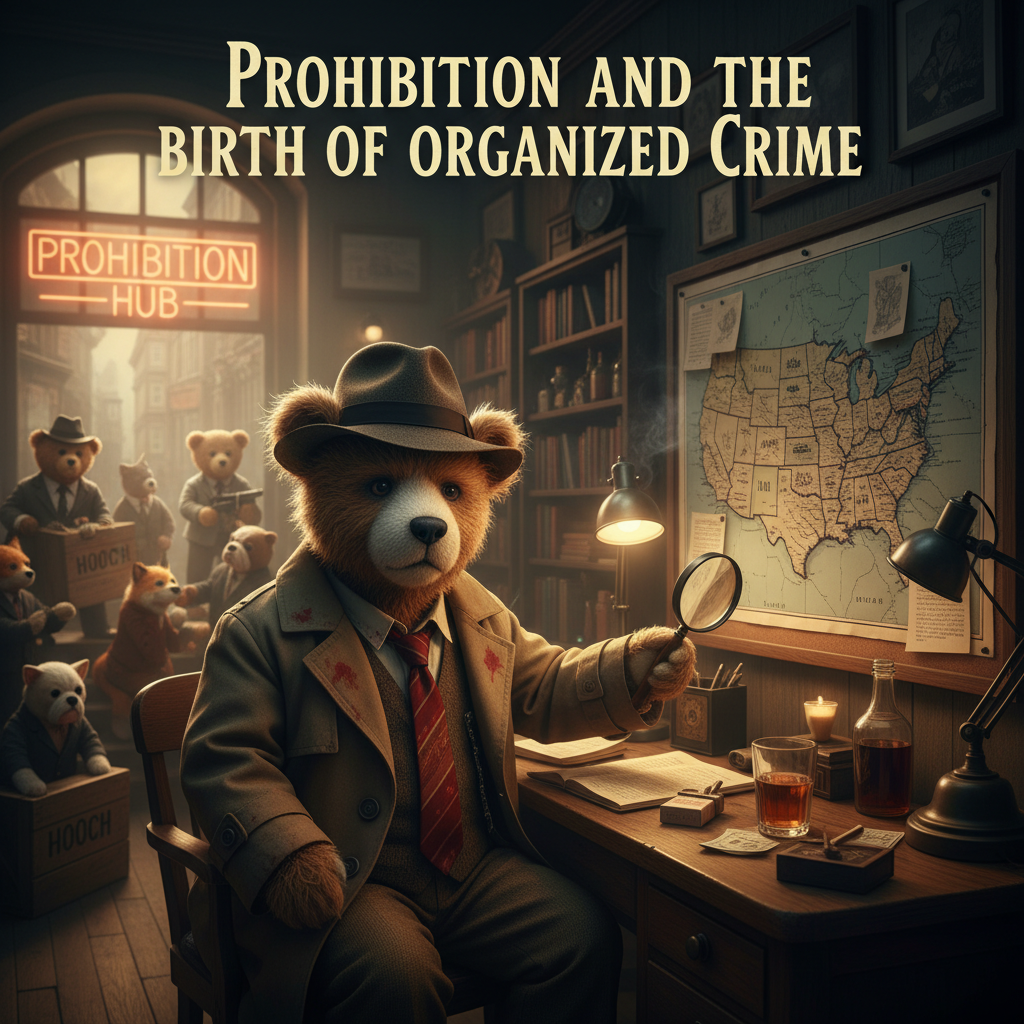
- Prohibition and the Birth of Organized Crime — Al Capone, the St. Valentine’s Day Massacre, bootlegging, Dutch Schultz, Lucky Luciano
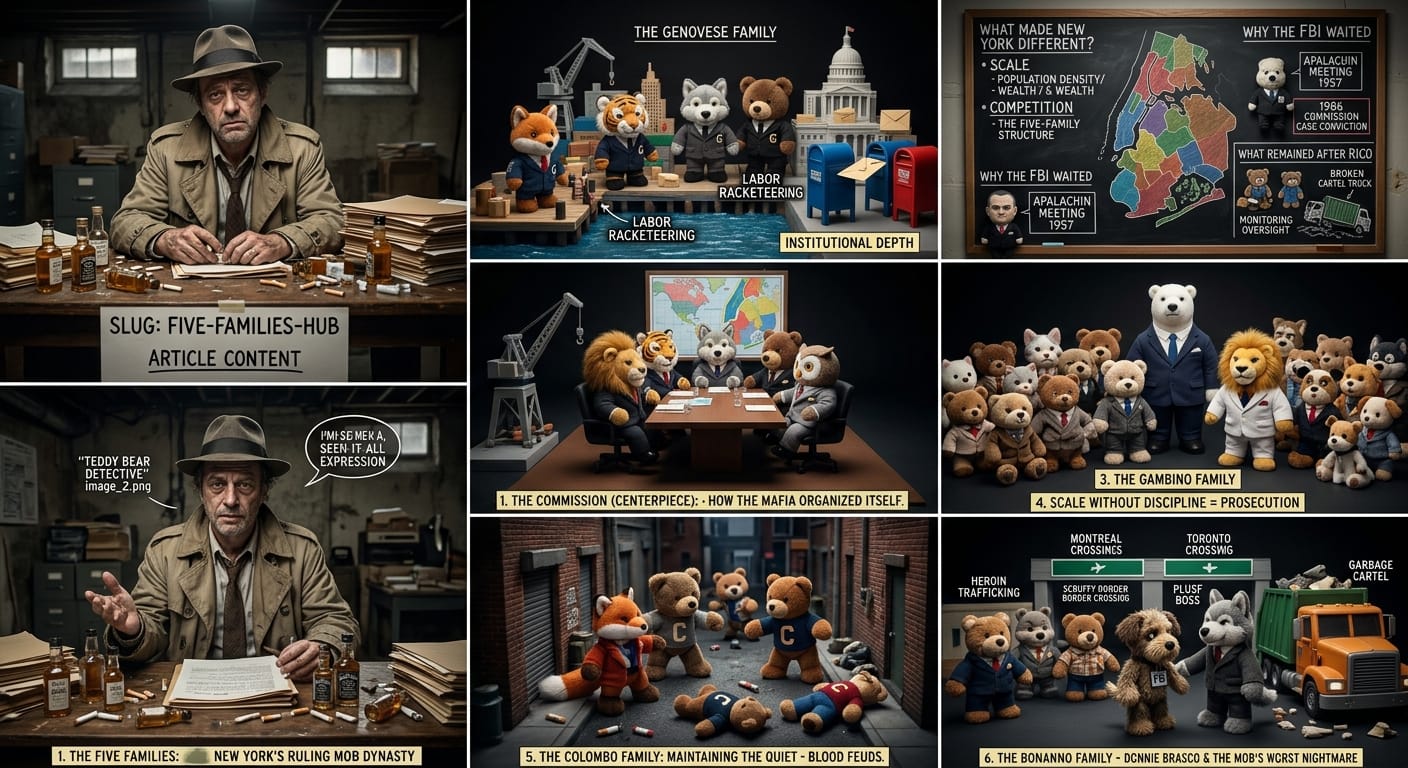
- The Five Families: New York’s Ruling Mob Dynasty — Genovese, Gambino, Lucchese, Colombo, Bonanno, the Commission
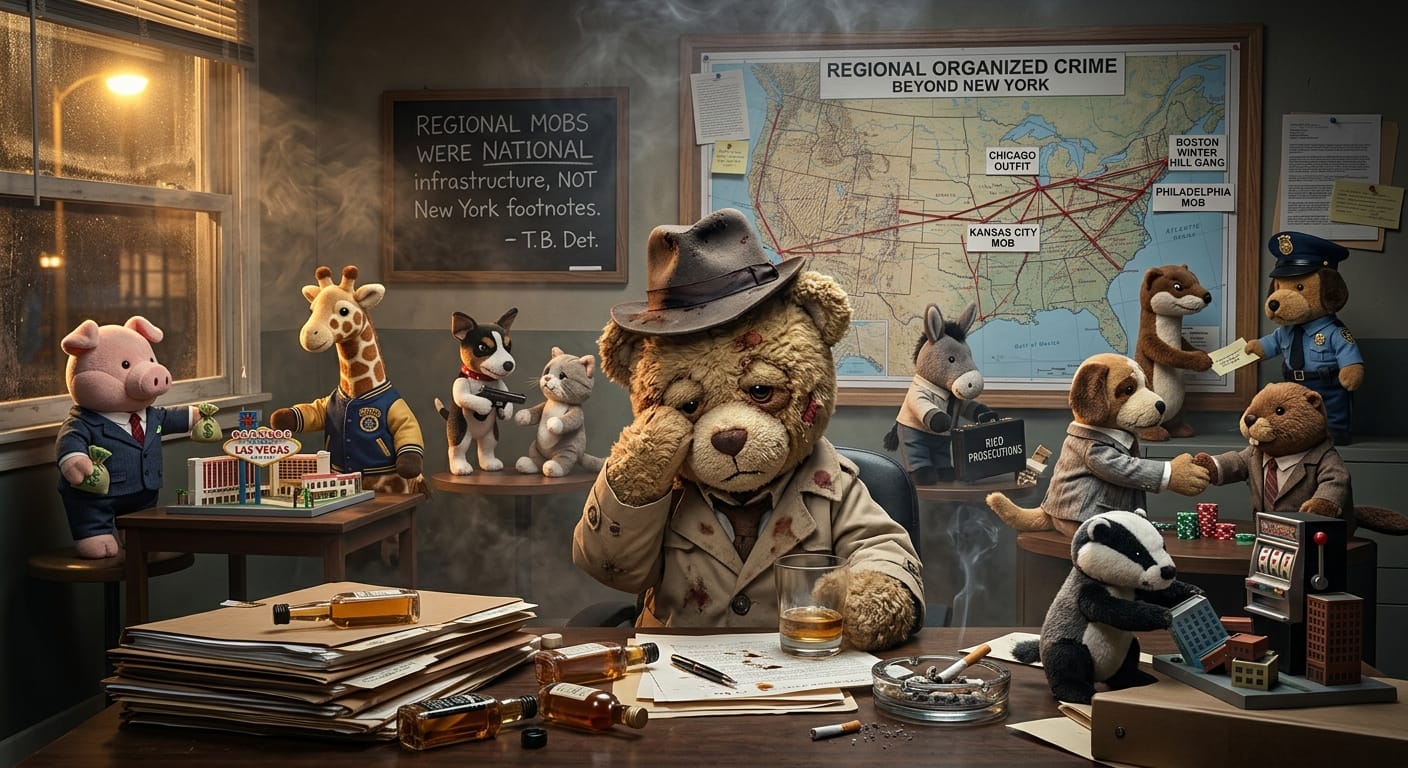
- Regional Mobs: Organized Crime Beyond New York — Chicago, Philadelphia, Detroit, Kansas City, Whitey Bulger
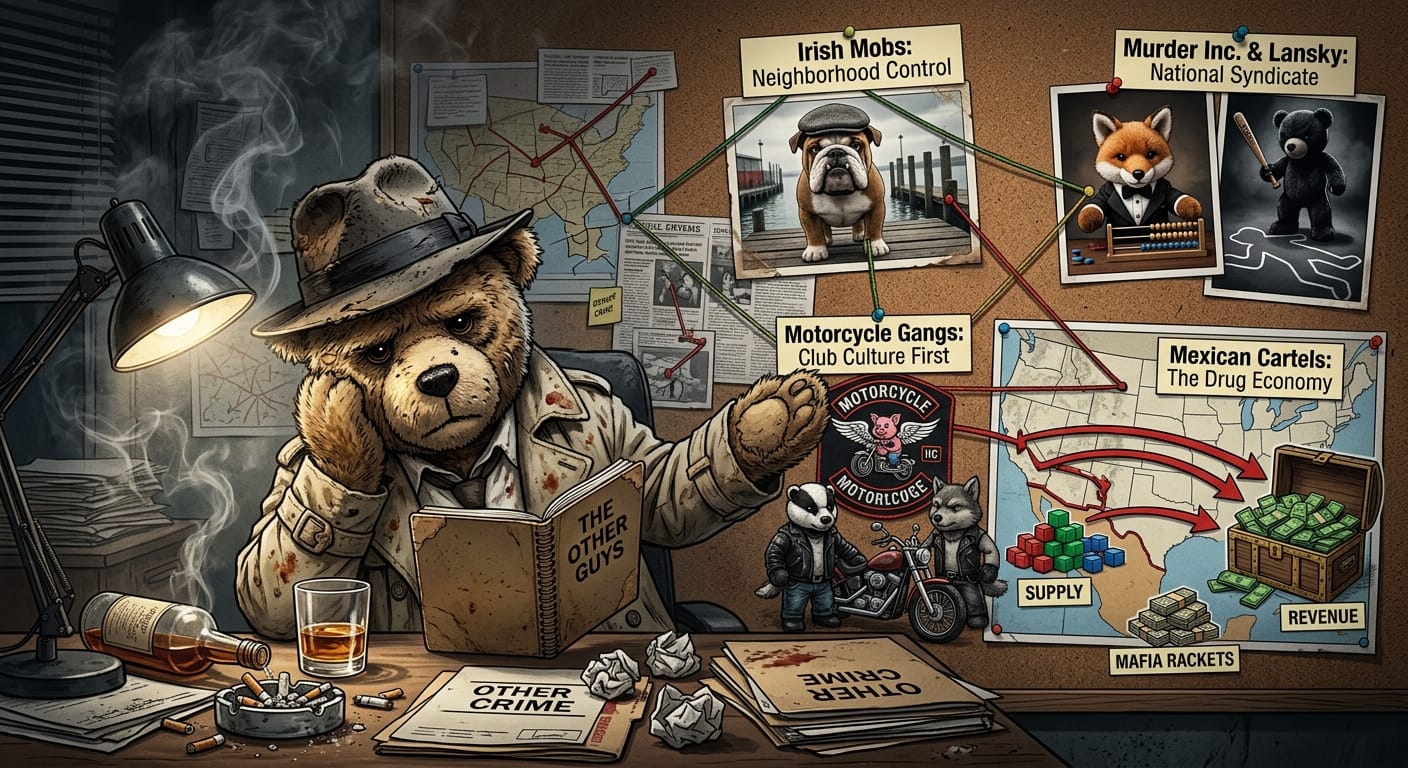
- Beyond the Mafia: Other Organized Crime in America — Irish mobs, Murder Inc., Hells Angels, Mexican cartels
Prohibition Built the Institution That Outlasted Prohibition
Every criminal organization in this section became powerful under a specific set of enabling conditions. The Italian-American families of the 1930s and 1940s were built on Prohibition-era capital, exploiting a thirteen-year legal experiment that generated hundreds of millions of dollars in criminal revenue and no legal competition. The bootlegging era forced the consolidation and professionalization of criminal organizations that had previously been local and relatively small. When Prohibition ended in December 1933, the organizations it had built were sophisticated enough to pivot into gambling, labor racketeering, and extortion — revenue streams that sustained them for another half-century.^1^
The motorcycle clubs of the 1960s and 1970s became criminal empires through the drug economy, specifically through methamphetamine manufacturing and distribution that required technical knowledge rather than agricultural supply chains, making it accessible to organizations that couldn’t compete in the heroin or cocaine import markets. The Mexican cartels became the dominant force in American drug supply by inheriting the Colombian cartels’ infrastructure, converting from transit contractors to wholesale distributors, and eventually to fentanyl manufacturers whose product was more potent and more profitable than anything that had come before.
In each case, the enabling condition was demand that law couldn’t eliminate. Americans wanted to drink during Prohibition. Americans wanted to gamble during the decades when casino gambling was legal in only two states. Americans wanted drugs regardless of scheduling status. The criminal organizations that emerged to serve those demands were not causes of the underlying appetites — they were responses to them.
How Each Series Connects to the Others
The Prohibition series covers the period when the modern criminal organization was invented as an institutional form. Al Capone demonstrated that a criminal enterprise could be run like a corporation — with diversified revenue, professional management, and systematic corruption of the regulatory environment. Lucky Luciano took the corporate model further, creating the Commission as a governance structure for the entire industry. The specific stories — Capone’s empire, the St. Valentine’s Day Massacre, the bootlegging supply chain, Dutch Schultz’s Harlem numbers operation — are windows into a single transformation: the conversion of local criminal operations into a national industry.^1^
The Five Families series covers the mature form of that industry, operating across the decades from the 1930s through the RICO prosecutions of the 1980s. The five New York families — Genovese, Gambino, Lucchese, Colombo, Bonanno — were the most powerful, most systematically organized, and most thoroughly documented criminal organizations in American history. They were also the most thoroughly prosecuted. The Commission Case of 1986 — which convicted the bosses of four of the five families on a single conspiracy indictment — demonstrated that the organizational coherence that made the families powerful also made them prosecutable as single enterprises.
The Regional Mobs series covers the organizations that operated alongside the New York families across the country. Chicago, Philadelphia, Detroit, Kansas City, Boston: each city’s criminal organization had its own character, its own leadership, and its own historical arc. The Chicago Outfit was the most powerful, the most diversified, and the most durable — operating continuously for over sixty years under a succession of bosses who understood that obscurity was more valuable than fame. The Philadelphia family under Nicky Scarfo demonstrated the opposite lesson: that excessive violence generates the cooperating witnesses that prosecutions are built on. The Kansas City mob’s Las Vegas connection illustrates how the regional organizations functioned as nodes in a national criminal network rather than isolated local enterprises.
The Beyond the Mafia series covers the organizations that operated in different structures and different historical moments: Irish-American mobs with neighborhood-based territorial control, the Jewish gangsters who helped build the national syndicate from the inside, motorcycle clubs that converted from social organizations to criminal enterprises through the drug economy, and Mexican cartels that represent a fundamentally different scale and structure from everything that preceded them.
The Government’s Choices Shaped Organized Crime as Much as the Criminals’ Did
A recurring theme across all four series is the government’s relationship to organized crime — not simply as the force that eventually prosecuted it, but as the institution whose choices shaped what organized crime became. The Volstead Act created the market that built the mob. The government’s failure to fund Prohibition enforcement adequately, and the systematic corruption of law enforcement from local police through the federal Prohibition Bureau, provided the operating environment that allowed bootlegging empires to scale.^1^ J. Edgar Hoover’s refusal to acknowledge the existence of the national organized crime syndicate for thirty-seven years gave the Commission time to entrench itself. The CIA’s recruitment of organized crime figures in anti-Castro operations in the early 1960s — Operation Mongoose, which engaged Meyer Lansky-connected figures and Chicago Outfit leadership — created precisely the entanglements that corrupted law enforcement’s relationship with criminal organizations in ways that weren’t fully documented for decades.
The FBI’s sixteen-year protection of Whitey Bulger — providing information that allowed him to murder cooperating witnesses while maintaining his status as a registered informant — is the starkest individual example of law enforcement corruption enabling criminal activity. It is not an isolated case. The Genovese family’s penetration of NYPD in the 1940s and 1950s, the Chicago police corruption that Capone maintained through $75 million in annual bribes, the compromised Kansas City officials who facilitated the Tropicana skim: these were not exceptional failures. They were the normal functioning of a system in which organized crime invested in law enforcement relationships as a business expense.
RICO Changed How Organized Crime Could Be Prosecuted
The Racketeer Influenced and Corrupt Organizations Act, enacted as Title IX of the Organized Crime Control Act of 1970, transformed the legal framework for organized crime prosecution. Before RICO, prosecutors had to prove individual crimes committed by individual defendants. RICO allowed them to prosecute the criminal enterprise itself, treating the organization’s pattern of criminal activity as the crime and making membership in the enterprise a basis for liability.
The theory required proving three elements: the existence of an enterprise, a pattern of racketeering activity over at least ten years, and the defendant’s participation in the enterprise through that pattern. Applied to the Commission in 1985 and 1986, it produced the most significant organized crime conviction in American history — four family bosses convicted on a single conspiracy indictment that proved the Commission was itself the criminal enterprise.^1^
The RICO prosecutions of the 1980s and 1990s did not eliminate organized crime. They dismantled the specific institutional form that organized crime had taken in the Italian-American families, by prosecuting their leadership faster than it could be replaced and by generating cooperating witnesses whose testimony mapped the organizations from the inside. The motorcycle clubs, the cartels, and the smaller ethnic organizations that continued after the Mafia’s decline operated in the space the RICO prosecutions created — in some cases growing into the vacuum.
What Organized Crime in America Looks Like Now
The Italian-American organized crime families still exist, though significantly diminished. All five New York families retain recognizable organizational structures and generate revenue from gambling, loan sharking, and construction industry rackets. The Chicago Outfit continues to function. The regional organizations that survived RICO have contracted but not disappeared.
The Mexican cartels present the most significant current organized crime challenge on American soil, with revenue, operational sophistication, and geographic reach that exceeds anything the traditional American families achieved. The drug economy that sustains them — producing an estimated 74,000 fentanyl deaths in 2023 alone — makes the bootlegging era look like a public health footnote.^1^
What connects Capone to El Chapo is not organizational continuity. It’s the same basic dynamic: a market that law can’t eliminate, an institution that grows to serve it, and a government that proves, repeatedly, that enforcement alone cannot resolve the problem that demand creates.
─────────
Sources:
- Raab, Selwyn. Five Families: The Rise, Decline, and Resurgence of America’s Most Powerful Mafia Empires. St. Martin’s Press, 2005.
- Pileggi, Nicholas. Casino: Love and Honor in Las Vegas. Simon & Schuster, 1995.
- Grillo, Ioan. El Narco: Inside Mexico’s Criminal Insurgency. Bloomsbury Press, 2011.
- Lacey, Robert. Little Man: Meyer Lansky and the Gangster Life. Little, Brown, 1991.
In This Section