Labor Wars: When Workers Fought Back and America Fought Harder
Seven events from Haymarket to Blair Mountain document one pattern: workers organized, employers called in guns, and the government backed the guns. 1886 to 1921.
Labor Wars: When Workers Fought Back and America Fought Harder
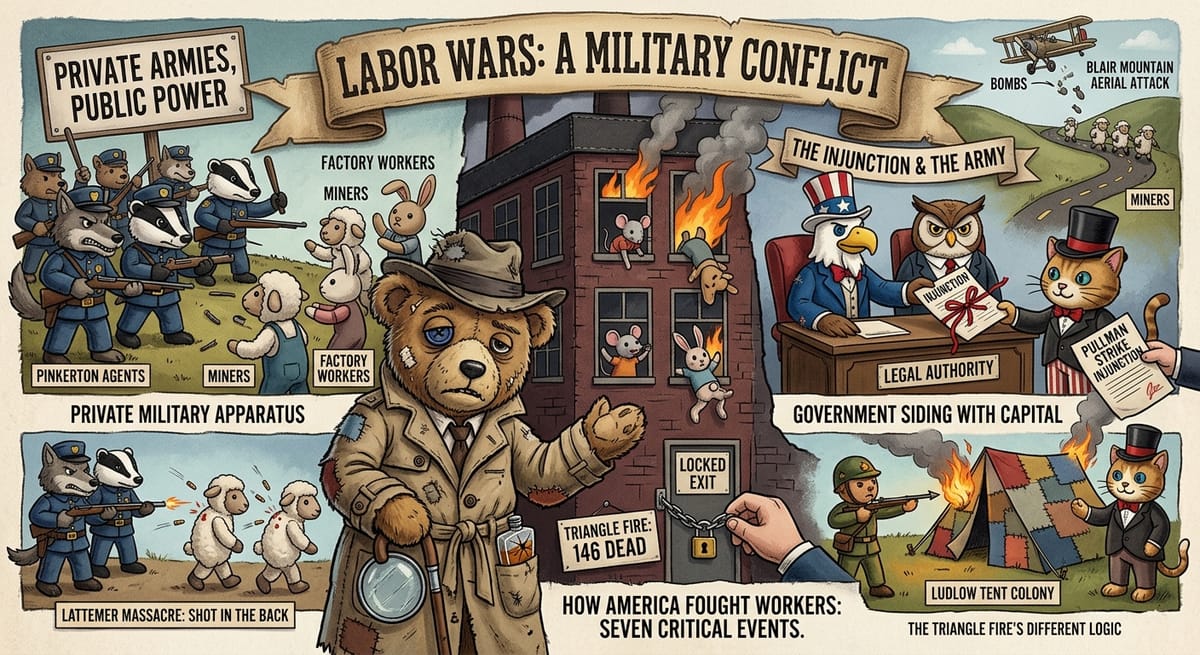
America’s labor wars were not riots — they were one side of a military conflict that the other side controlled. Between 1886 and 1921, workers in Chicago, Pennsylvania, Colorado, New York, and West Virginia organized to bargain collectively over wages, hours, and safety. Each time, employers responded with private armed forces, and governments backed those forces with troops, injunctions, and courts. Nineteen miners were shot in the back at Lattimer. Two women and eleven children suffocated at Ludlow. The U.S. Army deployed aircraft to bomb its own citizens at Blair Mountain. The pattern across these seven events is not complicated — it was policy, not exception.
In This Series
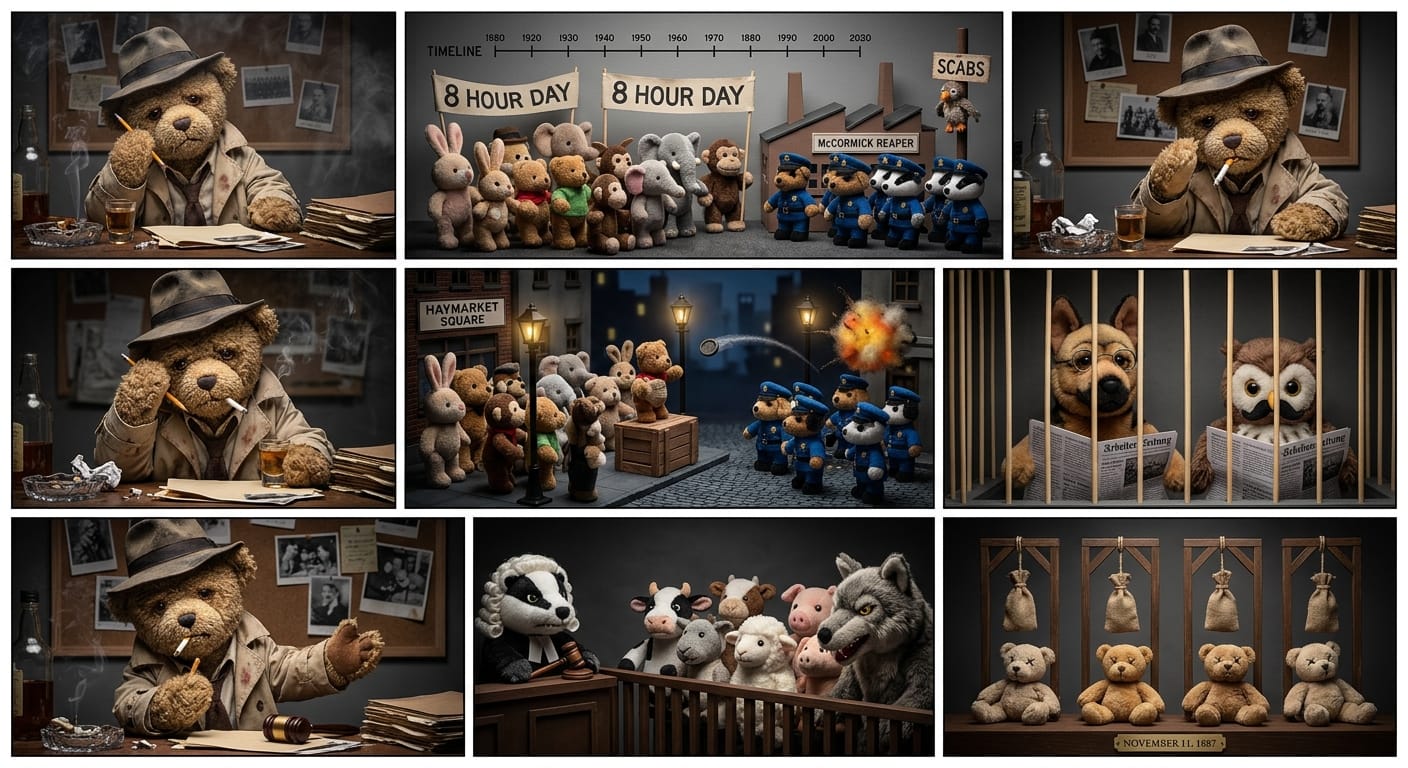
- The Haymarket Affair: The Bomb That Changed American Labor — Chicago, 1886. Eight anarchist leaders convicted for a bombing nobody could prove they committed. Four were hanged.
- The Homestead Strike: Carnegie, Frick, and Blood at the Mill — Pennsylvania, 1892. Carnegie Steel sent 300 Pinkerton agents by barge to retake a mill from locked-out workers. Thirteen men died.
- The Pullman Strike: When One Company Town Broke — Illinois, 1894. A sympathy boycott shut down rail traffic across 27 states. The federal government sent troops over the governor’s objection.
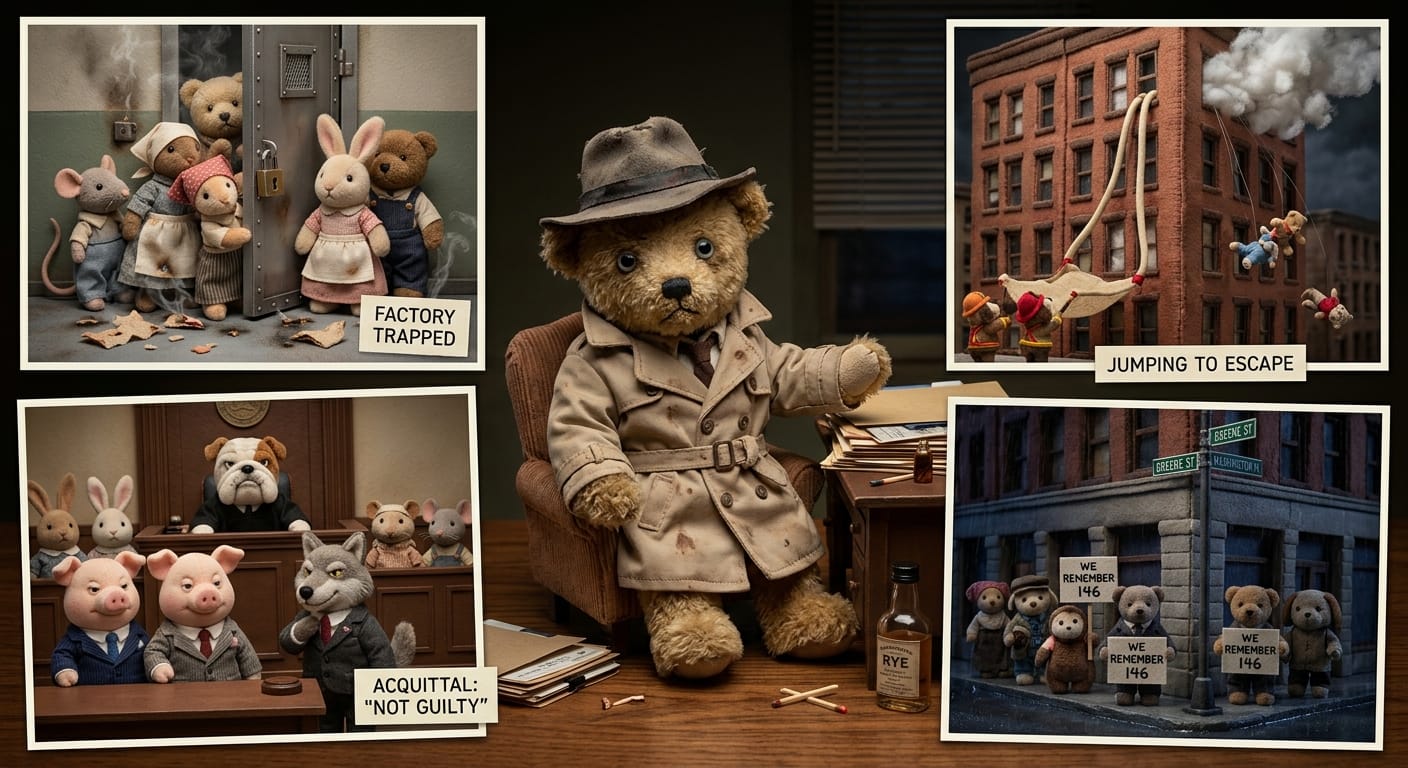
- The Triangle Shirtwaist Fire: 146 Dead Because the Doors Were Locked — New York, 1911. Factory owners locked exit doors to prevent theft. 146 workers died in eighteen minutes.
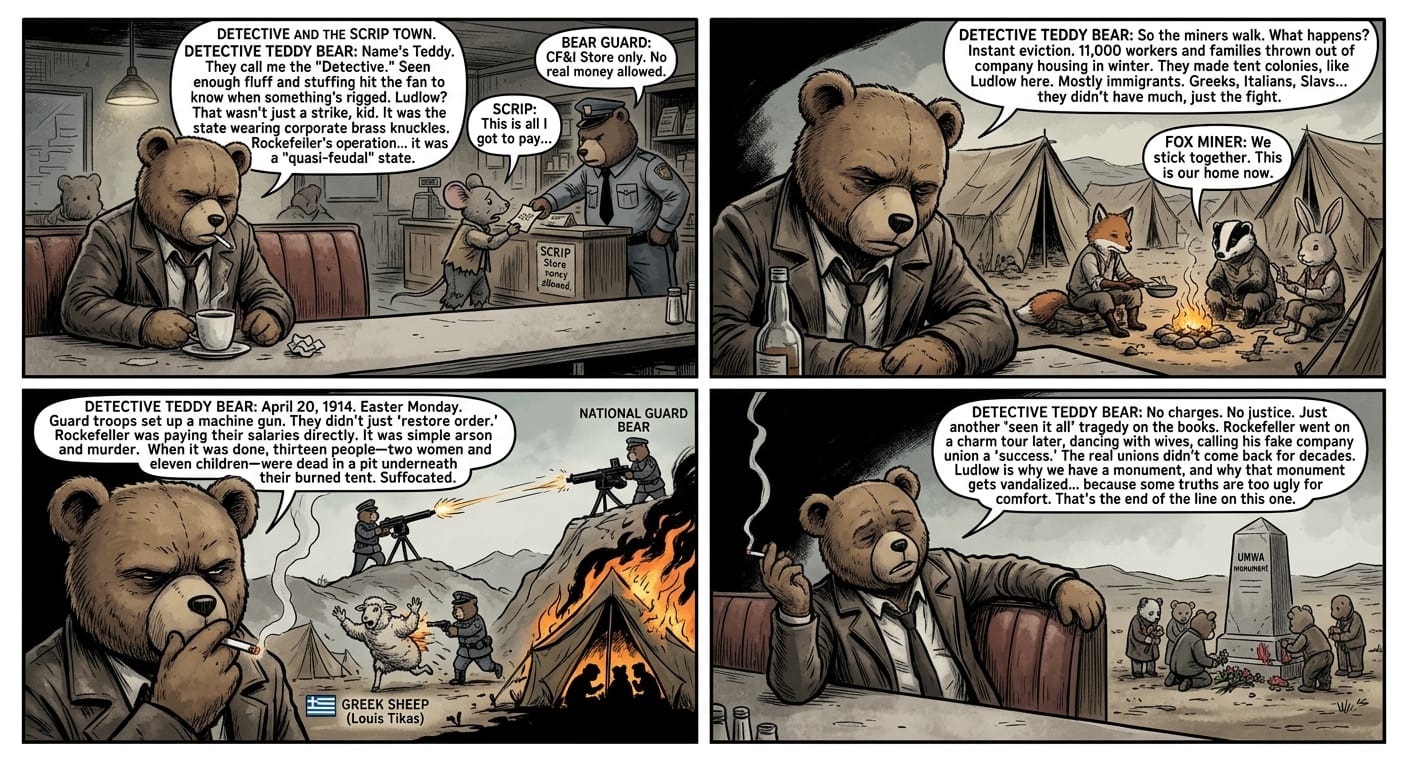
- The Ludlow Massacre: When the National Guard Attacked a Tent Colony — Colorado, 1914. Rockefeller-funded National Guard troops burned a mining camp on Easter Monday. Nineteen killed, including eleven children.
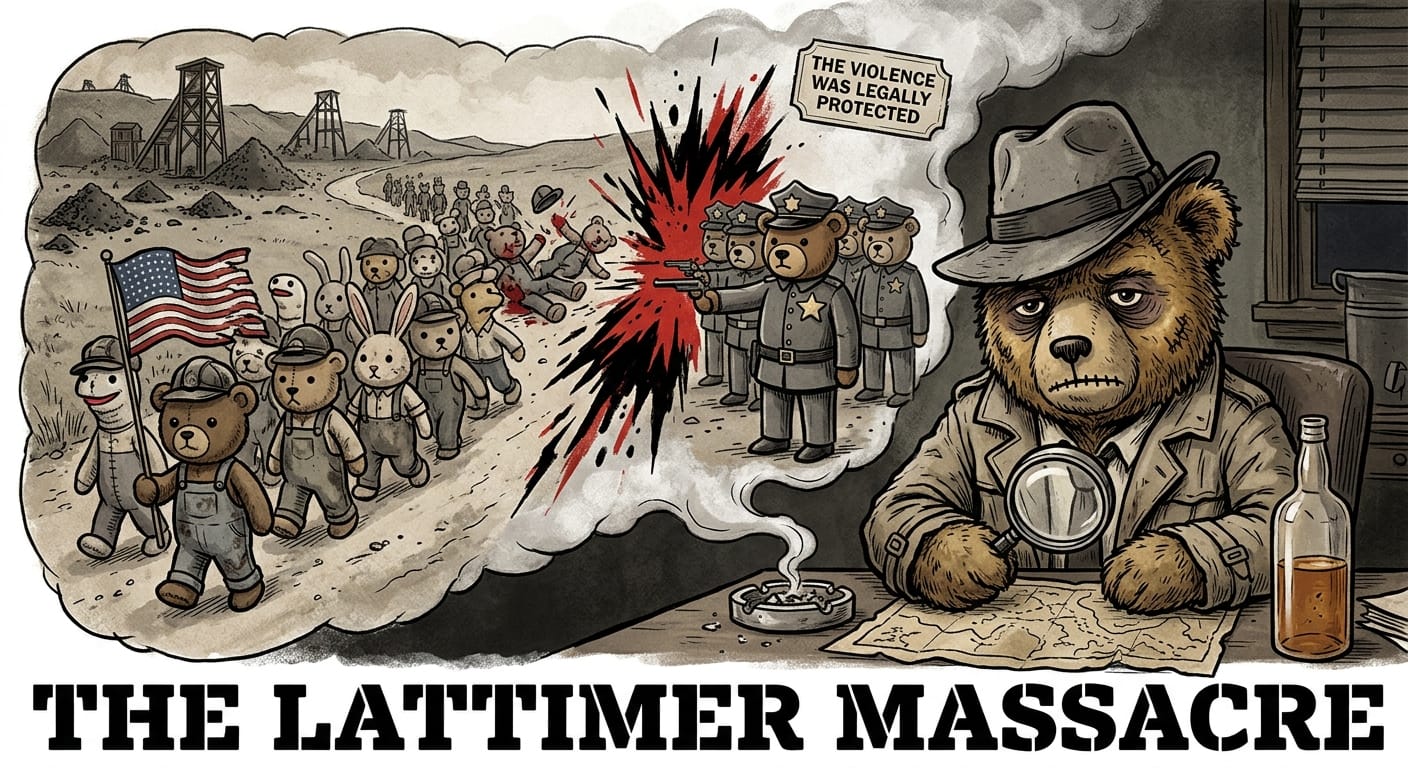
- The Lattimer Massacre: Immigrant Miners Shot Down by Deputies — Pennsylvania, 1897. Deputies fired on unarmed marchers walking a public road. Nineteen dead, shot mostly in the back. All deputies acquitted.
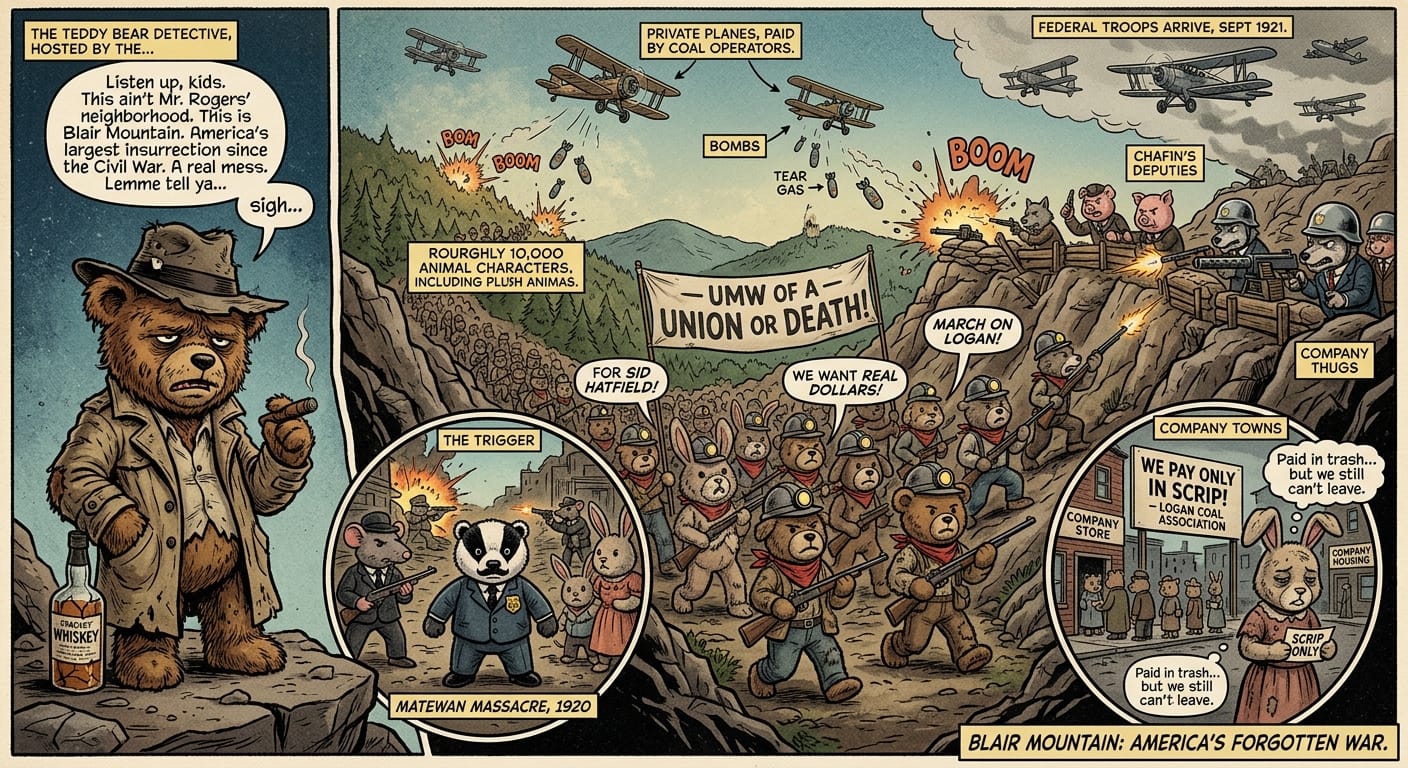
- The Battle of Blair Mountain: America’s Largest Armed Uprising Since the Civil War — West Virginia, 1921. 10,000 armed miners marched against a company-controlled county. The U.S. Army stopped them with aircraft.
The Private Military Apparatus Behind Every Strike
The Pinkerton National Detective Agency and its competitors — the Baldwin-Felts Detective Agency, the Coal and Iron Police, the Railroad Police — operated as a private military apparatus available to industrial employers. These agencies provided strikebreakers, labor spies, and armed guards who operated with de facto law enforcement authority and near-total immunity.^2^
At Lattimer in 1897, a Luzerne County sheriff deputized roughly 150 men and commanded them to fire on a column of unarmed immigrant miners walking on a public road. Nineteen men died, shot mostly in the back. All deputies were acquitted. At Matewan in 1920, Baldwin-Felts agents evicted miners’ families from company housing under the authority of the coal operators who employed them, then murdered the police chief who objected. Those agents, too, faced no meaningful legal consequence.
The Anti-Pinkerton Act of 1893, passed after Homestead, prohibited the federal government from hiring Pinkerton agents but left private employers entirely free to do so. The apparatus of private industrial violence was structural, not incidental.
Why Did Government Consistently Side With Capital?
What distinguished American labor suppression from simple employer violence was the consistent involvement of government — local, state, and federal. The federal injunction that ended the Pullman Strike in 1894 was drafted by a railroad attorney who was simultaneously serving as U.S. Attorney General. The National Guard units that fought miners at Ludlow were funded, by the end, by Rockefeller money rather than Colorado tax dollars. President Harding deployed the Army to Blair Mountain at the operators’ request, threatening to bomb American workers from the air.^3^
This pattern was not coincidental. State governments in the Gilded Age and Progressive Era were, in significant part, instruments of industrial capital. Tax revenues depended on mining and manufacturing. Political careers depended on operator money. The assumption that organized labor represented a threat to public order while employer violence did not — that 10,000 miners marching toward Blair Mountain were an insurrection while the systematic murder of union organizers was law enforcement — shaped every official response to labor conflict across this period.
The Triangle Fire’s Different Logic
The Triangle Shirtwaist Fire of 1911 stands somewhat apart from the labor war narrative because the violence was not organized — it was structural. No one sent guards to kill those workers. The owners simply locked the doors, as they had always locked the doors, and 146 people died when a fire broke out.^4^
But the locked doors were not an accident. They were a choice made by employers who did not trust their workers and faced no legal consequences for making working conditions dangerous. The garment workers who died at the Triangle factory and the miners who were shot at Lattimer were both victims of the same basic configuration: capital with legal authority, workers with none.
What Ended the Labor Wars
The most significant response to the labor wars was not any individual court case or legislative reform — it was the National Labor Relations Act of 1935, which guaranteed workers the right to organize, bargain collectively, and strike without criminal penalty.^5^ The NLRA did not end labor conflict. It changed the terms of it, replacing the gun with the arbitration table in most (not all) disputes.
The violence documented in these seven cases was not an inevitable feature of industrial capitalism. It was a choice, made repeatedly, by employers who could afford private armies and by governments that protected them.
← Back to Labor and Corporate Violence
─────────
Sources:
- Krause, Paul. The Battle for Homestead, 1880–1892. University of Pittsburgh Press, 1992.
- Morn, Frank. “The Eye That Never Sleeps”: A History of the Pinkerton National Detective Agency. Indiana University Press, 1982.
- Shogan, Robert. The Battle of Blair Mountain. Westview Press, 2004.
- Von Drehle, David. Triangle: The Fire That Changed America. Atlantic Monthly Press, 2003.
- Lichtenstein, Nelson. State of the Union: A Century of American Labor. Princeton University Press, 2002.
The Series