Blood of the Civil Rights Movement
Seven articles on the violence against the civil rights movement — Emmett Till to Malcolm X. The legislation happened. Here is what it cost.
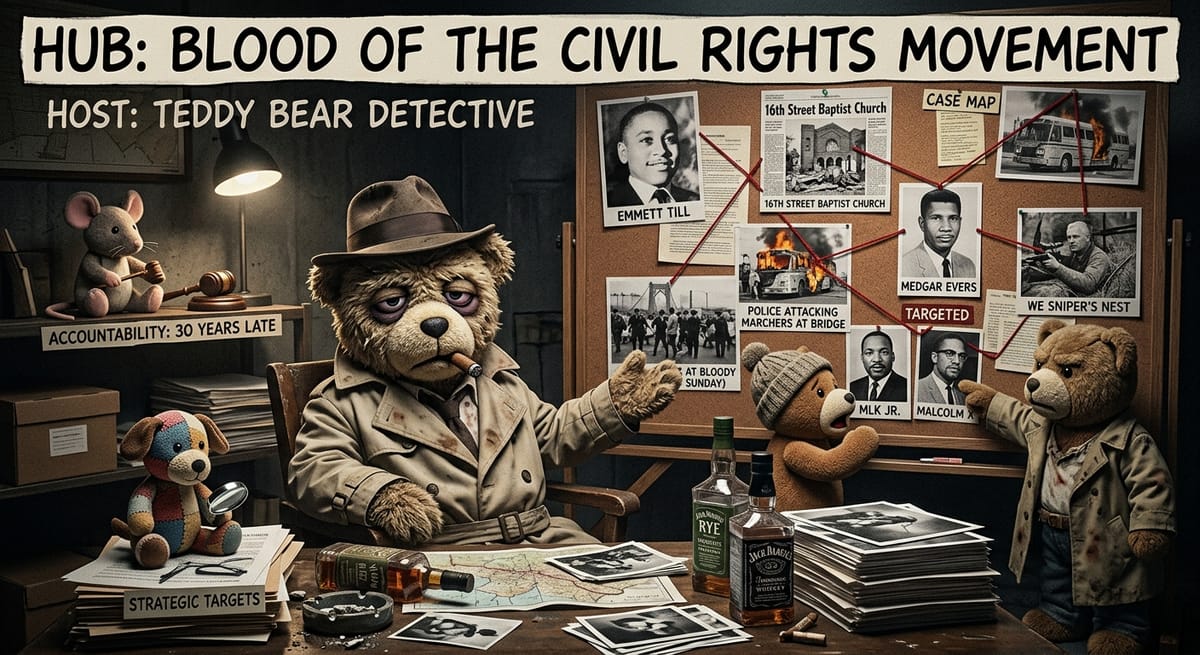
Blood of the Civil Rights Movement
The civil rights movement is taught, in most American schools, as a story of moral progress: nonviolent demonstrators, conscience-stricken moderates, landmark legislation, the arc of the moral universe bending toward justice. That story is not false. It is incomplete in a way that changes what it means. The legislation happened. The progress was real. And it was wrested from a system that murdered children in Sunday school basements, shot men in their driveways in front of their families, and burned bus passengers with the active participation of police.
This series covers what the system did to the people who challenged it. The violence here is not background — it is the subject.
In This Series
- Emmett Till: The Murder That Ignited a Movement
- The 16th Street Baptist Church Bombing: Four Girls on a Sunday Morning
- Medgar Evers: Assassinated in His Own Driveway
- Freedom Rider Attacks: When Buses Became Battlegrounds
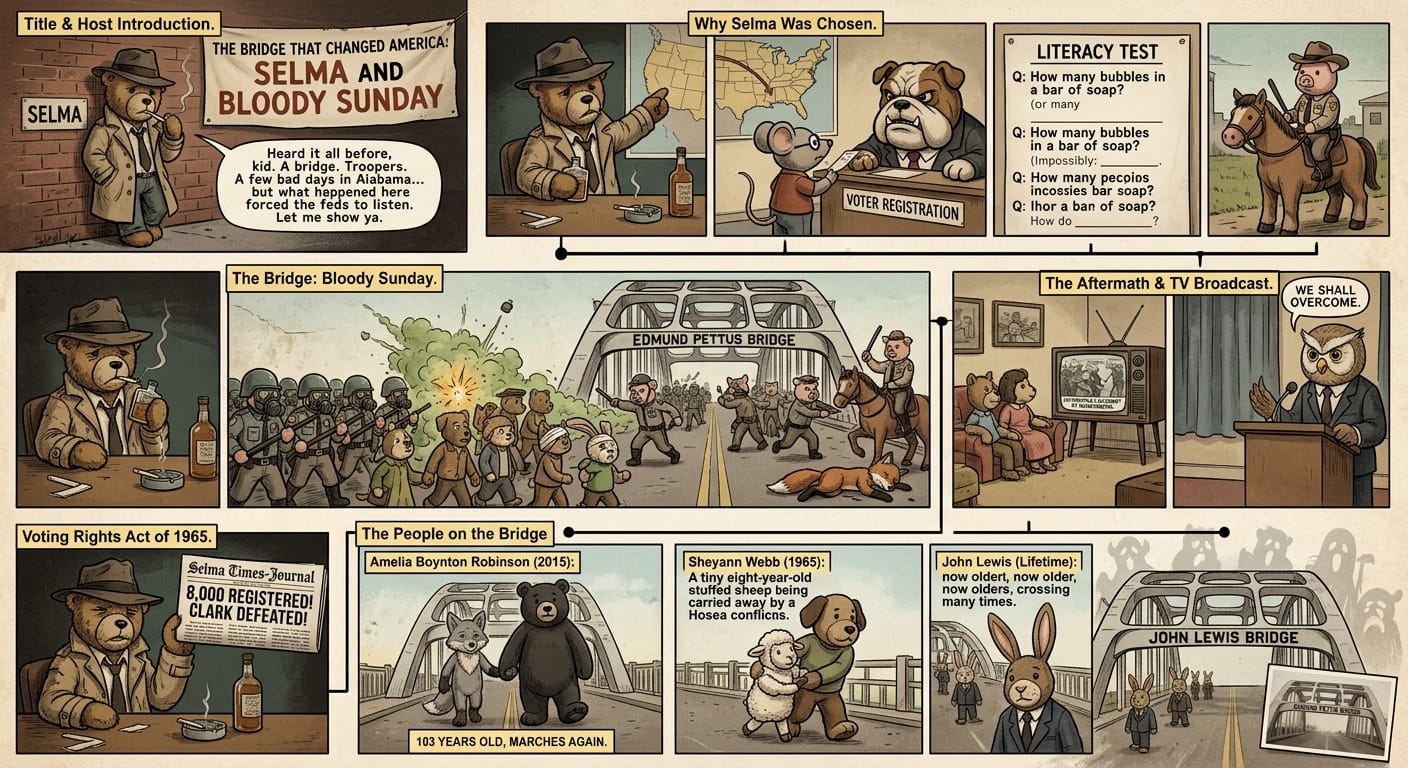
- Selma and Bloody Sunday: The Bridge That Changed America
- The Assassination of Martin Luther King Jr.
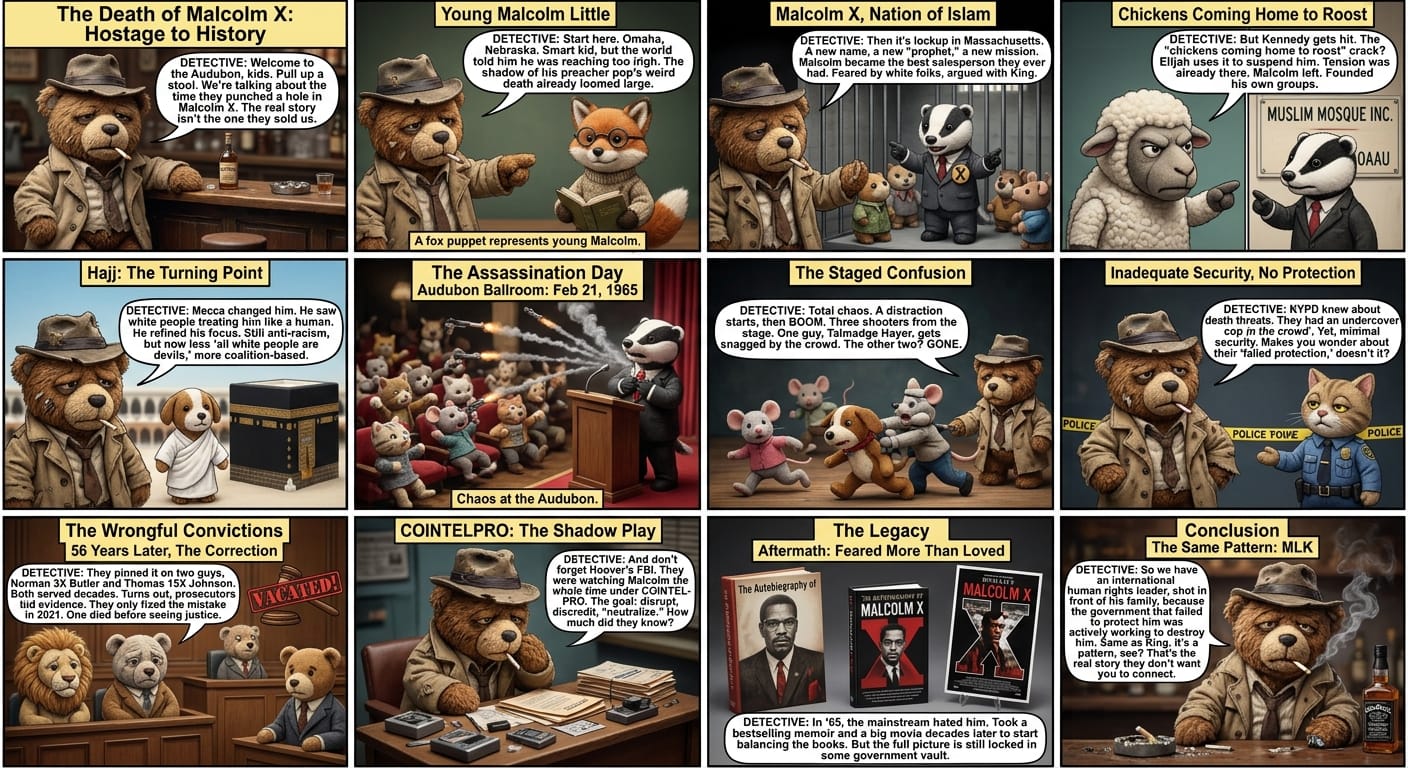
- The Assassination of Malcolm X
The Targets Were Chosen Strategically
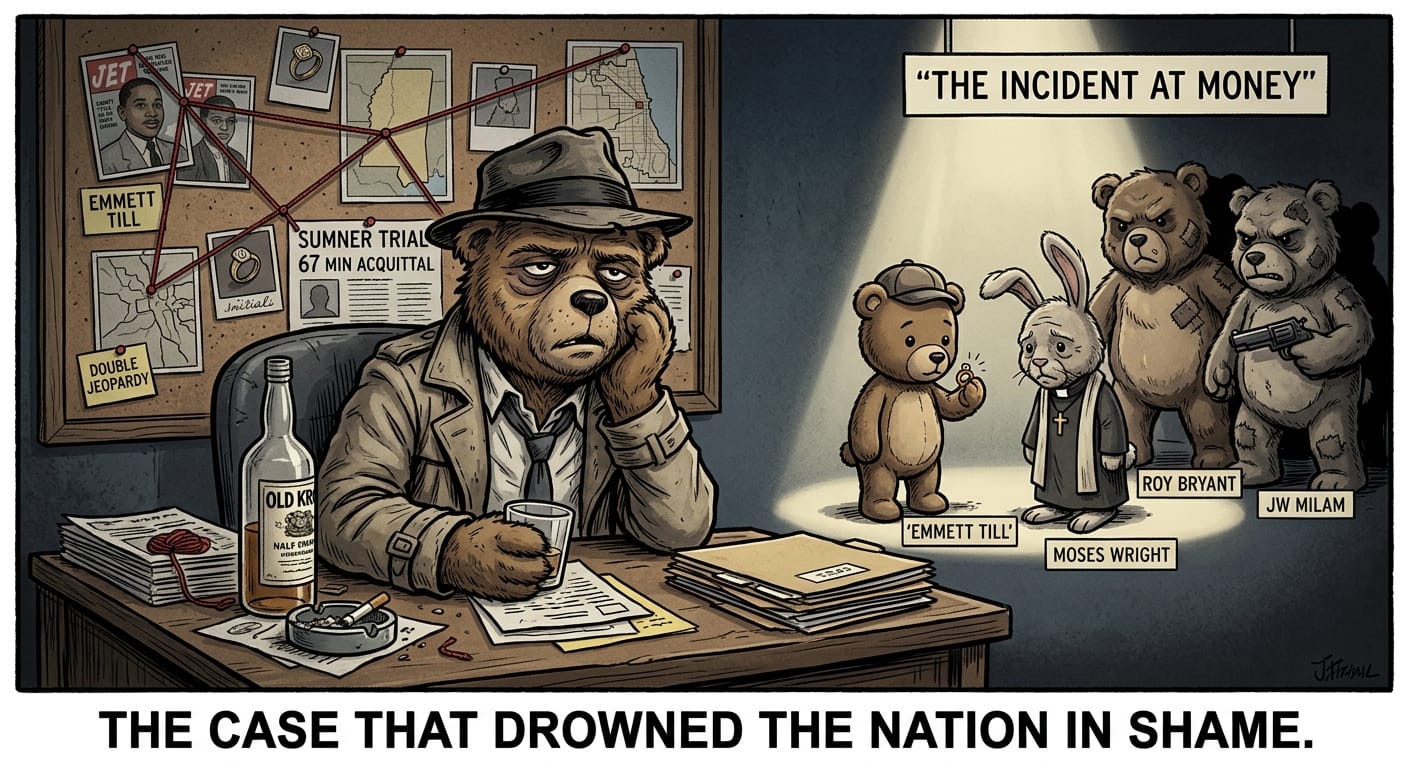
Every killing in this series was strategic. Emmett Till was murdered not because Carolyn Bryant felt personally threatened by a fourteen-year-old from Chicago, but because the structure of racial terror in Mississippi required that any perceived deviation from the racial order be met with overwhelming, public violence. The murder was meant to communicate to every Black person in the Delta what remained true about the cost of existing in white-controlled space.
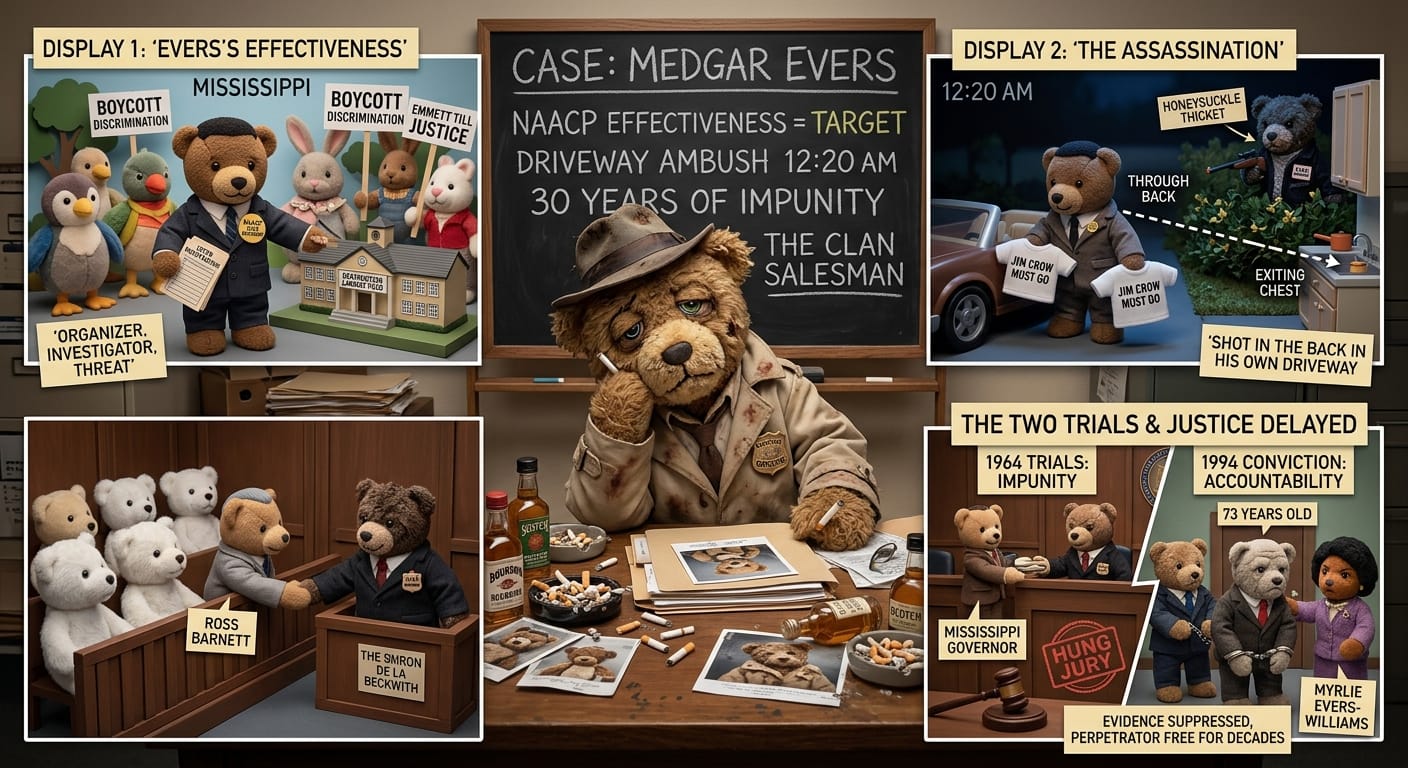
Medgar Evers was targeted because he was the NAACP’s most effective organizer in Mississippi — the man who investigated Till’s murder, who organized the boycotts, who filed the school desegregation lawsuits. Byron De La Beckwith didn’t wake up on the morning of June 12, 1963, with a random impulse. He had been asking about Evers’s address. He had the rifle. He was in position behind a honeysuckle thicket at 12:20 a.m.
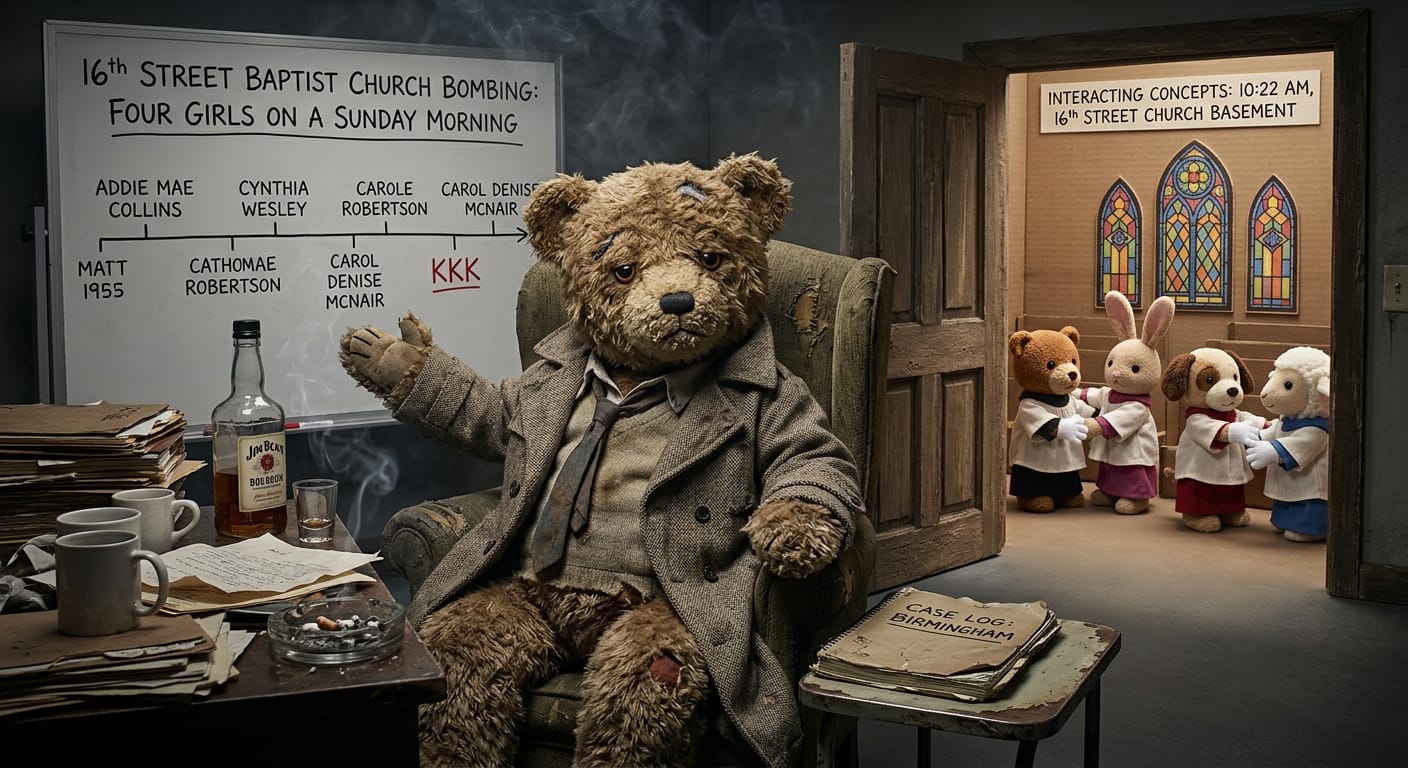
The 16th Street Baptist Church was bombed in Birmingham because it was the organizational hub of the campaign that had generated the political pressure leading to the Civil Rights Act — and because Birmingham’s Klan wanted to demonstrate that Black people were not safe anywhere, including in a house of God on a Sunday morning, including at eleven years old.
The Freedom Riders were beaten because riding buses and using waiting rooms in compliance with Supreme Court rulings was an act the white South treated as a provocation requiring physical suppression. Selecting which bus to ride, and announcing it in advance, was also strategic — Robert Kennedy begged them to stop, which is how you know it was working.
What the Violence Was Trying to Prevent
The underlying aim of the violence against civil rights activists was to preserve the structure that the movement threatened — not just segregated lunch counters or buses, but the entire apparatus of Black political, economic, and social subordination built since Reconstruction. The Civil Rights Act of 1964 and the Voting Rights Act of 1965 were existential threats to that structure, and the people who benefited from it understood that.
The killing of Martin Luther King Jr. in April 1968 came after King had extended his critique from legal segregation to the war in Vietnam and from voting rights to economic justice. He was building a coalition around the Poor People’s Campaign that included poor white, Native American, and Latino people alongside Black people. His approval rating in 1966 was 33 percent. The FBI considered him the most dangerous man in America. He was shot in Memphis while supporting sanitation workers who made poverty wages.
The assassination of Malcolm X in February 1965 removed a figure who was evolving rapidly — away from the racial separation he had advocated with the Nation of Islam, toward an internationalist framework that placed Black American civil rights within the global human rights movement. Two of the three men convicted of his murder may not have been involved; in 2021, their convictions were vacated after it was found that prosecutors had withheld exculpatory FBI and NYPD files.
Why Accountability Came Decades Late — or Not at All
The pattern of accountability in this series is consistent with what appears throughout the racial terror section. Robert Chambliss was convicted of the 16th Street Baptist Church bombing in 1977 — fourteen years after the murders of Addie Mae Collins, Cynthia Wesley, Carole Robertson, and Carol Denise McNair. The other two surviving perpetrators were convicted in 2001 and 2002. The FBI had identified all of them within weeks of the 1963 bombing and done nothing.
Byron De La Beckwith walked free for thirty years after killing Medgar Evers, ran for political office in Mississippi, and boasted publicly about the murder. He was convicted in 1994.
No one has ever been prosecuted for the attacks on Freedom Riders in Anniston, Birmingham, or Montgomery in May 1961. The FBI knew who was responsible. The state of Alabama declined to prosecute. The federal government made its peace with the outcome.
The civil rights era demonstrated that American institutions could, under sufficient political pressure and with sufficient documentation, eventually produce accountability — decades late, with the perpetrators often elderly or dead, with no compensation to survivors. What it did not demonstrate is that those institutions were capable of protecting the people being killed while the killing was ongoing.
Bloody Sunday at the Edmund Pettus Bridge was filmed. The 16th Street Baptist Church bombing was investigated by the FBI. Medgar Evers’s murder was documented with physical evidence within hours. The question was never whether the violence could be seen. It was whether anyone with the power to stop it would choose to.
← Back to Racial Terror section hub
─────────
Sources:
- Till-Mobley, Mamie, and Christopher Benson. Death of Innocence. Random House, 2003.
- McWhorter, Diane. Carry Me Home. Simon & Schuster, 2001.
- Lewis, John, and Michael D’Orso. Walking with the Wind. Simon & Schuster, 1998.
- Branch, Taylor. At Canaan’s Edge. Simon & Schuster, 2006.
- Equal Justice Initiative. Lynching in America. 3rd ed. EJI, 2017.
The Series