American War Crimes: When the Good Guys Aren't
From the Philippine War to Abu Ghraib: the documented pattern of U.S. forces killing civilians and the accountability that always stopped at the lowest rank.
American War Crimes: When the Good Guys Aren’t
The United States has fought more wars than most nations and won most of them. The winning tends to dominate the record. What this series examines is the part that doesn’t make it into the monuments: the documented pattern of American forces killing civilians, torturing prisoners, and covering up the evidence — not as the acts of individual bad actors, but as the predictable output of specific military systems, policies, and cultures of impunity.
The Same Structure Across a Century
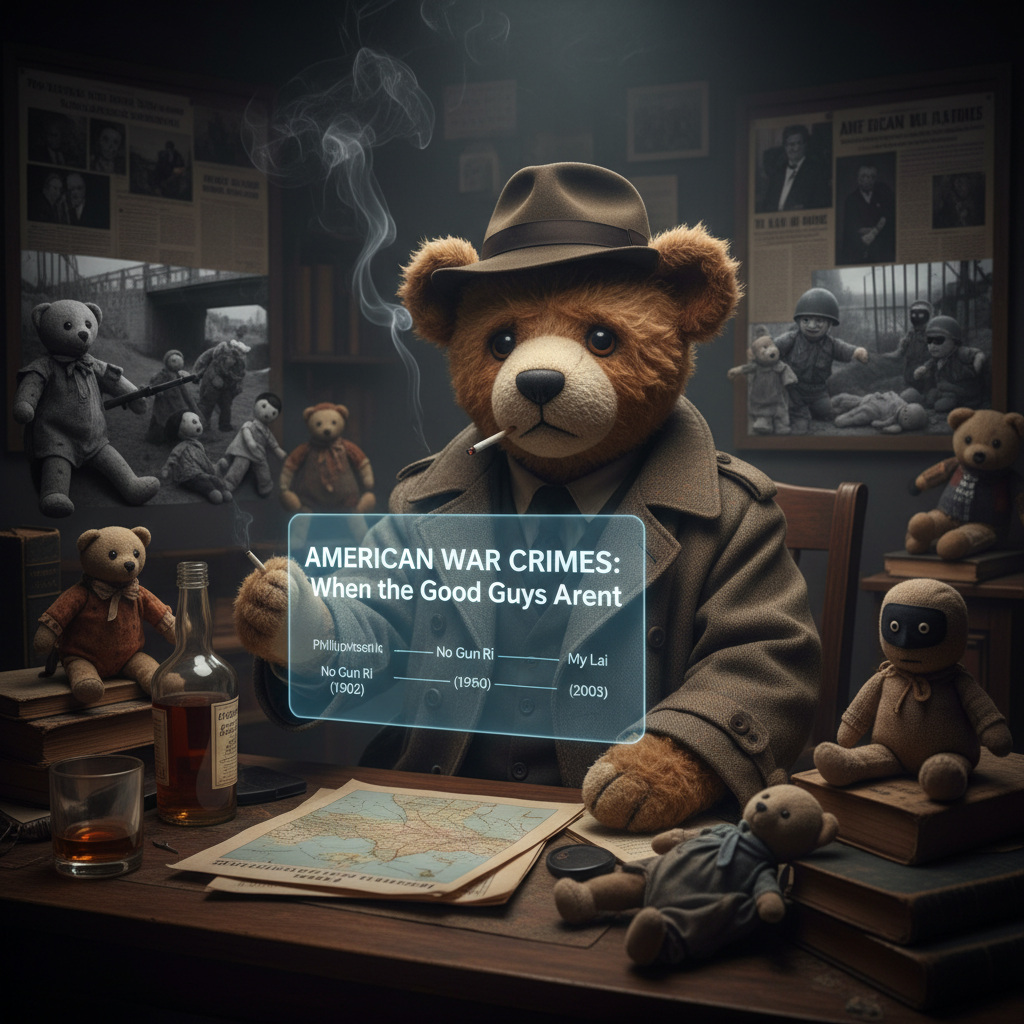
The events covered here span more than a hundred years: the Philippine-American War atrocities of 1899 to 1902, the No Gun Ri massacre of July 1950, the My Lai massacre of March 1968, and the Abu Ghraib abuses documented between October and December 2003. They occurred in different wars, on different continents, under different administrations, and in different legal frameworks. They share a structure.
In each case, American forces were operating in counterinsurgency or occupation contexts where the civilian population was treated as a collective threat. In each case, the immediate perpetrators — soldiers and low-ranking officers — bore the burden of any criminal accountability. In each case, the command decisions that created the conditions for atrocity — the reconcentration policies, the body count metrics, the interrogation memos, the standing orders about refugees — were either not investigated or investigated and found legally insufficient to prosecute. The distance between who pulled the trigger and who authorized the system that put them there has never been closed in American military law.
Why Counterinsurgency Reliably Produces Atrocities
The events in this series are not random. They are concentrated in specific kinds of conflicts: wars where there is no clear front, where the enemy cannot be distinguished from the civilian population, and where the measure of progress defaults to body counts rather than territorial control. The Philippine insurgency, the Korean War in its early chaotic phase, Vietnam, and Iraq all share this structure.
When the mission is to eliminate an enemy that looks like a civilian, the pressure on soldiers and commanders is to expand the definition of enemy. This happens through explicit policy — the reconcentration orders in the Philippines, the free fire zones in Vietnam, the Guantanamo-ization directive for Abu Ghraib — and through informal cultural norms: the “mere gook rule” documented in My Lai testimony, the dehumanizing nicknames that appear in every American counterinsurgency. The official policy creates legal cover. The cultural norm provides psychological permission. The combination makes atrocity more likely, not less.
Accountability That Consistently Stopped Short
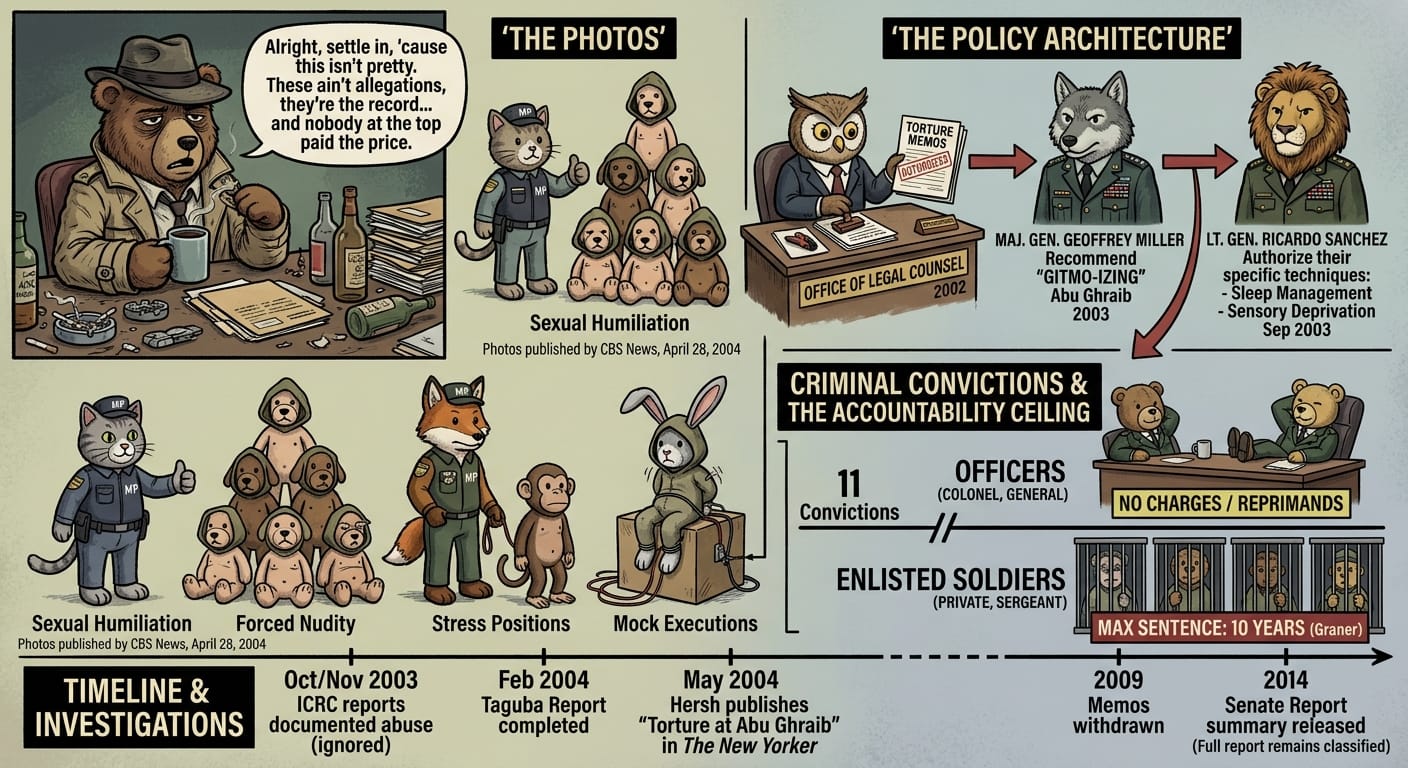
What also connects these events is the shape of the accountability that followed. Eleven soldiers were convicted for Abu Ghraib; none above the rank of staff sergeant. William Calley was the only person convicted for My Lai; he served three and a half years under house arrest. Jacob Smith was court-martialed for Samar and admonished. At No Gun Ri, the Army expressed regret fifty years later and recommended a scholarship fund.
The individuals who wrote the policies, issued the orders, and ran the systems that produced these events retired, returned to private life, or in some cases received promotions. The accountability, when it came at all, was calibrated to preserve the system. This is not a conspiracy — it is a pattern that emerges from the same institutional pressures that produce the atrocities themselves. Courts-martial of generals threaten command authority. Prosecutions of policy architects threaten the legal frameworks that future administrations will want to use. The system protects itself. The same dynamic appears in civilian government contexts — COINTELPRO ran for years because the accountability mechanisms were controlled by the institution being held accountable.
In This Series
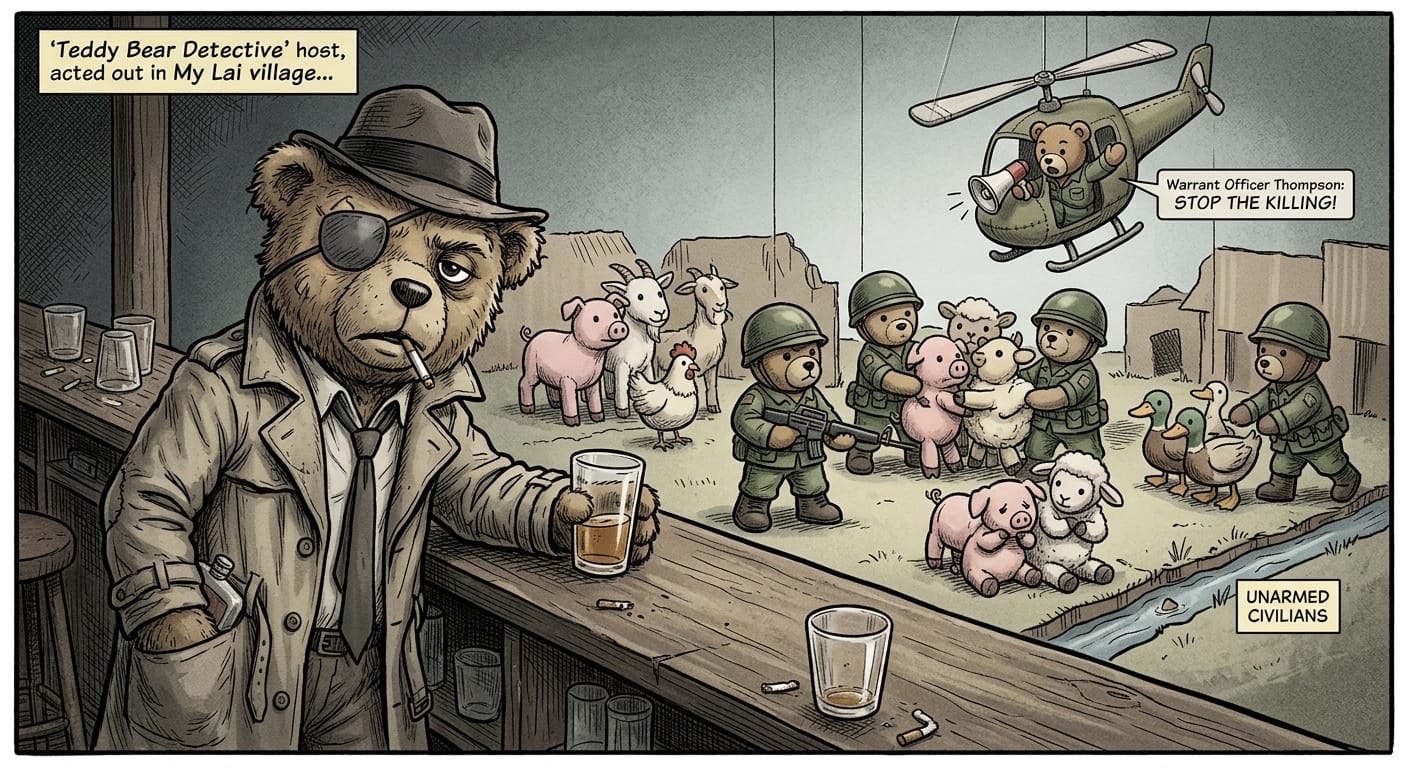
The My Lai Massacre — March 16, 1968. Charlie Company kills between 347 and 504 unarmed Vietnamese civilians in four hours. One conviction follows.
Abu Ghraib — October through December 2003. The photographs published in April 2004 document what the classified Taguba Report had already described. Eleven soldiers convicted, no officers above staff sergeant.
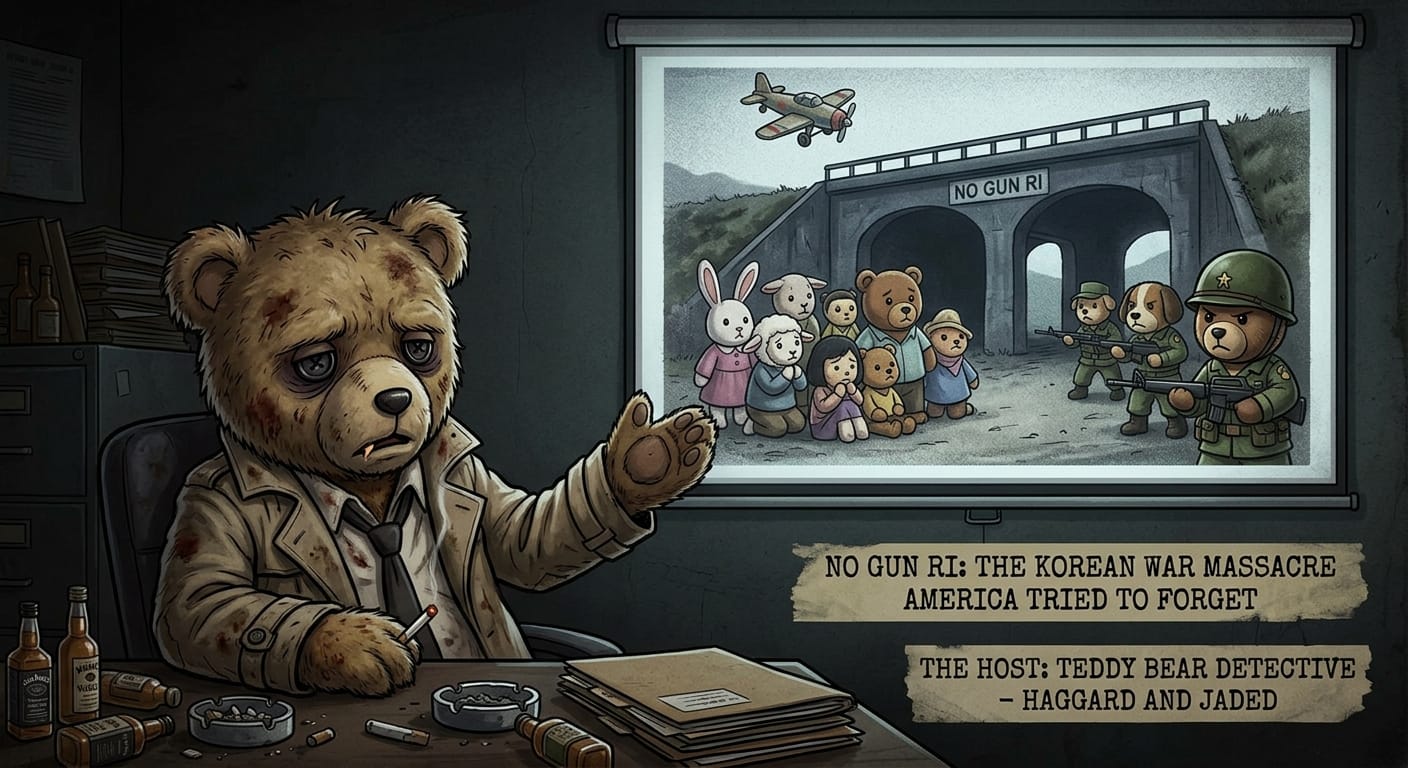
No Gun Ri — July 26–29, 1950. Soldiers of the 7th Cavalry Regiment fire on South Korean refugees sheltering under a railroad bridge. The Army acknowledges it fifty years later and calls it tragic, not criminal.
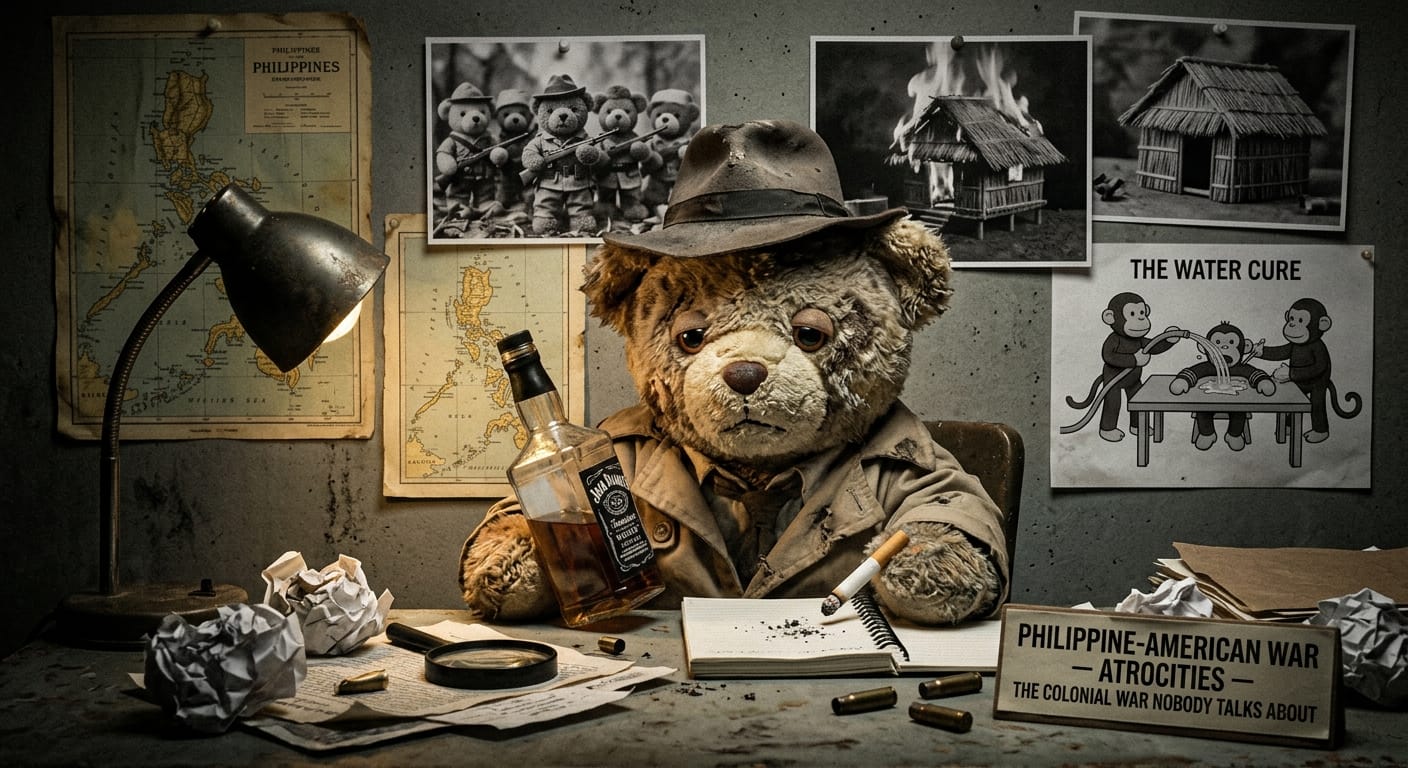
Philippine-American War Atrocities — 1899 to 1902 and beyond. Between 200,000 and 600,000 Filipinos die. The war is not taught in most American schools.
← Back to War Crimes & Military Atrocities
Containment
None of this is comfortable to look at straight. The United States fought World War II and the Cold War as genuinely opposing forces to genuinely dangerous alternatives. The soldiers who committed atrocities in My Lai and Abu Ghraib were not representative of every American in uniform. The pattern documented here does not erase the rest of the record.
What it does is complicate the story that American power is inherently benevolent, that violations are aberrations, and that the system corrects itself. The pattern across more than a century suggests something different: that atrocity is a predictable product of specific conditions, that accountability is consistently calibrated to protect the system rather than the victims, and that the distance between official memory and the historical record is maintained by choices — about what gets investigated, what gets prosecuted, and what gets taught.
─────────
Sources:
- Turse, Nick. Kill Anything That Moves: The Real American War in Vietnam. Metropolitan Books, 2013.
- Greenberg, Karen J., and Joshua L. Dratel, eds. The Torture Papers: The Road to Abu Ghraib. Cambridge University Press, 2005.
- Kramer, Paul A. The Blood of Government: Race, Empire, the United States, and the Philippines. University of North Carolina Press, 2006.
The Series