Healthcare and Religious Fraud: Exploiting Trust
From fake cancer diagnoses to prosperity gospel to $95 billion in annual Medicare fraud — the common thread is institutions that exploit the trust people place in medicine and faith.
Healthcare and Religious Fraud: Exploiting Trust
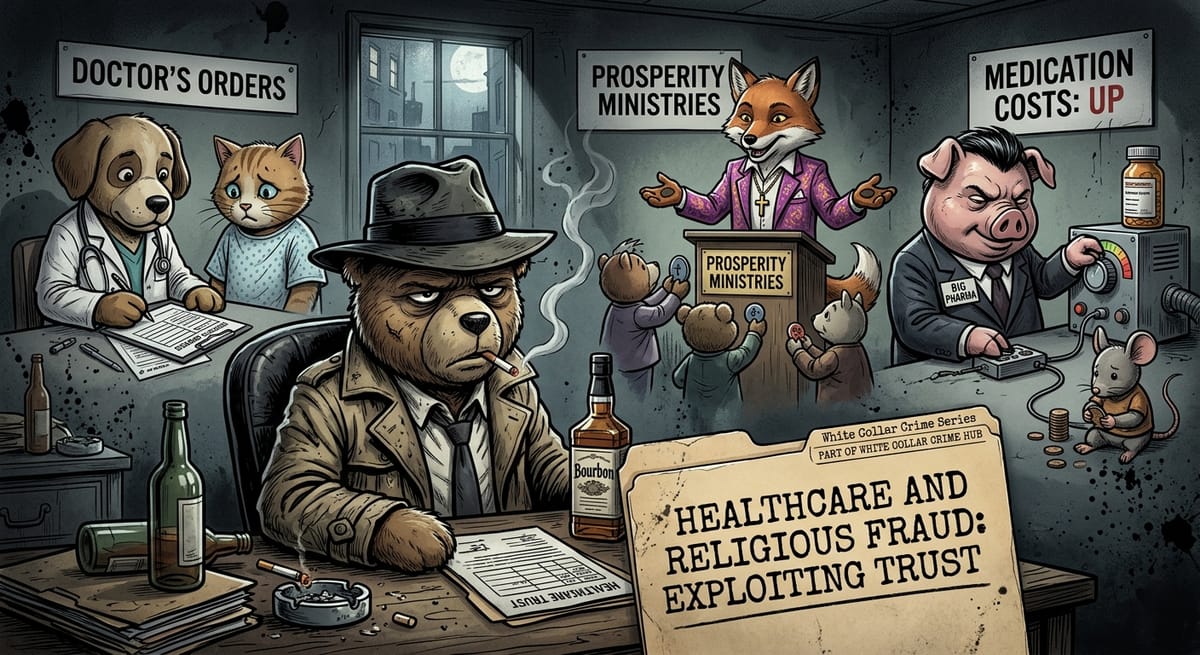
The cases in this series — pharmaceutical pricing, Shkreli, fake cancer doctors, Medicare fraud, televangelists, charity scams, and prosperity gospel — are connected by a specific form of vulnerability: the trust that people place in institutions claiming to care for their health or their souls. This trust is not naive. Medical care requires trusting physicians with information you’d share with almost no one else and with decisions that can end your life. Religious communities are built on shared beliefs that are not externally verifiable. Charities ask you to extend concern beyond your immediate community to people you’ll never meet. The fraud in each of these categories is possible because the trust is real and necessary.
Part of White Collar Crime — ← Back to section hub
In This Series
- Martin Shkreli: The Most Hated Man in Pharma
- Medicare and Medicaid Fraud: Billions Stolen From Taxpayers
- Pharmaceutical Price Gouging: The Legal Crime That Kills
- Fake Cancer Doctors: Poisoning Patients for Profit
- Charity Scams: When Generosity Gets Exploited
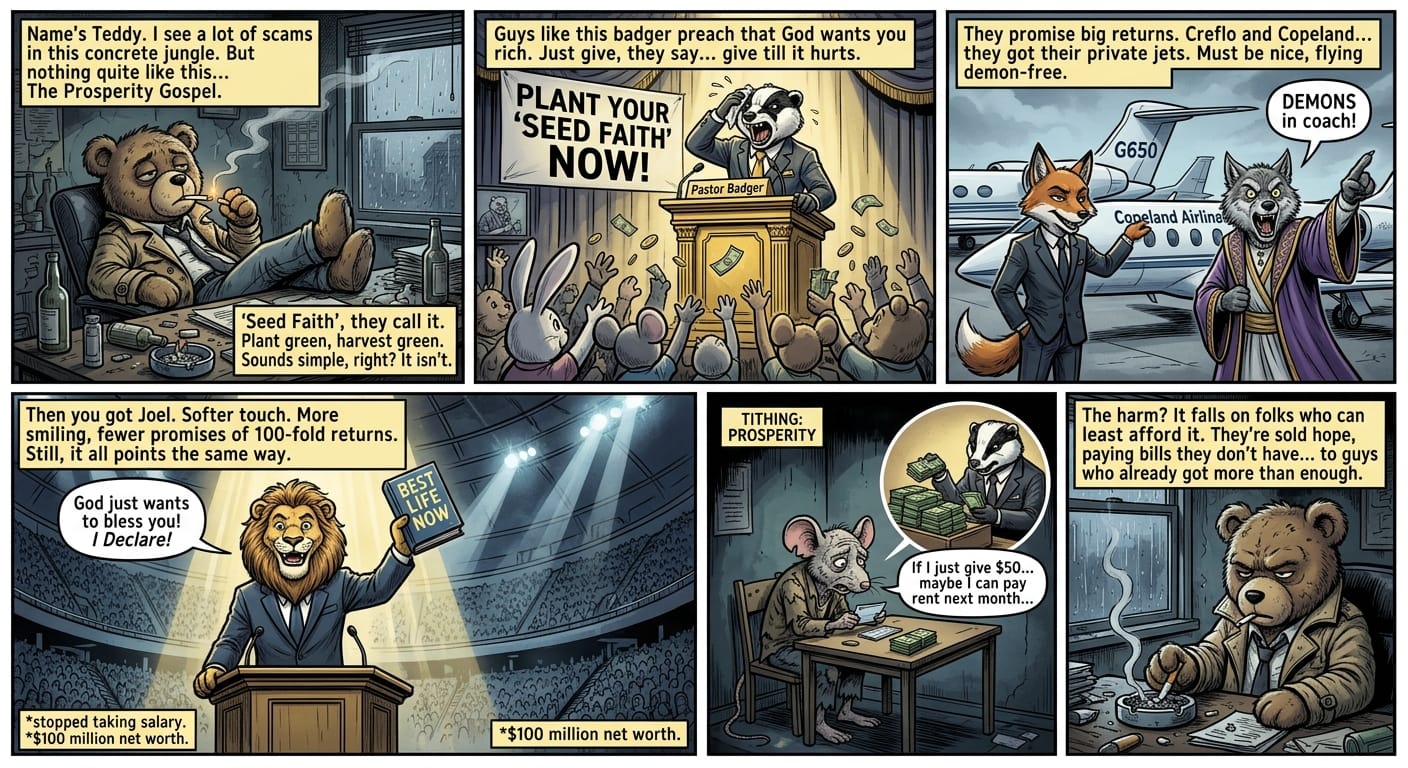
- Prosperity Gospel: Getting Rich Off the Faithful
- Televangelist Scandals: Holy Fraud
Healthcare Fraud Operates on an Information Asymmetry That Can’t Be Eliminated
Patients cannot evaluate the appropriateness of their own treatment. Farid Fata’s patients went to him with symptoms and fears; he had the authority of medical credentials and the expertise to make their situations legible to them. When he told them they had cancer and needed chemotherapy, they had no independent mechanism for verification.^1^ The same asymmetry that makes medical care valuable — that the physician knows things the patient doesn’t — is what makes medical fraud possible.
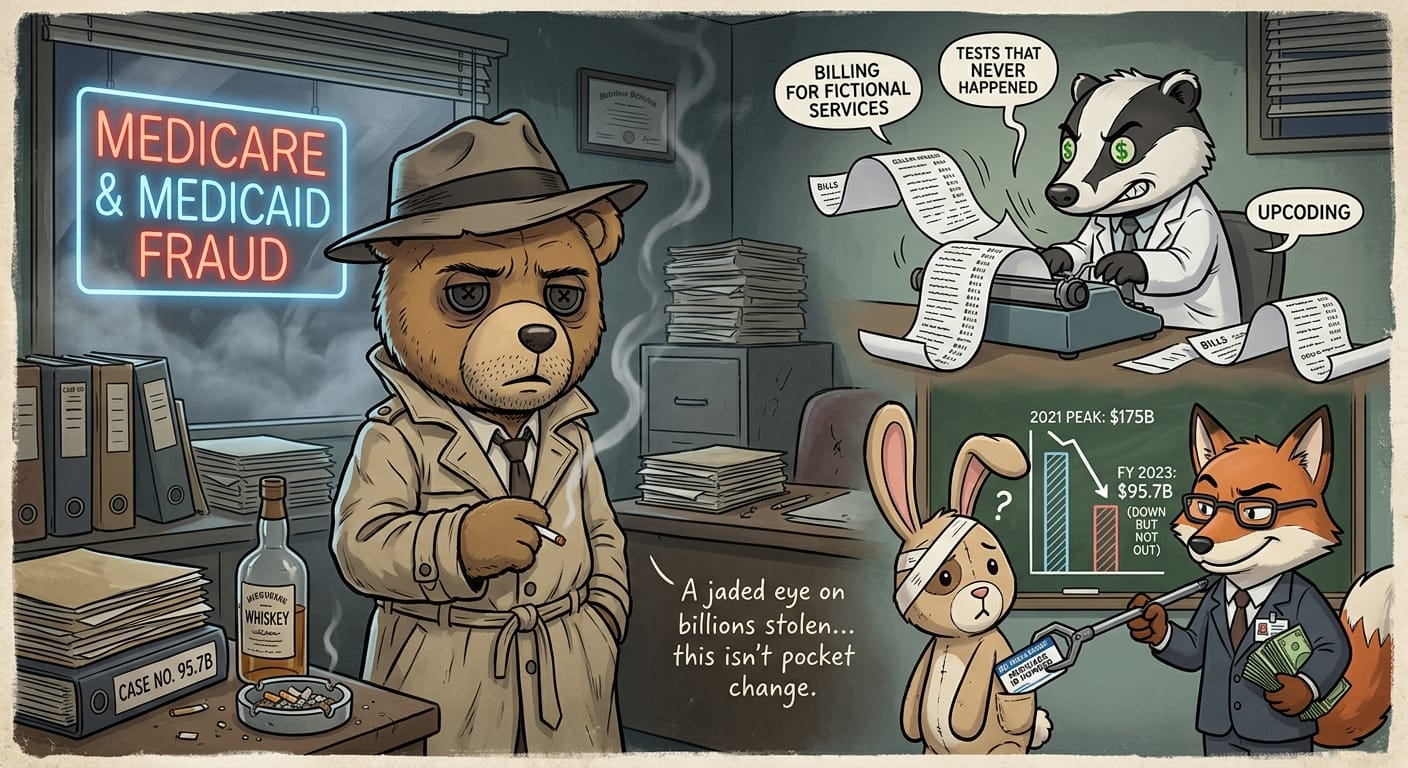
Medicare and Medicaid fraud at scale exploits the same gap at the institutional level. Billing codes are technical and specific; audit is retrospective; the volume of claims exceeds the capacity for real-time verification. Billions of dollars flow through the system before fraud is detected, because the system is designed to minimize friction for legitimate providers, and fraudulent providers exploit that design.
Religious Fraud Adds a Layer That Commercial Fraud Law Can’t Reach
Religious fraud adds another layer to the information asymmetry problem. The social norms around skepticism toward religious claims are genuinely different from norms around skepticism toward commercial claims. Questioning whether a pastor is telling the truth about seed-faith doctrine is not the same kind of socially permissible act as questioning whether a car dealer’s claims about a vehicle are accurate. Religious institutions receive tax exemptions, disclosure exemptions, and investigative restraint from regulatory agencies partly because of genuine First Amendment protections and partly because of the cultural weight of religious authority.
The prosperity gospel ministries covered in this series operate in a space where they can make financial promises that would constitute fraud in a commercial context and face no legal liability because the promises are religious. This isn’t just a regulatory gap. It’s a gap that the ministries have deliberately cultivated, arguing against any regulatory scrutiny of their finances as an attack on religious freedom. The televangelist scandals of the 1980s and 1990s showed what happens at the extreme end of that gap, when there are no financial controls at all.
Pharmaceutical Pricing Causes Equivalent Harm Through Legal Mechanisms
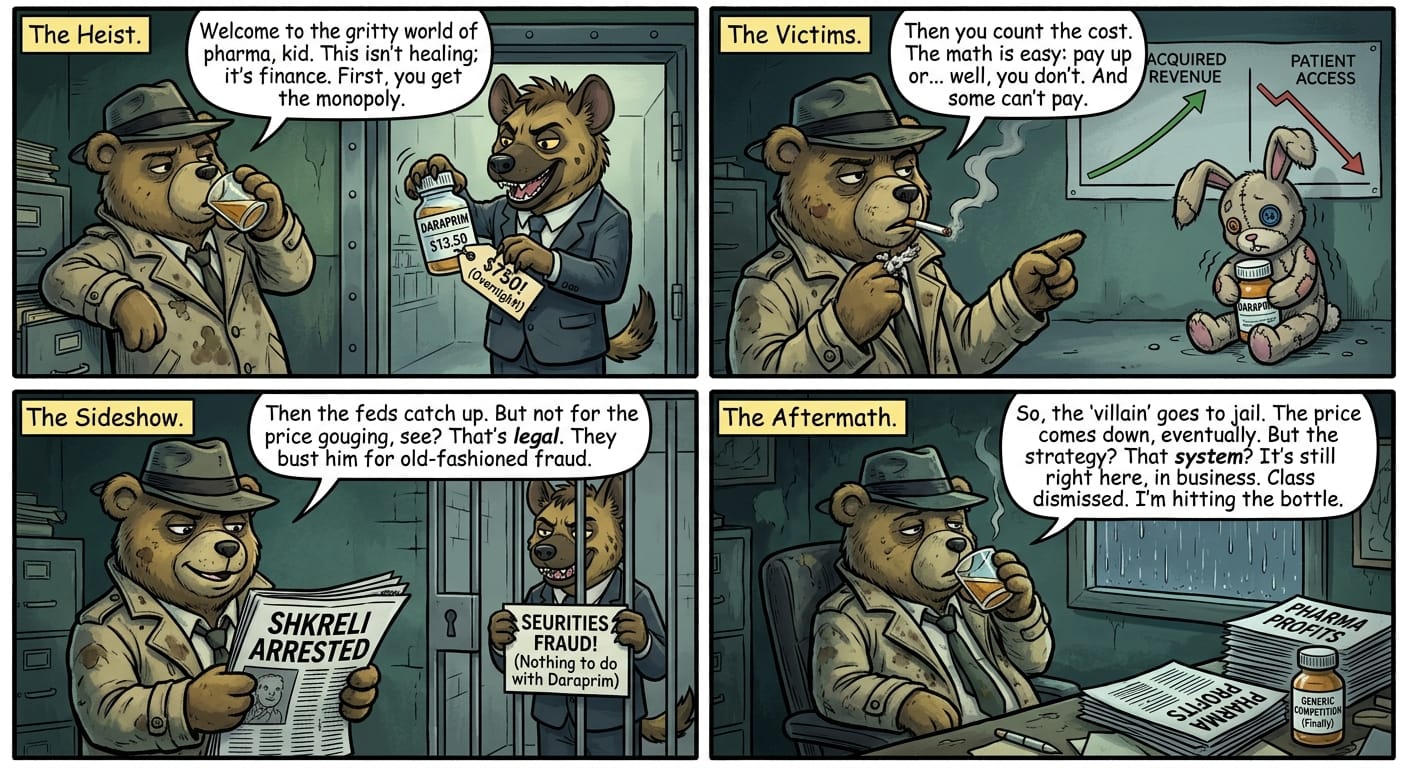
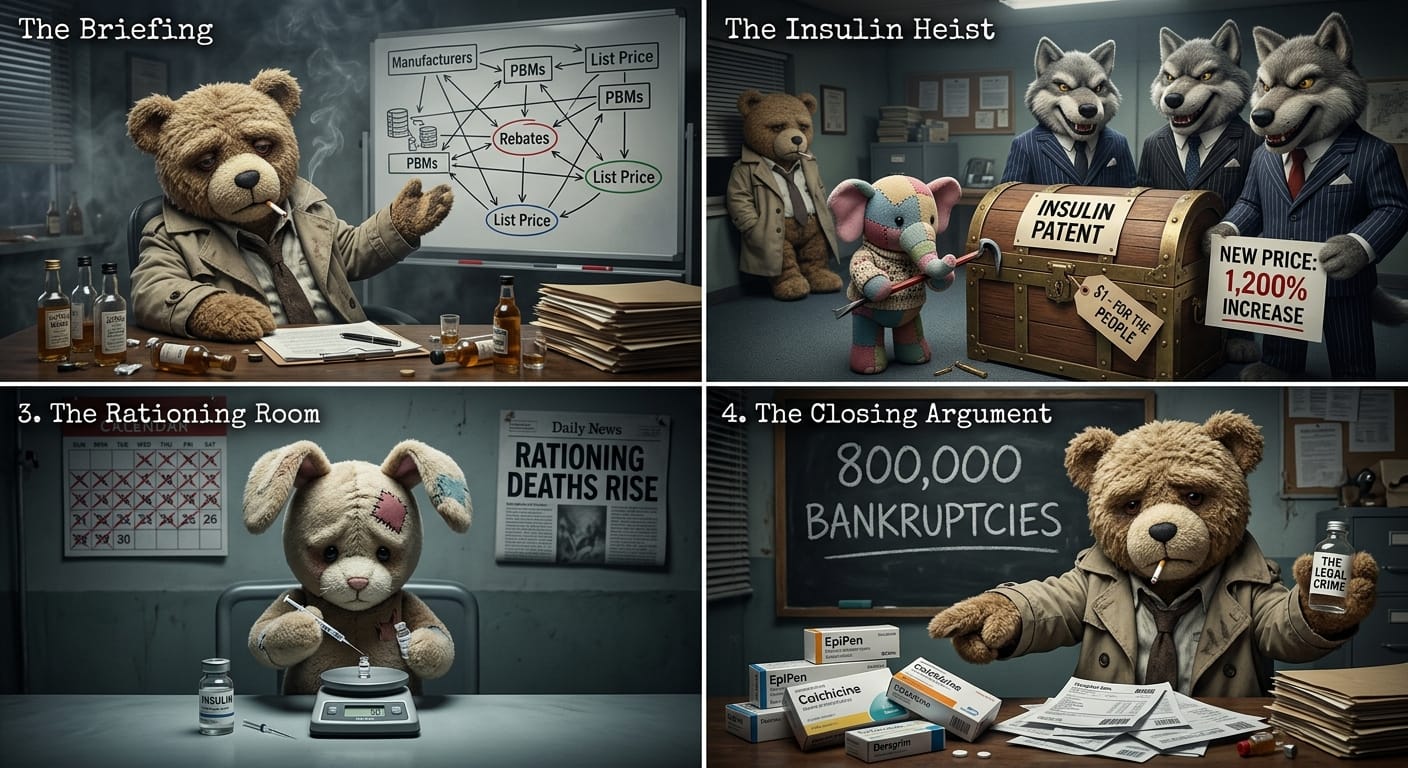
The pharma-gouging and Shkreli articles sit adjacent to the fraud cases in this series, but they describe something different: harm caused by legal behavior within a system structured to allow it. The patients who couldn’t afford insulin in 2019 weren’t victims of crime. They were the predictable output of a pricing system that maximizes pharmaceutical company revenue without reference to patient outcomes. This is in the series because its effect — people unable to access medications they need, people rationing drugs in ways that cause severe harm and death — is morally equivalent to the harm from outright fraud, even though its mechanism is entirely legal.
The Targeted Population Is Consistent Across Every Category
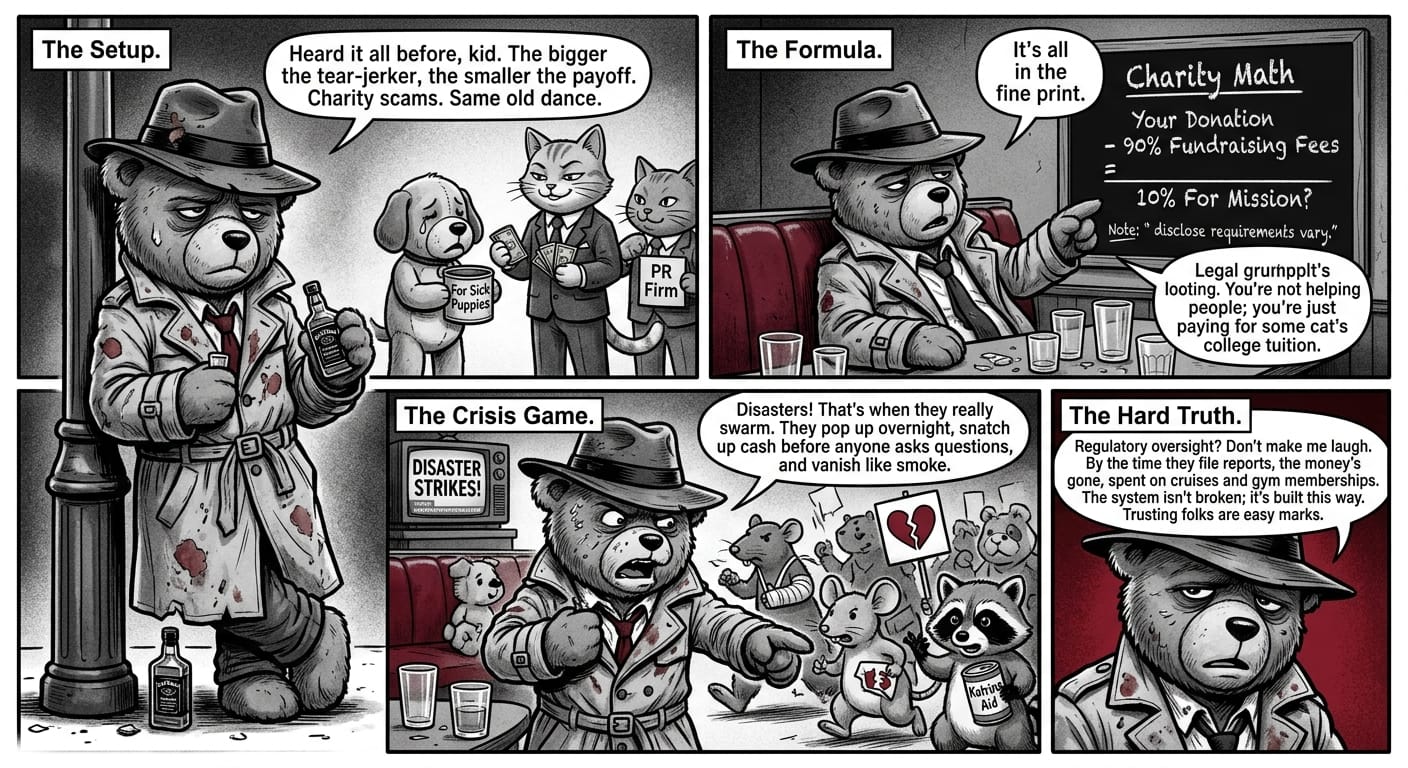
The populations most vulnerable to the categories of fraud in this series share characteristics: they have urgent needs (health crises, material hardship, personal crisis), they exist in information asymmetries (they can’t evaluate medical claims, financial claims about charities, or theological claims about prosperity), and they often have less power to respond when fraud is revealed (uninsured patients, low-income donors, elderly Medicare beneficiaries). The cancer charity fraud targeted people moved by the emotional weight of cancer; the prosperity gospel targets the economically struggling; Medicare phantom billing targets elderly beneficiaries whose identities are used without their knowledge.
The perpetrators — from Fata to Bakker to the cancer charity operators — chose their targets at least partly because of this vulnerability. It’s easier to defraud someone who can’t easily verify what they’re being told and who has strong emotional reasons to believe it.
Fata received 45 years. Bakker served eight. The cancer charities were shut down. Martin Shkreli served four years — for securities fraud that had nothing to do with Daraprim. Pharmaceutical pricing reform passed 30 years after the problem was clearly documented. The prosperity gospel ministers continue to operate.
The asymmetry in outcomes reflects the difference between conduct that crosses legal lines (Fata, Bakker, cancer charities) and conduct that operates within them (pharmaceutical pricing, prosperity gospel, low-efficiency charities). The legal lines exist where they do because of lobbying, constitutional protection, and political choices. They are not drawn at the boundary of harm.
─────────
Sources:
- Sparrow, Malcolm K. License to Steal. Westview Press, 2000.
- Shepard, Charles E. Forgiven. Atlantic Monthly Press, 1989.
- Bowler, Kate. Blessed: A History of the American Prosperity Gospel. Oxford University Press, 2013.
- Kesselheim, Aaron S., et al. “The High Cost of Prescription Drugs in the United States.” JAMA, 2016.
- Federal Trade Commission v. Cancer Fund of America, Inc. No. 2:15-cv-00884 (D. Ariz. 2015).
The Series