Beyond the Mafia: Other Organized Crime in America
Irish mobs Jewish gangsters motorcycle clubs and Mexican cartels each represent a distinct criminal model operating alongside or outside the Italian-American Mafia's framework. This series covers them all.
Beyond the Mafia: Other Organized Crime in America
The Italian-American Mafia dominated the American organized crime story for most of the twentieth century — in law enforcement attention, in cultural representation, in federal prosecution. That dominance reflected reality: the five New York families and the regional outfits were the most systematically organized criminal enterprises in the country for several decades, with the Commission providing a governance structure that no comparable organization could match. But organized crime in America was never exclusively Italian-American, and the organizations that operated alongside or outside the Mafia’s framework were not minor variations on the same theme. They were different kinds of criminal enterprise, with different structures, different revenue models, and different relationships to the communities they operated in.^1^
← Back to the Organized Crime section
In This Series
- Irish Mobs: The Westies, Winter Hill, and Blood on the Docks — Neighborhood-based criminal enterprises that dominated their territories without the national structure that sustained the Italian families
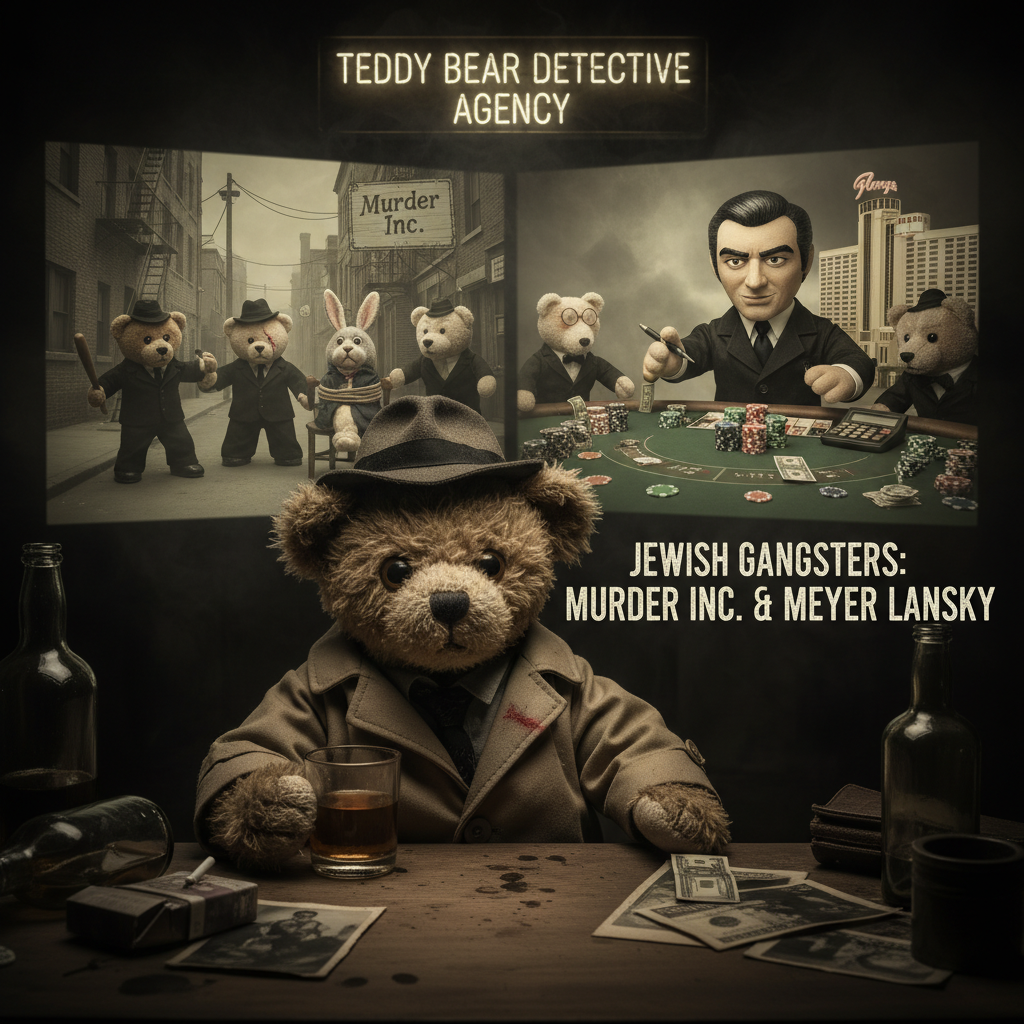
- Murder Inc. and Meyer Lansky: The Gangsters Who Built Las Vegas — The killing operation that served the whole national syndicate, and the financial architect who laundered its revenue for fifty years
- Hells Angels and Bandidos: When Bike Clubs Became Criminal Empires — How social clubs became federal RICO defendants with chapters in twenty-seven countries
- Mexican Cartels on American Soil — The organizations that inherited the American drug market and generate revenue that dwarfs anything the Mafia achieved
Each Organization in This Series Represents a Different Criminal Model
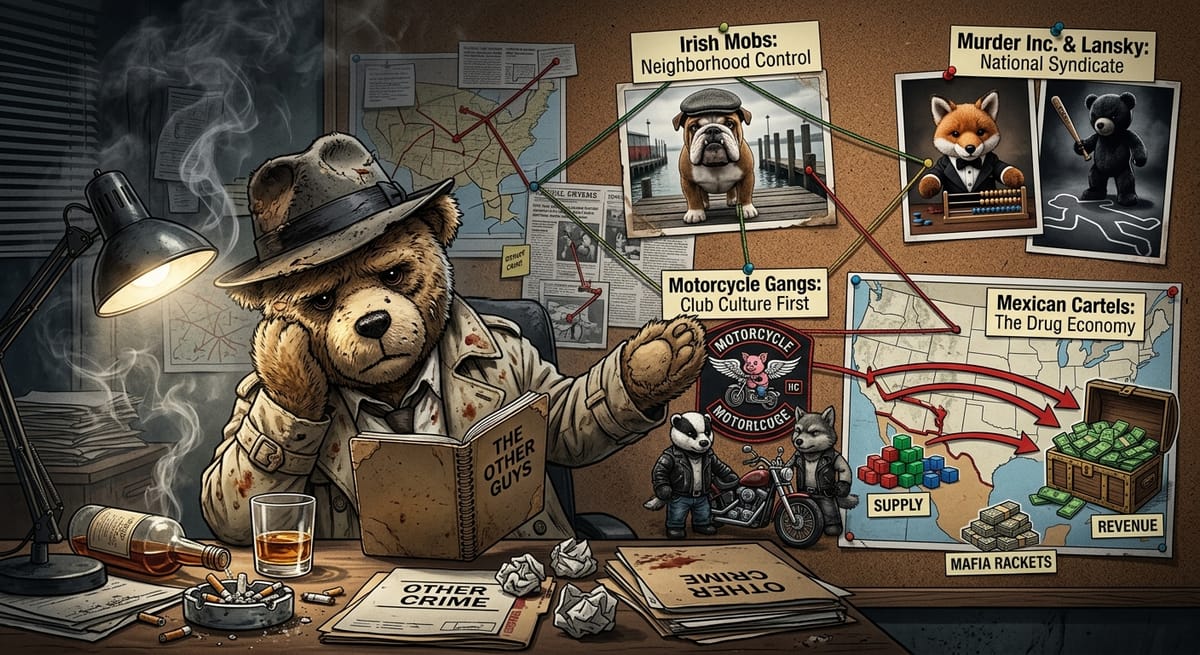
Four articles in this series cover Irish mobs, Jewish gangsters, motorcycle gangs, and Mexican cartels. Each represents a distinct organizational model and a distinct historical moment.
The Irish-American criminal organizations — the Westies in Hell’s Kitchen, the Winter Hill Gang in Boston — operated in specific urban territories with neighborhood-based organizational structures that resembled the Italian families in their territorial control but differed in their institutional depth. The Westies were powerful in Hell’s Kitchen and essentially nowhere else. When the prosecution came, they collapsed immediately. Winter Hill, insulated by its FBI relationship for a decade longer than it should have been, collapsed when that relationship collapsed. Neither organization had the national coordination structure that would have allowed them to survive the loss of their leadership.
The Jewish gangsters of the early and mid-twentieth century — Murder Inc., Meyer Lansky, Bugsy Siegel, the Reinfeld Syndicate — operated differently because many of them operated within the national syndicate rather than as a separate ethnic criminal organization. Lansky and Siegel were equal partners with Lucky Luciano and Costello in building the national crime structure. Murder Inc. served the whole syndicate, not just its Jewish members. The Jewish criminal figures of the mid-century were integrated into the organized crime system at its top rather than running parallel ethnic enterprises.
Motorcycle gangs represent a third model: social organizations that became criminal enterprises over time, with the criminal activities embedded in a membership culture that the traditional organized crime families never developed. The Hells Angels don’t primarily recruit criminals and make them bikers; they recruit bikers and some of them become criminals, or they recruit criminals who also become bikers. The cultural commitment to the club is primary — and it creates organizational cohesion that survives law enforcement pressure differently than a purely economic criminal enterprise would.
The Mexican cartels are something else entirely: multinational organizations with their organizational centers in a foreign country, operating in the American market through distribution networks that insulate the leadership from American prosecution, generating revenue that exceeds anything in American criminal history.
The Organizations in This Series Faced Federal Prosecution Later and Less Thoroughly
The organizations in this series received sustained federal prosecution later and less thoroughly than the Italian-American families, and the reasons are worth noting. The Mafia’s closed membership structure — which produced Valachi’s 1963 testimony, then dozens of subsequent informants — made the internal structure documentable in ways that looser organizations were not. The motorcycle clubs’ membership culture made infiltration more difficult and produced fewer cooperating witnesses. The Irish organizations were smaller and less coherent. Jewish criminal figures were often prosecuted individually rather than as part of an organization. The cartels were across an international border.^1^
The Hells Angels’ first major RICO prosecution in 1979 ended in acquittal, largely because the jury couldn’t be persuaded that the organization itself was criminal rather than that criminal individuals happened to be members. The same argument that organized crime defense lawyers had used against the Italian families in the 1970s — this is guilt by association — was more convincing when applied to a motorcycle club with a nominal legitimate purpose than when applied to an organization whose entire function was criminal.
The Drug Economy Restructured Every Organization in This Series
The articles in this series span a long historical arc, from Murder Inc.’s 1930s enforcement operations to the current cartel presence in American cities. The thread connecting them is the drug economy. Murder Inc. was a killing operation, not a drug trafficking organization. But the drug economy that emerged in the 1960s and exploded in the 1980s restructured all American organized crime, providing revenue that dwarfed gambling and loan sharking and creating new criminal organizations — the cartels — whose scale was impossible to achieve through the rackets that had sustained the Mafia.^1^
The motorcycle gangs became major criminal organizations through methamphetamine manufacturing and distribution. The Irish mobs’ revenue grew with the drug trade. The cartels are the drug trade, at a scale that makes all previous American organized crime look parochial. The demand never diminished. The supply chains evolved, and the organizations that controlled them evolved with them.
─────────
Sources:
- Raab, Selwyn. Five Families: The Rise, Decline, and Resurgence of America’s Most Powerful Mafia Empires. St. Martin’s Press, 2005.
- Lacey, Robert. Little Man: Meyer Lansky and the Gangster Life. Little, Brown, 1991.
- Grillo, Ioan. El Narco: Inside Mexico’s Criminal Insurgency. Bloomsbury Press, 2011.
The Series