The Long War: Institutional Destruction of Native Peoples
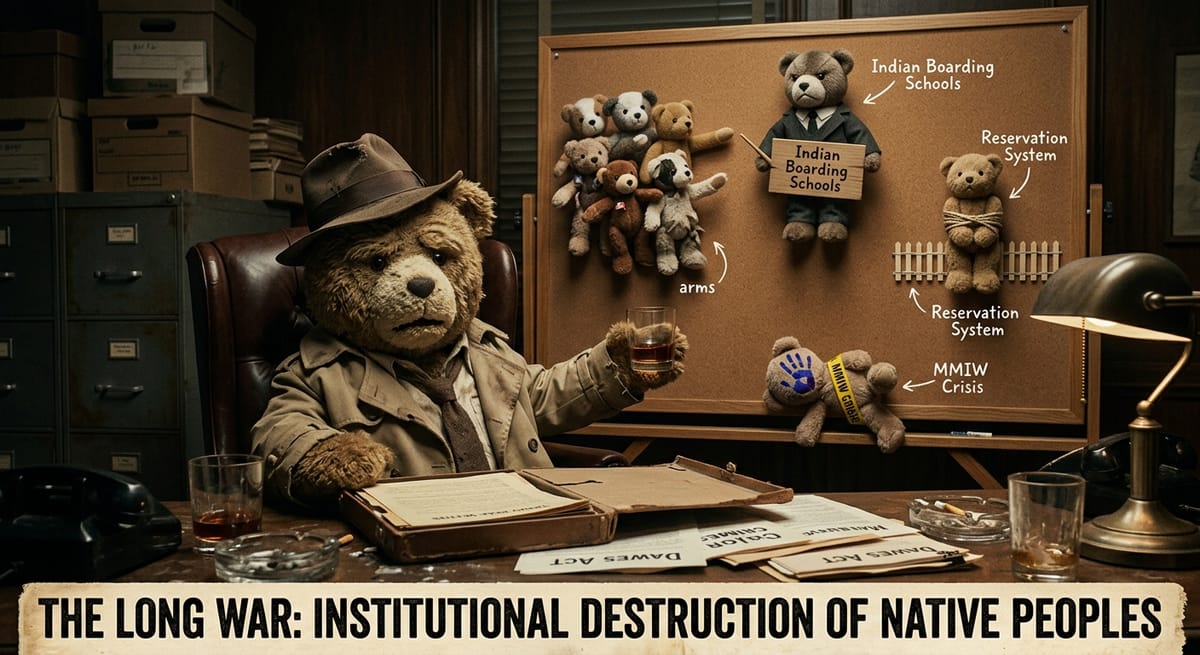
After Wounded Knee the war moved into schools, clinics, and land bureaus. This series covers boarding schools, broken treaties, reservations, sterilization, and MMIW.
The Long War: Institutional Destruction of Native Peoples
After Wounded Knee in 1890, the military phase of U.S. policy toward Native nations was largely over. What replaced it was not peace. It was a different kind of war — fought through legislation, bureaucracy, and the controlled environments of schools, clinics, and reservation offices. The instruments changed; the objective of eliminating Native nations as distinct political and cultural entities did not.
← Back to Native American History
In This Series
- Indian Boarding Schools: Kill the Indian, Save the Man
- Broken Treaties: Every Promise America Made and Broke
- The Reservation System: America’s Open-Air Prisons
- Forced Sterilization: The Program That Targeted Native Women
- Missing and Murdered Indigenous Women: The Crisis With Historical Roots
These Programs Were a Single Project, Not Separate Policies
The programs collected in this series — boarding schools, land allotment, the reservation system, forced sterilization, and the ongoing crisis of missing and murdered Indigenous women — look different from each other on the surface. One targets children’s language acquisition. Another targets women’s reproductive capacity. Another targets land tenure. What connects them is a consistent federal logic: Native peoples should not persist as Native peoples. The methods for achieving that goal shifted with political conditions and the availability of funding mechanisms, but the direction of pressure did not change.
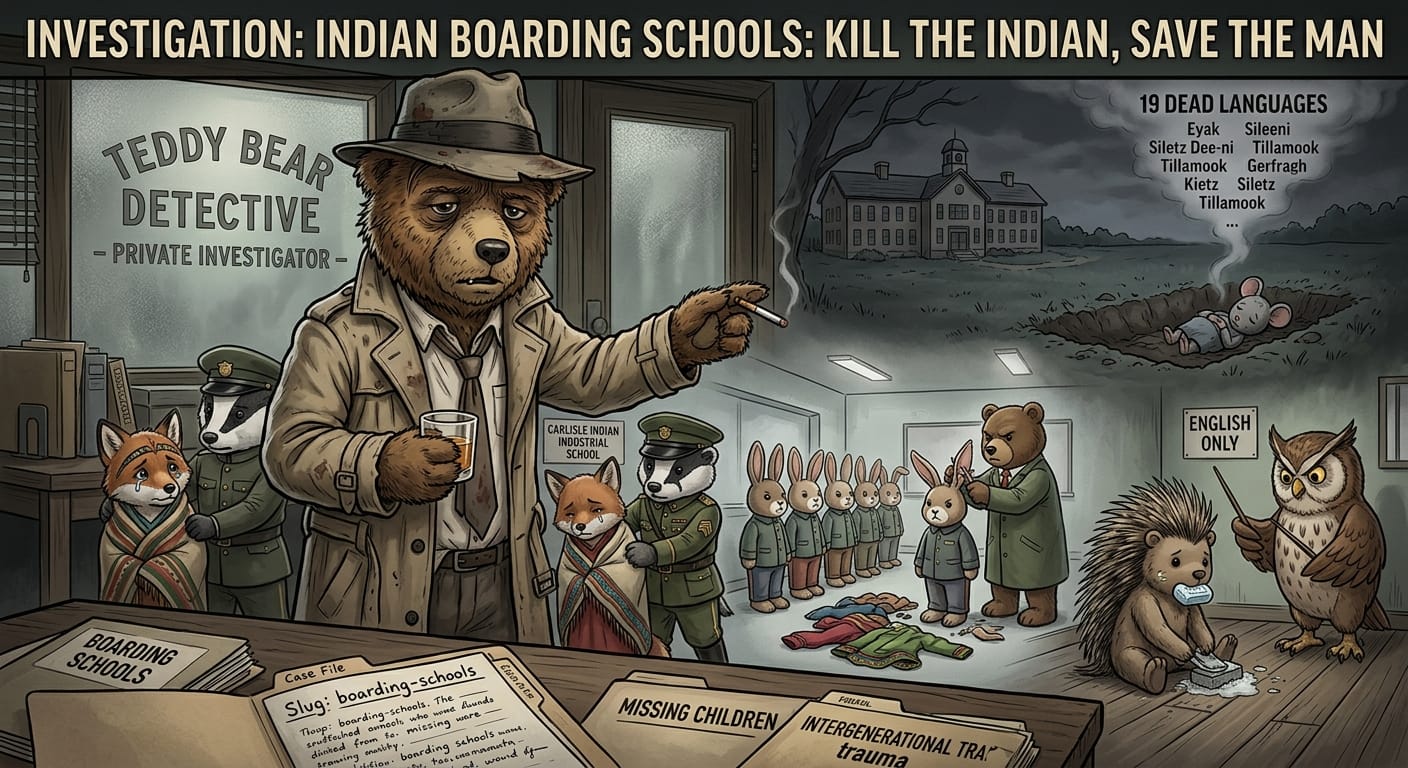
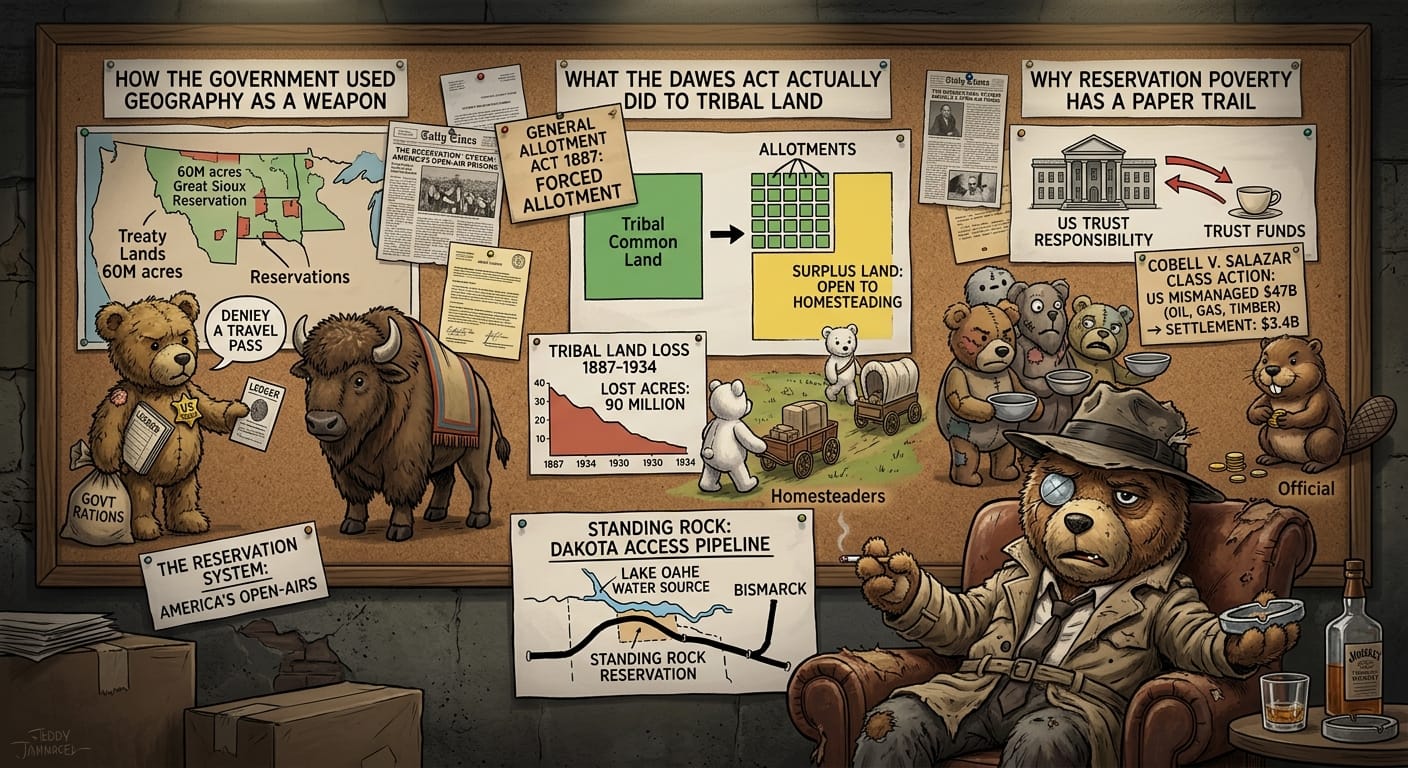
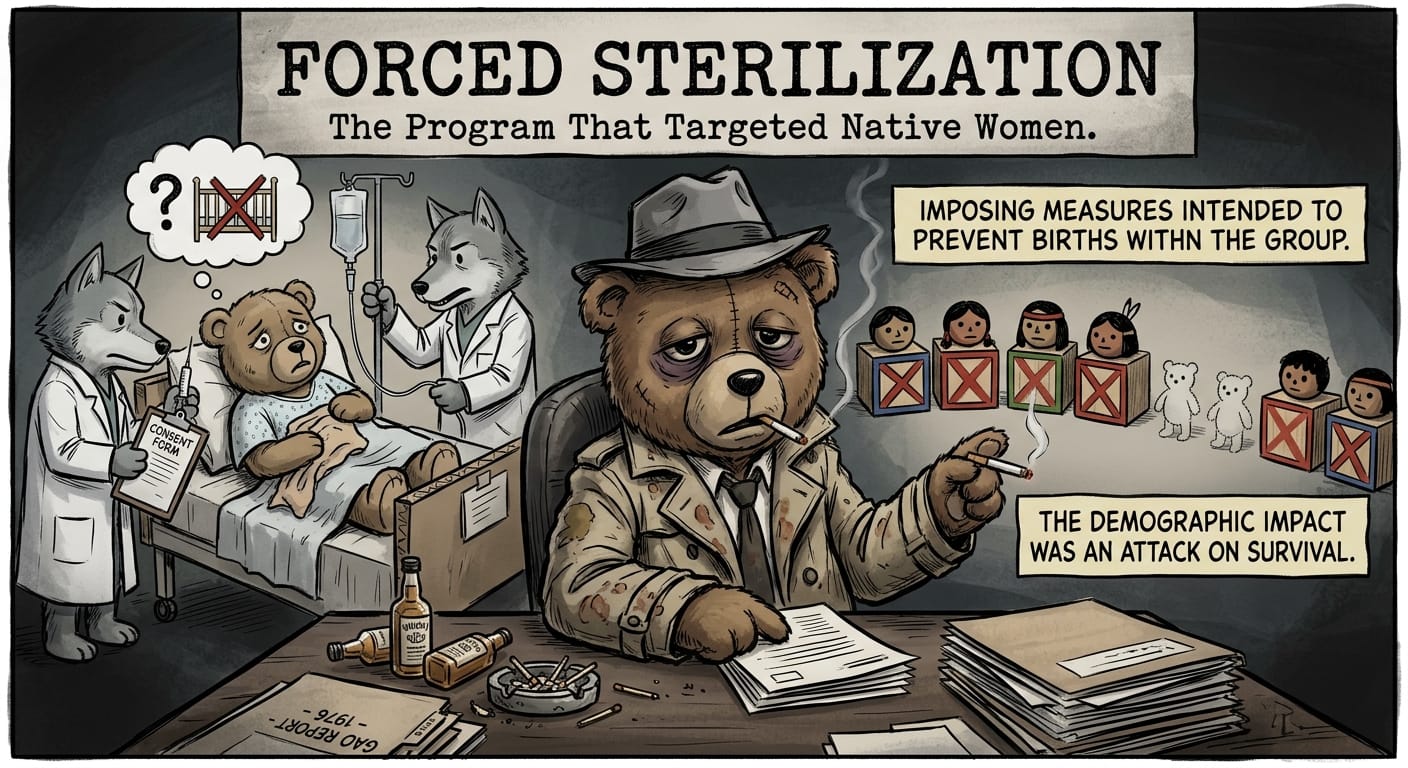
The boarding school system, operating between roughly 1869 and 1978, removed an estimated 150,000 children from their communities and suppressed their languages, spiritual practices, and familial bonds.^1^ The Dawes Act of 1887 transferred approximately 90 million acres of tribal land into private or government hands within five decades. The Indian Health Service’s sterilization program, operating through the 1970s, reduced birth rates in Native communities at a moment when those communities were already among the smallest in the country. These were not unrelated policies. They were concurrent or sequential phases of a continuous project.
Federal Law Did More Damage Than Federal Bullets
The institutional war was primarily a legal war. Where removal-era policy relied on military force backed by legal frameworks, the institutional era inverted the ratio: the law did most of the work, with coercion and threat serving as backstops. The Major Crimes Act of 1885 stripped tribal courts of jurisdiction over serious crimes. The 1978 Oliphant decision extended that jurisdictional vacuum to cover crimes by non-Indians on reservations. The Indian Appropriations Act of 1871 ended treaty-making and with it the nominal requirement of Native consent to major federal actions.^2^
Each legal move foreclosed an avenue for Native political resistance. By the early 20th century, the Bureau of Indian Affairs had near-total authority over reservation economies, schools, land management, and individual movement. Indian agents could approve or deny travel, control access to rations, and refer people to federal courts operating under laws that treated Native political and spiritual practices as crimes. The 1883 Code of Indian Offenses made “heathenish dances,” plural marriages, and the work of medicine men federal offenses.^3^ These rules were enforced by BIA-funded Courts of Indian Offenses whose judges were themselves employees of the BIA.
What Recovery Has Looked Like — and How Incomplete It Remains
The policy environment began shifting in the 1930s under Commissioner of Indian Affairs John Collier, whose Indian New Deal — formalized in the Indian Reorganization Act of 1934 — ended allotment, authorized tribal constitutions, and formally repudiated the assimilation framework. But the IRA had its own problems: the tribal constitutions it established were in many cases modeled on Western political structures that displaced traditional governance, and Collier’s reforms left the BIA bureaucracy largely intact.
The American Indian Movement, founded in Minneapolis in 1968, marked the beginning of a sustained political mobilization that produced the Indian Self-Determination and Education Assistance Act of 1975, the Indian Child Welfare Act of 1978, and — decades later — the investigation into boarding school burial sites and the partial restoration of tribal criminal jurisdiction under VAWA. These gains are real. They were achieved against institutional resistance that remains substantial.
The MMIW crisis — the epidemic of missing and murdered Indigenous women that the federal government is still building the data infrastructure to properly measure — connects directly to the jurisdictional voids created by the institutional war.^4^ The women who fall through the gaps between tribal, federal, and state law enforcement are falling through gaps that were deliberately created by federal policy over the course of a century. The removal era built the geographic and political foundation. The institutional war built the legal and bureaucratic superstructure on top of it. Both are still operating.
─────────
Sources:
- U.S. Department of the Interior. Federal Indian Boarding School Initiative Investigative Report. May 2022.
- Wilkins, David E. American Indian Sovereignty and the U.S. Supreme Court. University of Texas Press, 1997.
- Hoxie, Frederick E. A Final Promise: The Campaign to Assimilate the Indians, 1880–1920. University of Nebraska Press, 1984.
- Deer, Sarah. The Beginning and End of Rape: Confronting Sexual Violence in Native America. University of Minnesota Press, 2015.
The Series