It Didn't Start With Columbine: Historical Mass Violence
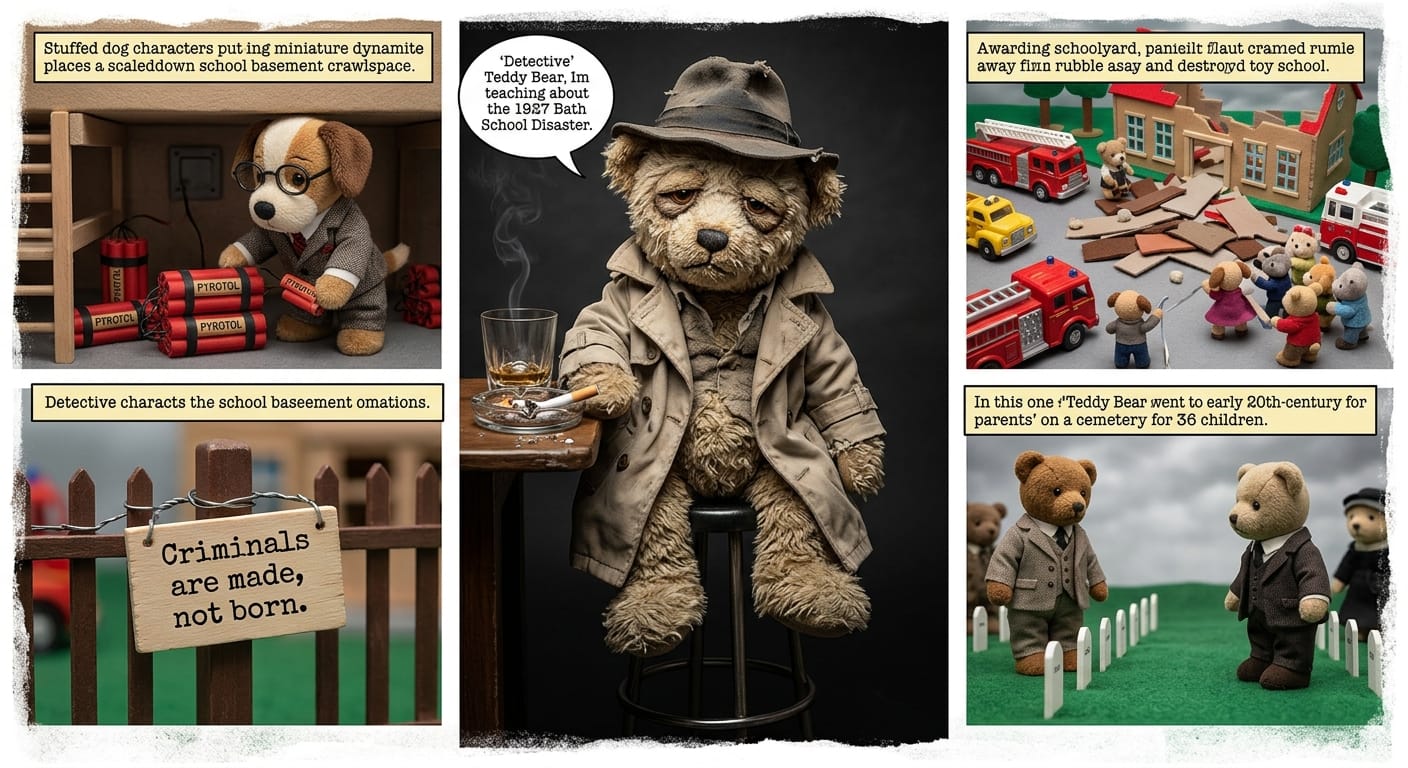
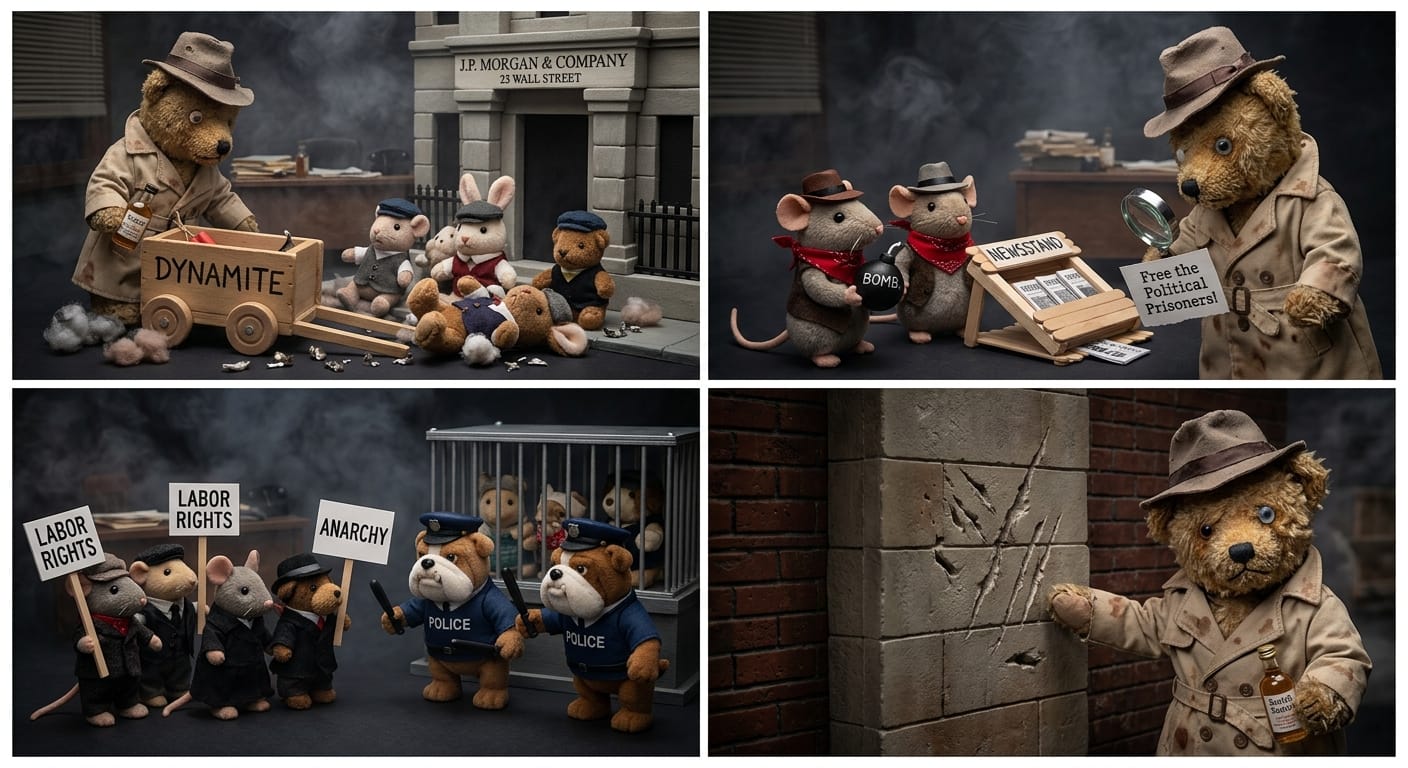
The 1920 Wall Street bombing killed 38 and was never solved. The 1927 Bath School Disaster killed 36 children. Both predate modern mass violence discourse and complicate every argument about it.

It Didn’t Start With Columbine: Historical Mass Violence
The common starting point for mass violence in America is 1966 — Charles Whitman on the UT Tower — or 1984, or 1999. These are anchor points in a story that’s actually much older. The Bath School Disaster of 1927 killed 36 children in a Michigan township before the term “mass shooting” existed. The Wall Street bombing of 1920 killed 38 people at noon in the financial center of the world and was never solved. The through-line to contemporary events is not just the acts themselves but the patterns underneath them: institutional grievance converted to mass violence, political violence against symbols of power, and the gap between warning signs and intervention that appears in 1927 as clearly as it appears in 2018.
In This Series
- The Bath School Disaster: America’s Deadliest School Attack Was in 1927
- The Wall Street Bombing of 1920: Terrorism Before the Word Existed
What Predates the Modern Frame
The word “terrorism” entered common American usage in the late 20th century. The concept it now names is not new. The Wall Street bombing of September 16, 1920, was, by any functional definition, a terrorist attack: an explosive device placed in a populated area at a time calculated for maximum casualties, directed at a symbolic target, executed by a political actor aiming to produce fear and demonstrate state impotence. It killed 38 people and wounded more than 400 and was never solved.
What it lacked was the word, and with it the institutional framework that the word activates. There was no FBI in its current form, no domestic terrorism statute, no national threat assessment infrastructure. The Bureau of Investigation pursued suspects for years and produced nothing prosecutable. The crime was absorbed into history and largely forgotten.
The Grievance Architecture Is Old — and Predictable
Andrew Kehoe in Bath Township in 1927 and the postal shooters of the 1980s share more than the fact of mass violence. They share a structure: an individual who believed an institution had wronged him materially and had exhausted or abandoned legitimate channels for redress, who then converted that grievance into violence against the institution and its people. Kehoe had fought his tax assessment through the school board for years before deciding on a different approach. The postal shooters had used the grievance process, the union system, and formal complaints before arriving at their endpoints.
This structure is not unique to mass violence — it appears in legal systems, in workplace studies, in political science. What makes it relevant here is the specificity with which it predicts the targets of violence. Kehoe didn’t attack a random building. He attacked the school that represented the tax that had ruined him. Thomas McIlvane, who killed four people at the Royal Oak, Michigan post office in 1991, had been fired and spent months pursuing a grievance that went nowhere. The violence was not random. It was aimed. This has practical implications for prevention that have largely not been implemented.^1^
What the Historical Record Adds to the Modern Debate
The two events in this series — the 1920 Wall Street bombing and the 1927 Bath School Disaster — are not included because they are thematically similar to each other. They aren’t, particularly. They are included because they document how old the problem is, how inadequate the institutional responses were even at the time, and how selectively the collective memory of mass violence has been constructed.
The Bath School Disaster is the deadliest school attack in American history. It is not in the American public consciousness. Columbine — 36 fewer dead — is. The difference is not explained by severity. It is explained by timing, by media, by the cultural moment, and by the fact that Andrew Kehoe used no firearms, making the Bath School Disaster inconvenient for certain arguments made about mass violence in each direction. Kehoe killed children with explosives he bought legally in the 1920s. The children were just as dead.
The Line Into the Present
The Wall Street bombing of 1920 established that small groups of politically motivated actors could execute mass casualty attacks on American soil, disappear without identification, and never face consequences. That precedent has been revisited: the Oklahoma City bombing of 1995 was the domestic political violence equivalent — 168 dead, perpetrators identified — and it produced the Antiterrorism and Effective Death Penalty Act of 1996. The Bath School precedent — that severe mass violence against children produces national grief and then national forgetting — has also been revisited, most directly at Sandy Hook in 2012.
The historical perspective doesn’t make current events easier. It makes them more legible. What looks like unprecedented crisis in any given moment is usually the visible emergence of patterns that have been running underground for much longer. The 1920s had mass violence. The 1930s had mass violence. Every decade of American history has examples of individuals or groups deciding that violence against civilians was the appropriate response to their circumstances or beliefs.
The question the historical record poses is not whether mass violence is new. It isn’t. The question is what, given a century of evidence about how these events unfold and what warning signs precede them, we are still getting wrong.
─────────
Sources:
- Gage, Beverly. The Day Wall Street Exploded. Oxford University Press, 2009.
- Bernstein, Arnie. Bath Massacre: America’s First School Bombing. University of Michigan Press, 2009.
- Avrich, Paul. Sacco and Vanzetti: The Anarchist Background. Princeton University Press, 1991.
- Murray, Robert K. Red Scare: A Study in National Hysteria, 1919–1920. University of Minnesota Press, 1955.
The Series