Government Experiments: When America Used Its People as Lab Rats
Four programs where the U.S. government experimented on its own people — Tuskegee MKULTRA Cold War radiation tests and forced sterilization. Subjects were chosen for their powerlessness.
Government Experiments: When America Used Its People as Lab Rats
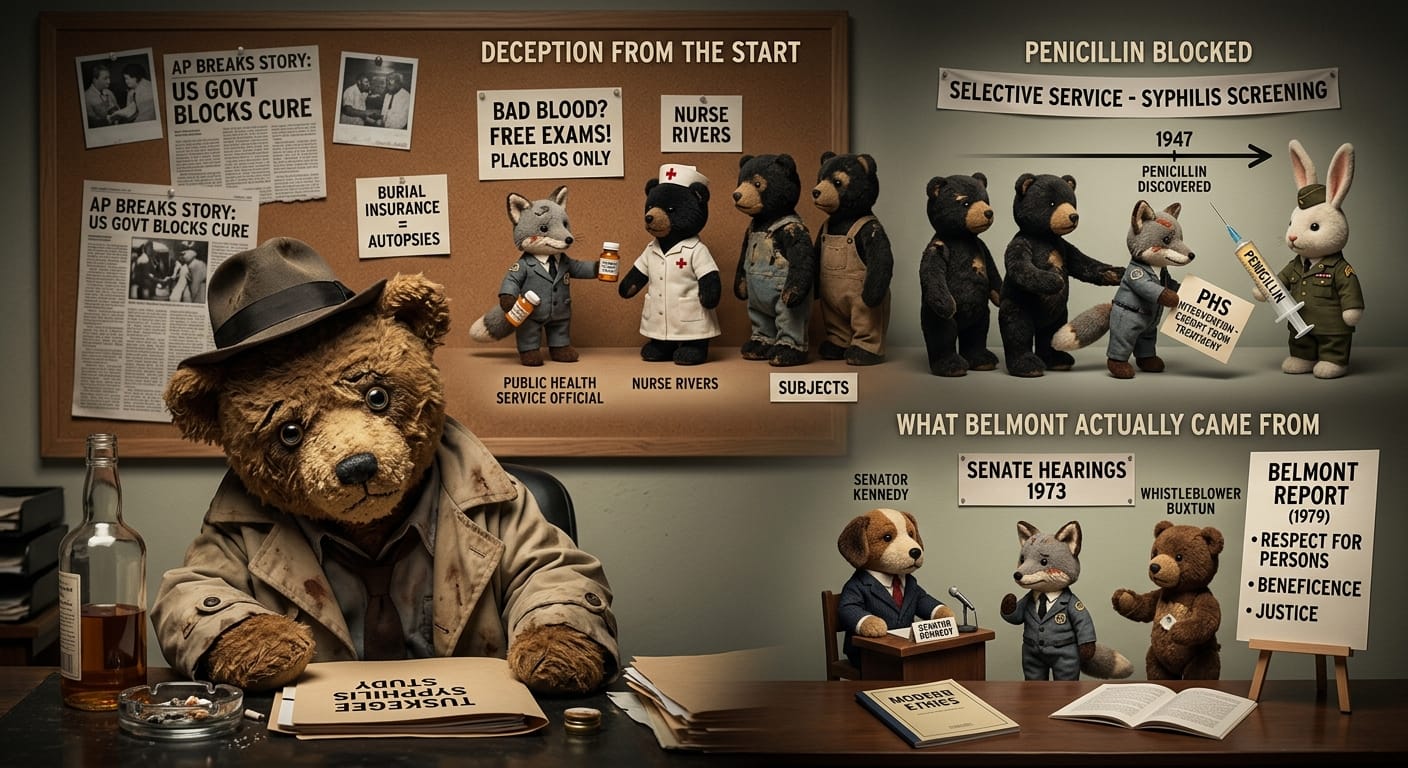
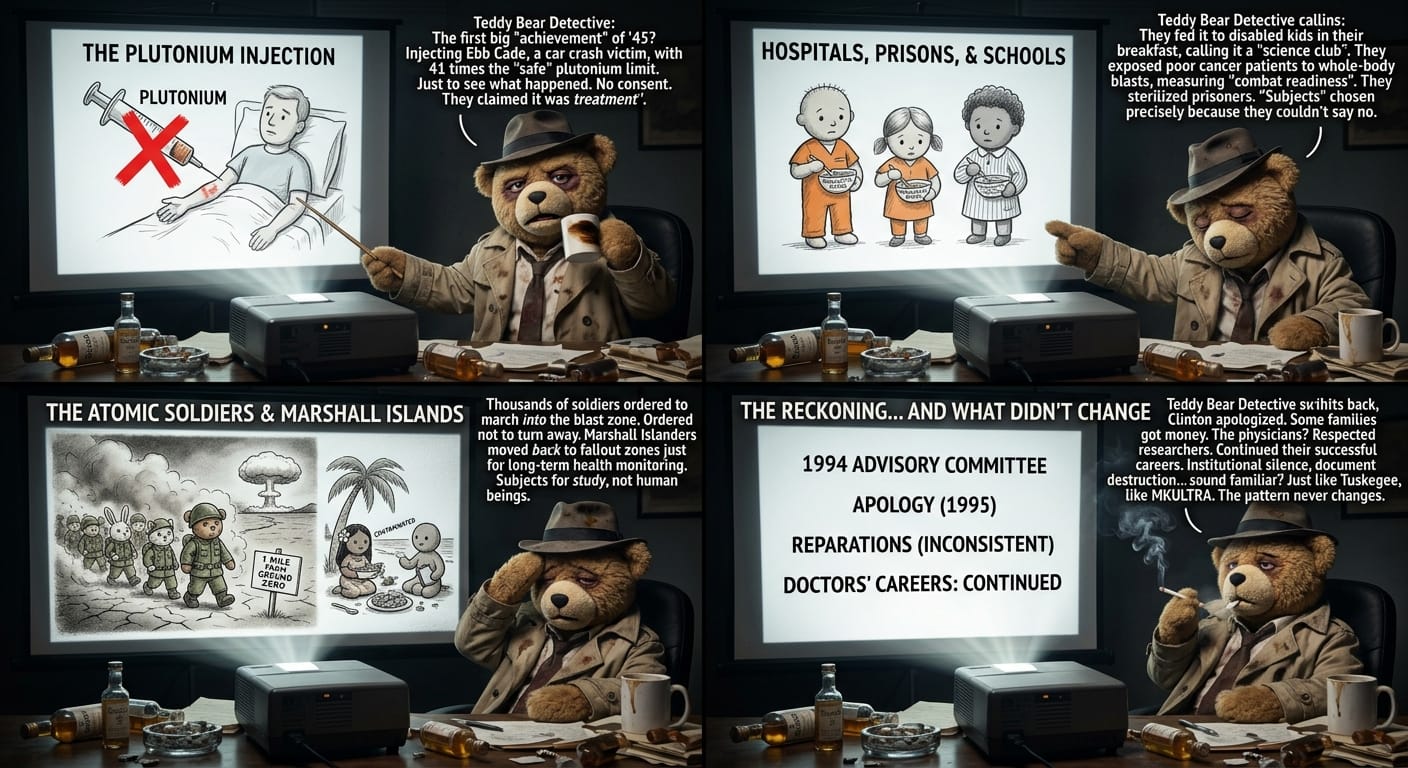
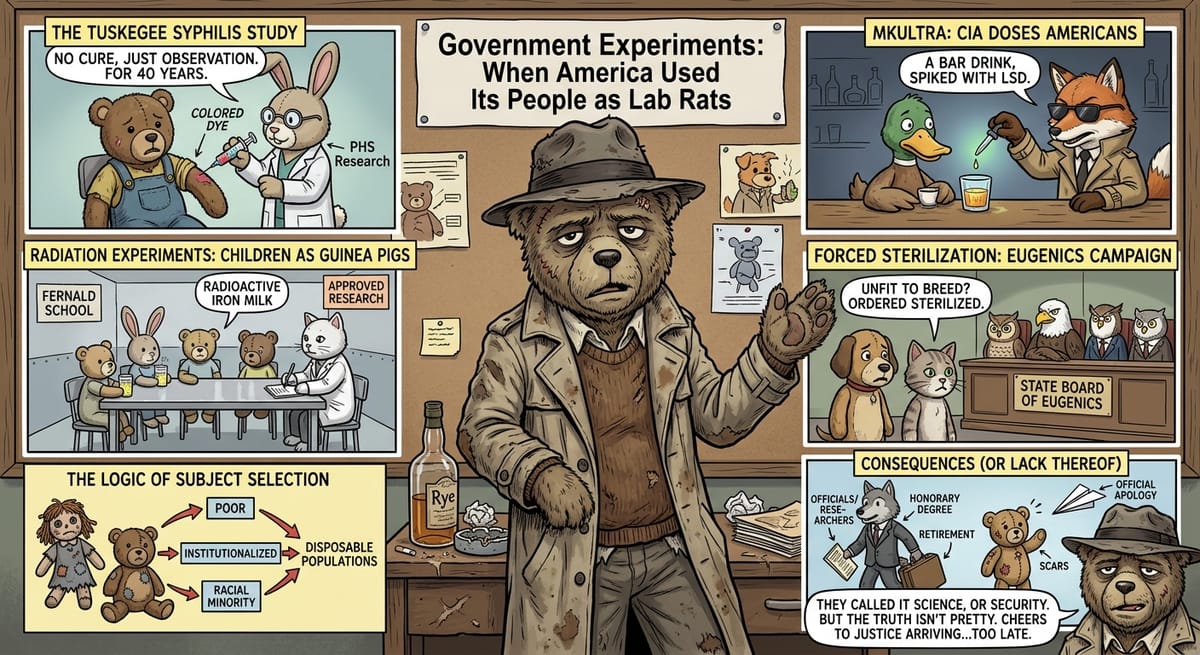
The four programs documented in this series — Tuskegee, MKULTRA, the Cold War radiation experiments, and the eugenics sterilization campaign — share a structure that is not incidental. In each case, the government identified a population it considered disposable, decided that the value of information or social control exceeded the rights of those people, and proceeded accordingly. The subjects were Black sharecroppers in Alabama, prisoners in Oregon, institutionalized children in Massachusetts, immigrants in California, poor women in North Carolina. They were chosen because they were unlikely to complain, unlikely to be believed, and unlikely to have the resources to fight back.^1^
In This Series
- The Tuskegee Syphilis Study: 40 Years of Medical Abuse
- Radiation Experiments: When the Government Used Citizens as Guinea Pigs
- MKUltra: The CIA Dosed Americans With LSD
- Forced Sterilization: America’s Eugenics Campaign
How Subjects Were Chosen Followed a Consistent Logic
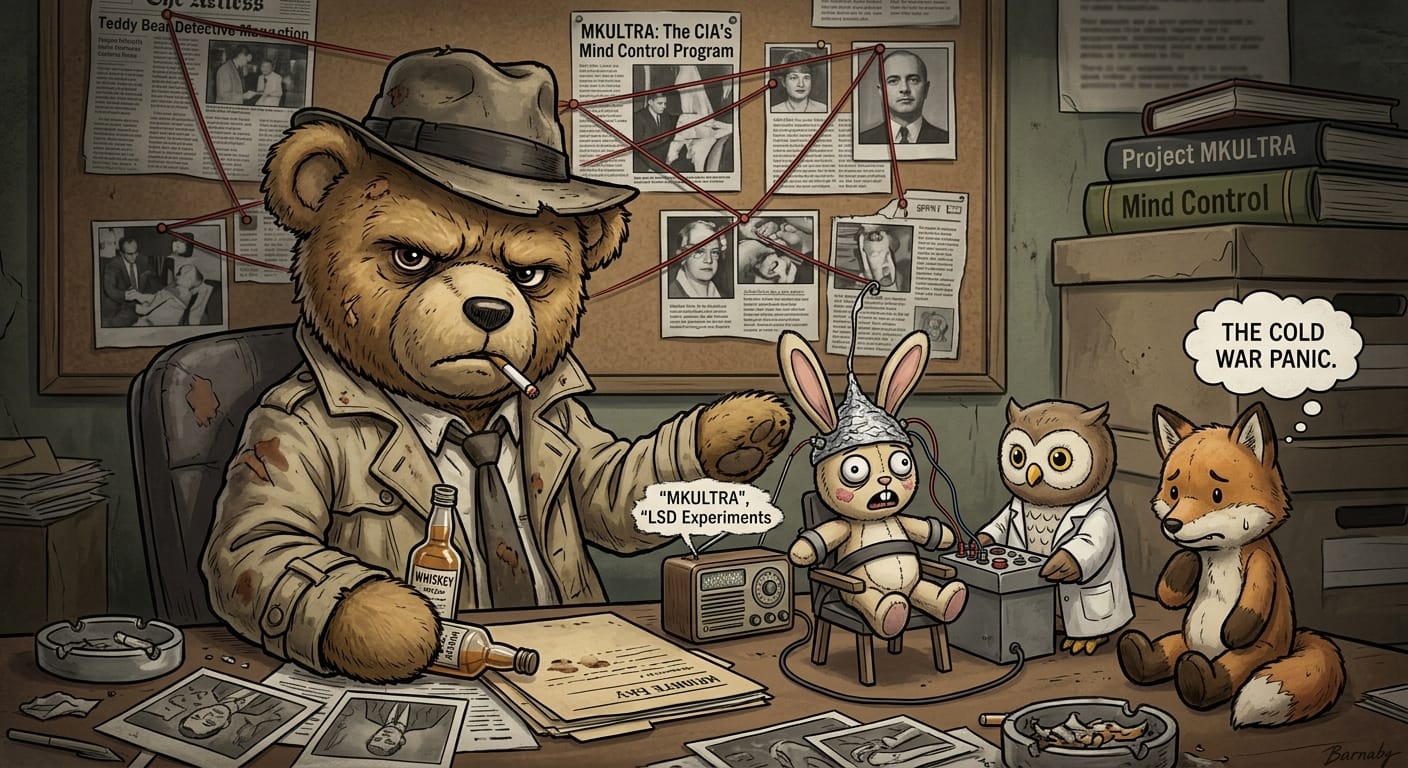
The Tuskegee study enrolled 399 Black men from one of the poorest counties in Alabama, where the promise of free medical exams, meals, and burial insurance was enough to secure participation from men who had no access to ordinary medical care.^1^ The CIA’s Operation Midnight Climax dosed men in San Francisco bars — men who had no connection to national security research and no reason to expect they were in a government experiment. The radiation experiments at Fernald State School selected children with intellectual disabilities, institutionalized and largely cut off from family contact.
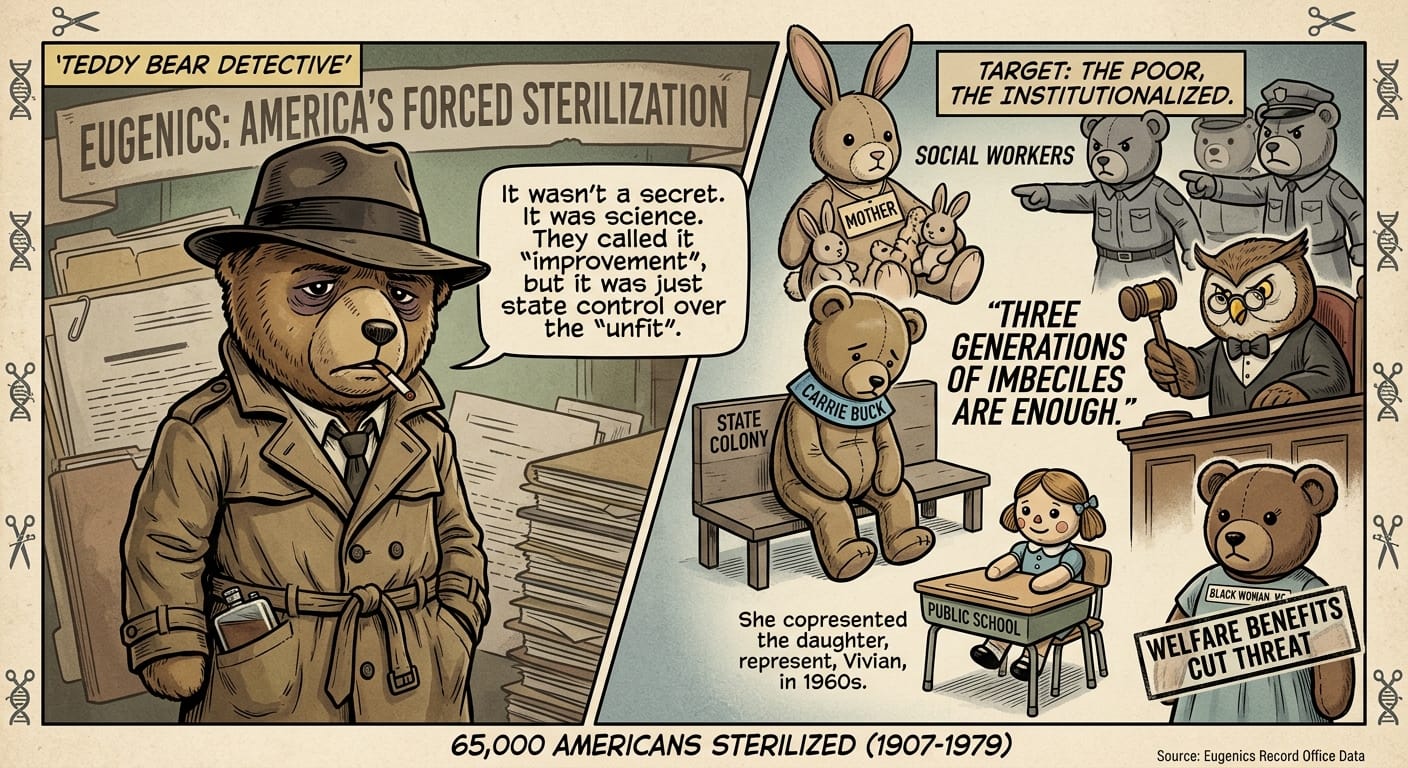
The eugenics sterilization campaign was the most systematic: state boards with legal authority to compel sterilization targeted people who were institutionalized, poor, or socially marginalized — categories that overlapped heavily with racial minorities, immigrants, and the economically vulnerable. North Carolina’s program, one of the most aggressive in the postwar period, shifted from roughly equal racial targeting in the 1930s to more than 65 percent Black victims by the 1960s.^2^
These Programs Were Not Hidden From the Institutions Running Them
In each case, the experimentation was not secret within the institutions conducting it. The Tuskegee study was reviewed annually by the Public Health Service and the Centers for Disease Control for 40 years. The plutonium injections at Manhattan Project hospitals were conducted by researchers employed by major American universities. MKULTRA was authorized by a CIA director, funded through the agency’s budget, and supervised by the agency’s Technical Services Staff. The sterilization programs operated through state boards with legislatively defined powers and published annual reports.
The silence was institutional, maintained by bureaucracies with every incentive to continue and none to stop. Peter Buxtun raised ethical objections to Tuskegee within the PHS starting in 1966 and was told the study would be completed.^3^ The MKULTRA documents that survived were found by accident, misfiled in a building that escaped the 1973 document destruction ordered by CIA Director Richard Helms. The radiation experiments were reviewed by a presidential advisory committee in 1994 — more than 50 years after the first plutonium injections.
What Laws Came After, and What They Couldn’t Fix
Each revelation produced law, or at least policy. The Tuskegee disclosure in 1972 drove the National Research Act of 1974 and ultimately the Belmont Report of 1979 — the foundational document of American research ethics. The Senate MKULTRA hearings in 1977 produced tighter oversight requirements for intelligence community research. The Advisory Committee on Human Radiation Experiments, reporting in 1995, produced new informed consent regulations. The Buck v. Bell litigation created a reform movement in research ethics.^4^
The reforms were consistently reactive rather than preventive. They addressed the programs that had been exposed rather than the structural conditions that produced them. In each case, the exposure came years or decades after the harm — after the subjects were dead, or old, or scattered, or no longer able to identify what had been done to them. The same pattern of accountability arriving too late also defines the corporate atrocities series, where the asbestos industry operated for fifty years after the first clear scientific warnings.
The Same People Who Did This Faced Almost No Consequences
No one was prosecuted for Tuskegee. Sidney Gottlieb of MKULTRA retired to northern California and died in 1999. Harry Laughlin of the Eugenics Record Office received an honorary degree from Heidelberg University in 1936. The physicians who conducted plutonium injections on patients who thought they were receiving cancer treatment continued their careers at American universities.^5^
The formal apologies came eventually: Clinton apologized for Tuskegee in 1997, for the radiation experiments in 1995. North Carolina apologized to sterilization victims in 2003. These apologies acknowledged the wrong and did not restore a single year to a single shortened life.
The common thread is not sadism or individual malice — most of the people who ran these programs believed they were serving legitimate scientific or national security purposes. The common thread is the decision to treat certain categories of people as less than fully human, as bodies whose pain and autonomy could be subordinated to institutional goals. That decision was made by institutions, reviewed by institutions, and protected by institutions. The individuals who made it were almost never the ones who faced consequences for it.
─────────
Sources:
- Reverby, Susan M. Examining Tuskegee. University of North Carolina Press, 2009.
- Schoen, Johanna. Choice and Coercion. University of North Carolina Press, 2005.
- Jones, James H. Bad Blood. Free Press, 1981.
- Advisory Committee on Human Radiation Experiments. Final Report. U.S. Government Printing Office, 1995.
- Kinzer, Stephen. Poisoner in Chief. Henry Holt and Company, 2019.
The Series