Corporate Atrocities: When Profit Kills
Six cases where corporations knew their products killed people and hid it — from the radium girls to the opioid crisis. The cover-up playbook is identical across all of them.

Corporate Atrocities: When Profit Kills
Corporate atrocities follow a consistent structure. A corporation identifies a risk to human life, calculates that concealing or ignoring it is more profitable than addressing it, and acts accordingly. The deaths that follow are not accidents — they are the predictable outcome of a deliberate business decision. The six cases in this series span a century and several industries, from the radium dial painters who died in the 1920s to the opioid crisis that is still killing people today. The mechanism is identical across all of them.^1^
In This Series
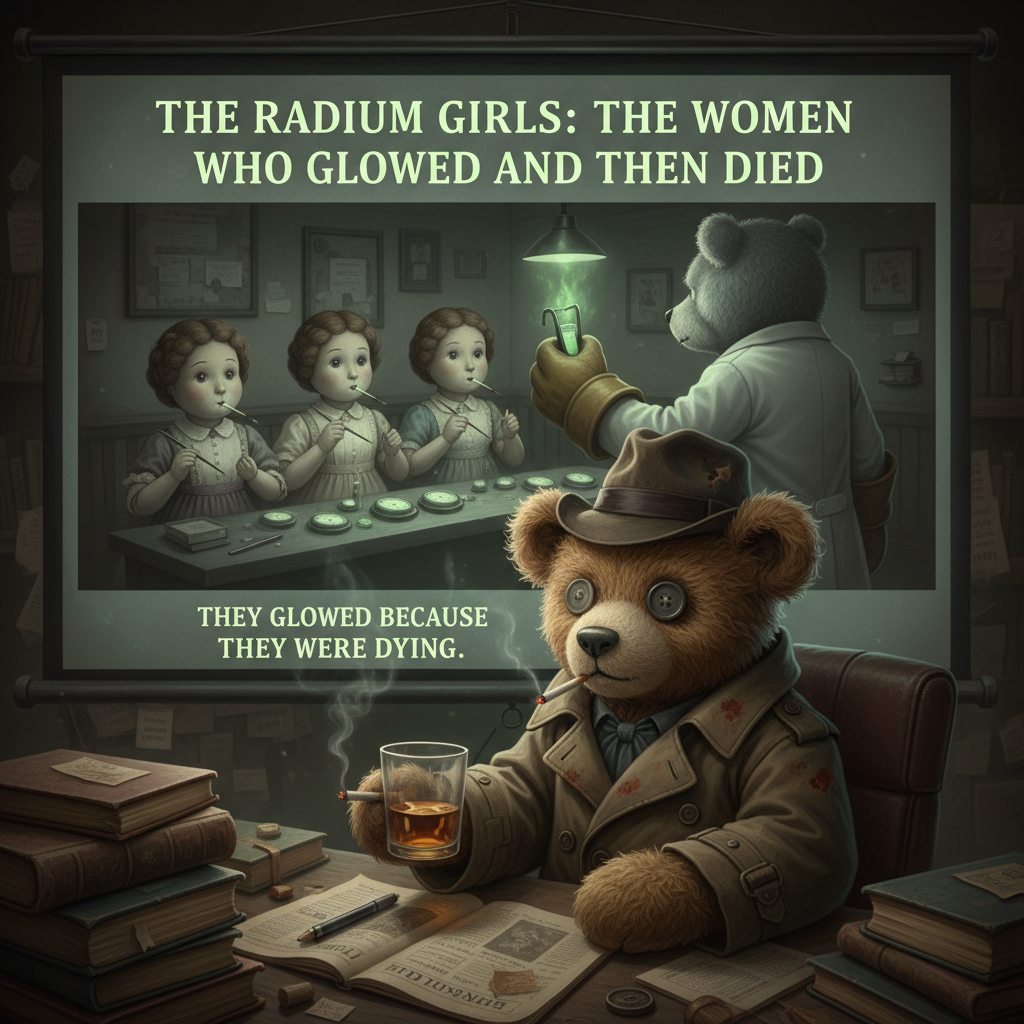
- The Radium Girls: The Women Who Glowed and Then Died
- Tobacco Industry Lies: How Cigarette Companies Denied Science for Decades
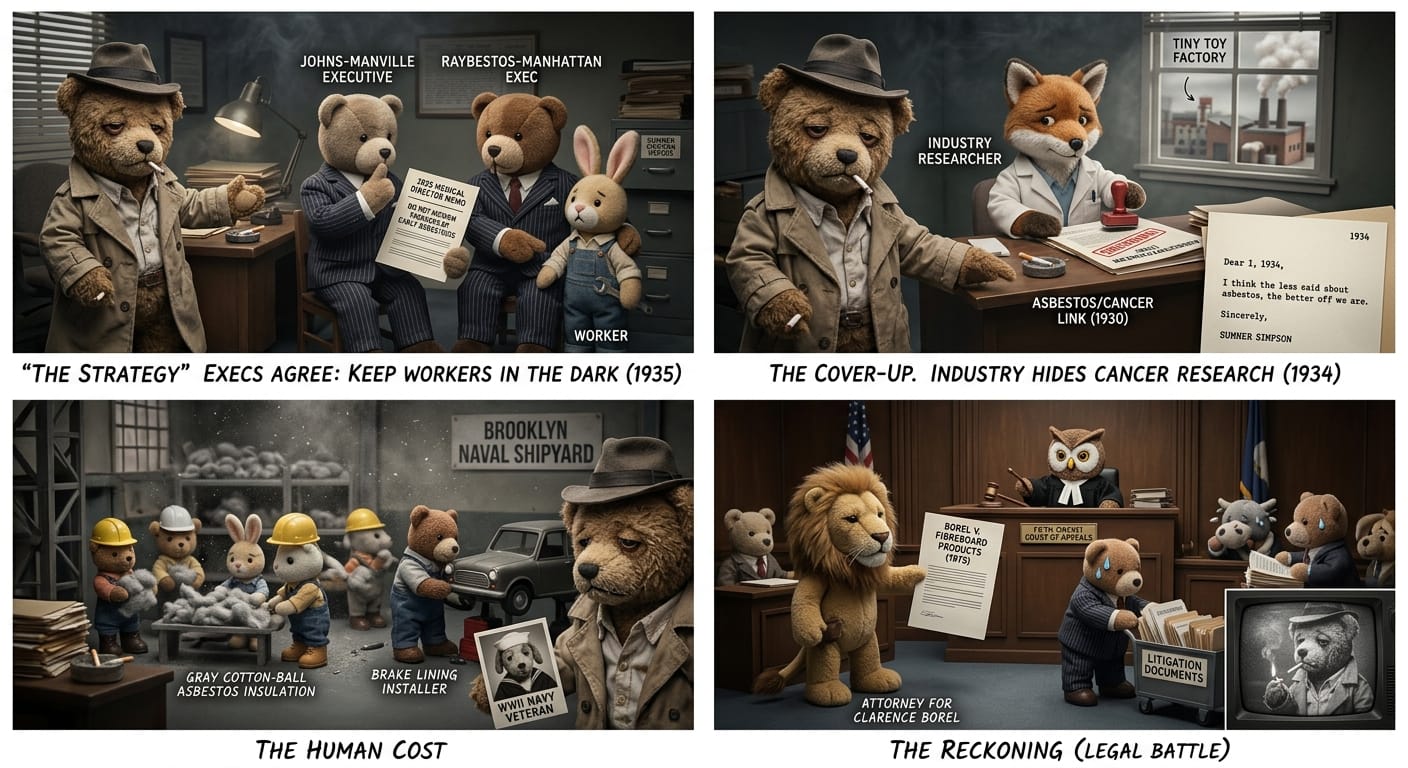
- The Asbestos Cover-Up: The Industry That Knew It Was Killing People
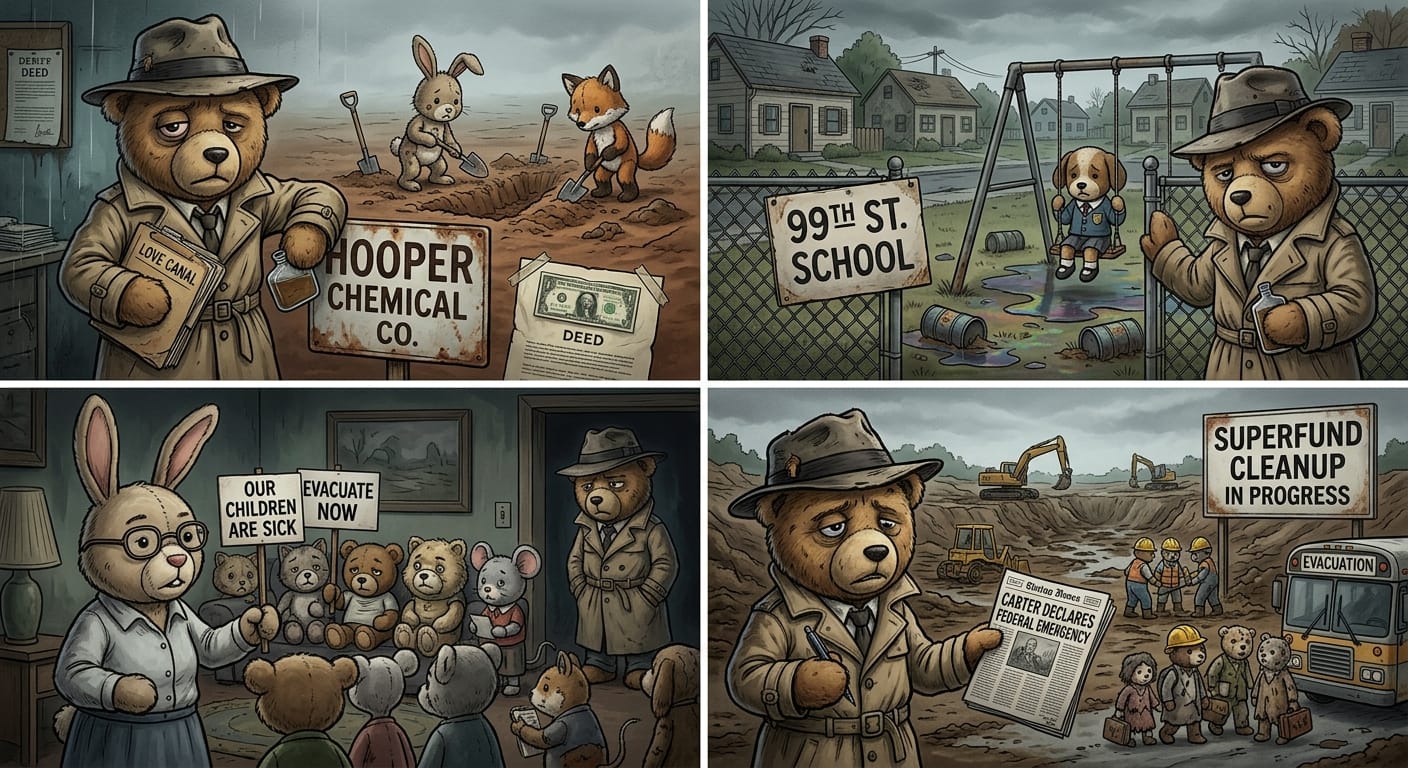
- Love Canal: The Neighborhood Built on Poison
- Bhopal: Union Carbide’s Midnight Massacre
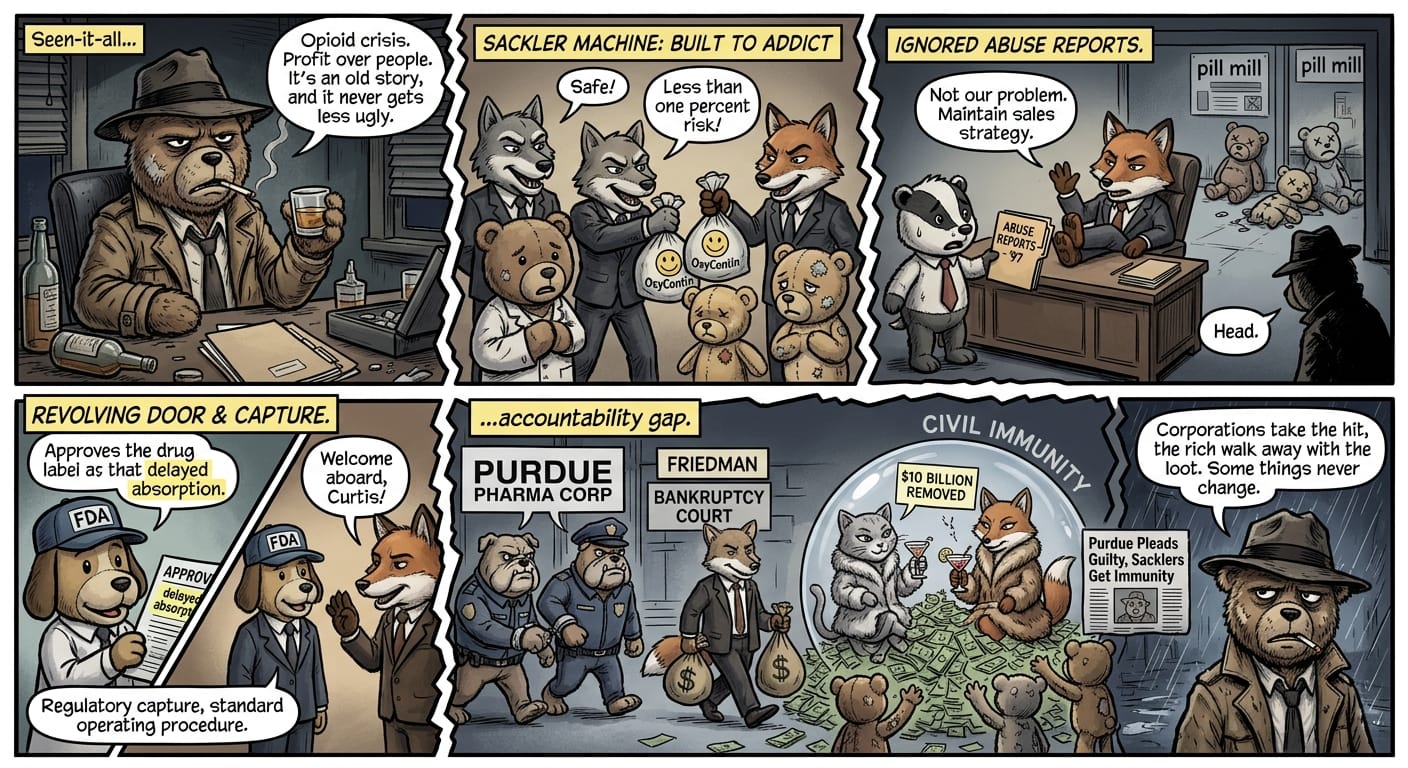
- Purdue Pharma and the Opioid Crisis
The Knowledge Problem That Wasn’t
The most consistent thread across corporate atrocities is not ignorance — it is knowledge. Every corporation discussed in this series knew. Radium dial painters were dying of radiation poisoning while U.S. Radium Corporation’s own scientists wore lead aprons and handled radium with tongs. Johns-Manville’s medical director wrote a 1935 memo advising against informing workers with early asbestosis because they might file claims. Tobacco executives hired Hill & Knowlton in 1953 to manufacture scientific doubt about a causal link their own internal research had already confirmed.^1^
Internal documents from each of these industries, produced in litigation or through regulatory investigation, tell the same story: the risk was known, internally discussed, and concealed from the workers and consumers who bore it. The knowledge was not uncertain or marginal. It was specific, detailed, and suppressed.
Purdue Pharma’s sales representatives were filing reports about OxyContin being crushed and snorted in rural Virginia by 1997, the year after launch. Hooker Chemical’s engineers had advised against selling Love Canal to the school board before the company sold it anyway. Union Carbide’s American safety team identified specific deficiencies at the Bhopal plant in 1982, two years before the gas release that killed thousands.^2^
How Did Regulation Fail Every Single Time?
Each atrocity in this series was enabled by the absence, inadequacy, or corruption of regulatory oversight. The radium industry operated without occupational health regulations because no meaningful federal workplace safety standards existed in the 1920s. The Bhopal plant operated under standards that were lower than those at Union Carbide’s American facilities because Indian environmental regulations were weaker — a gap the corporation deliberately exploited.
The FDA approved OxyContin with labeling that Purdue’s own researchers knew to be false about the drug’s abuse potential. The examiner who approved that labeling went to work for Purdue approximately two years later.^3^ The EPA’s 1989 asbestos ban was overturned by a federal court in 1991 because the agency had not satisfied the legal standard for demonstrating that the costs of regulation were proportionate to benefits — a standard that requires showing, essentially, that the deaths of specific numbers of people are expensive enough to justify restricting the industry killing them.
The regulatory environment did not fail by accident. The tobacco industry spent decades lobbying against health warnings and advertising restrictions. The asbestos industry funded research designed to undermine the scientific case for regulation. Purdue Pharma’s parent company spent millions lobbying against prescription drug monitoring programs that would have identified pill mills earlier. Corporate regulatory capture was not incidental to these disasters — it was part of the business model.
Who Died, and Who Collected
Across these cases, the pattern of who bears the risk and who collects the profit is consistent. The dial painters who lip-pointed their brushes were young immigrant women earning $20 a week. The residents of Love Canal were working-class families who had bought modest homes near what had been marketed as a model community. The people who died in Bhopal were residents of dense old neighborhoods surrounding an industrial facility — people who had no say in the plant’s safety practices and no means to evacuate when the gas cloud spread at midnight.^4^
The opioid crisis devastated communities that were already economically marginal — coal country, rural Appalachia, the post-industrial Midwest. The people most likely to be prescribed opioids for chronic pain from physically demanding jobs were the same people least equipped to recognize addiction, access treatment, or afford the legal costs of holding the manufacturer accountable.
The executives who made the decisions faced, at most, civil settlements and reputational damage. No tobacco executive has ever been imprisoned for the industry’s decades of fraud. Warren Anderson died in Florida in 2014, having never returned to India to face criminal charges. The Sackler family extracted $10 billion from Purdue before filing for bankruptcy.
The Playbook That Gets Reused
The tobacco industry’s disinformation campaign — funding scientific doubt, attacking independent researchers, cultivating regulatory allies, delaying action through litigation — became the operational template for subsequent corporate cover-ups. The same strategies appear in the asbestos industry’s response to mesothelioma research, in Purdue Pharma’s manipulation of pain medicine literature, and in the fossil fuel industry’s response to climate science.^5^
The pattern is learnable because it worked. Tobacco companies sold cigarettes profitably for decades after their internal research confirmed the cancer link. Asbestos manufacturers operated for 50 years after the first clear scientific warnings. The playbook’s primary function is to buy time — to widen the gap between when a corporation knows it is killing people and when it is held accountable for doing so.
The accounting always comes eventually. It is always too late.
─────────
Sources:
- Brandt, Allan M. The Cigarette Century. Basic Books, 2007.
- Fortun, Kim. Advocacy After Bhopal. University of Chicago Press, 2001.
- Keefe, Patrick Radden. Empire of Pain. Doubleday, 2021.
- Gibbs, Lois Marie. Love Canal: The Story Continues. New Society Publishers, 1998.
- Oreskes, Naomi, and Erik M. Conway. Merchants of Doubt. Bloomsbury Press, 2010.
The Series