Depression Era Outlaws: Crime as Folk Hero
Dillinger Bonnie and Clyde Pretty Boy Floyd Baby Face Nelson — the Depression outlaws became folk heroes because the banks had already taken everything else.
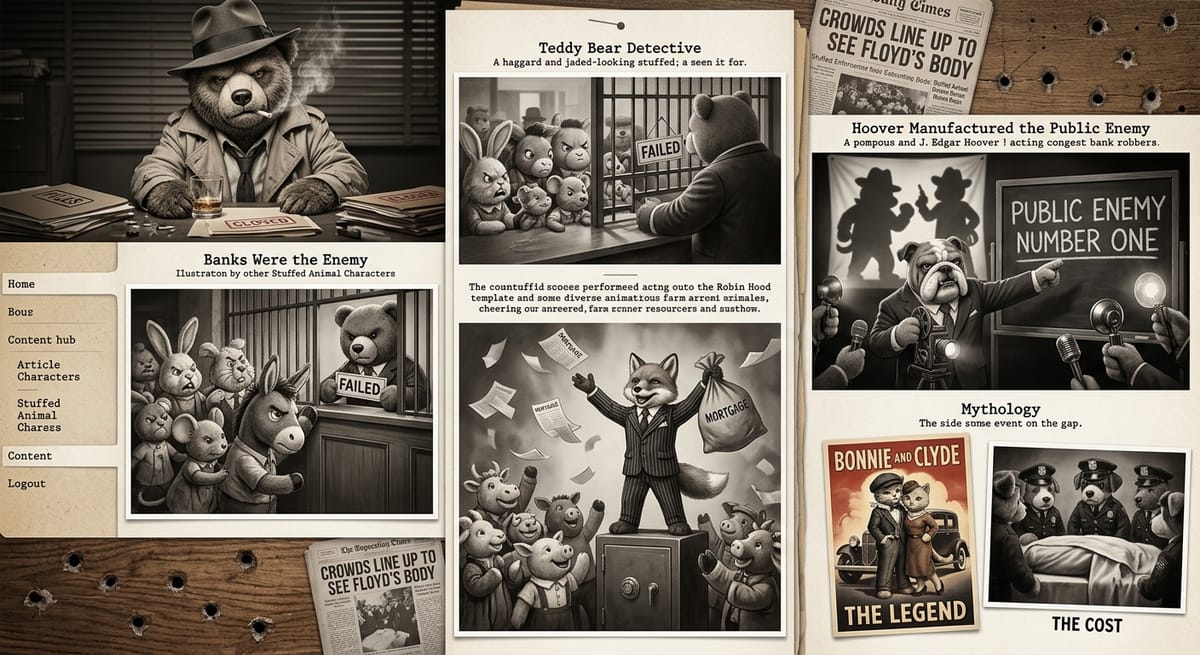
Depression Era Outlaws: Crime as Folk Hero
Between 1933 and 1934, more than a dozen significant bank robbers and kidnappers were killed or captured by the FBI in a crime wave that J. Edgar Hoover systematically turned into a national political spectacle. John Dillinger, Pretty Boy Floyd, Baby Face Nelson, Bonnie and Clyde, the Barker Gang — their deaths were announced with press releases, photographed in exhaustive detail, and presented to an American public that was simultaneously appalled by the violence and deeply sympathetic to the criminals. Crowds lined up to see the bodies. Tens of thousands attended funerals for people who had killed law enforcement officers.
The Depression-era outlaws are the most documented case in American history of mass sympathy for violent criminals, and the sympathy had causes that deserve examination rather than dismissal.
In This Series
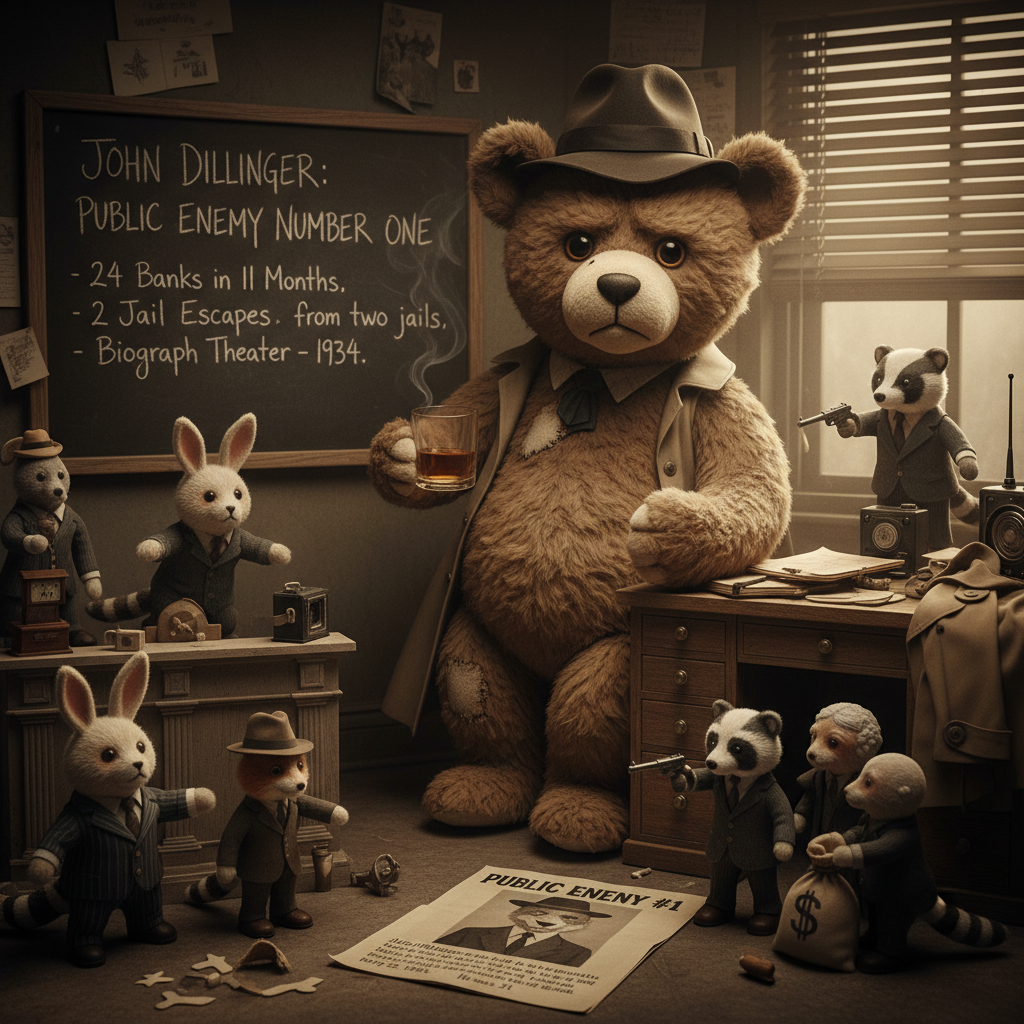
- John Dillinger: Public Enemy Number One
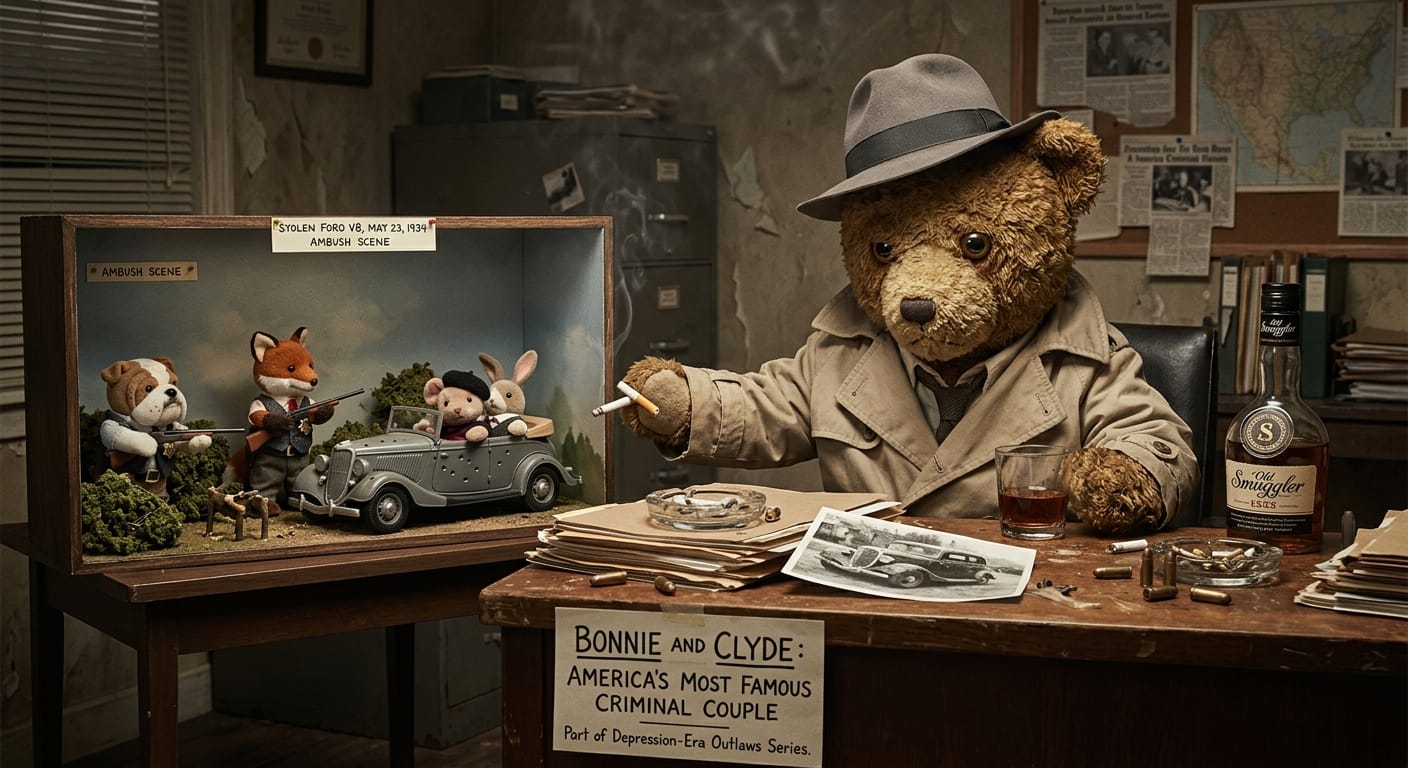
- Bonnie and Clyde: America’s Most Famous Criminal Couple
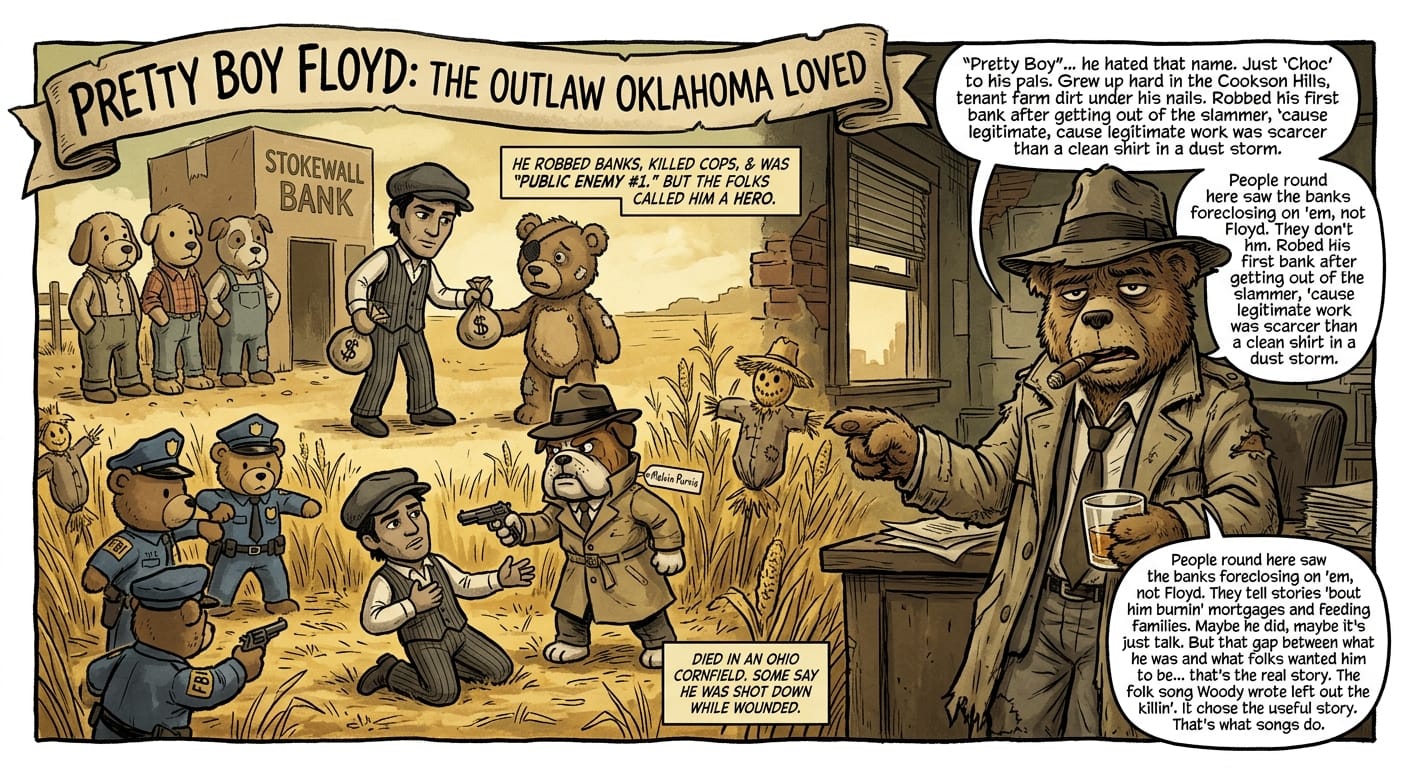
- Pretty Boy Floyd: The Outlaw Oklahoma Loved
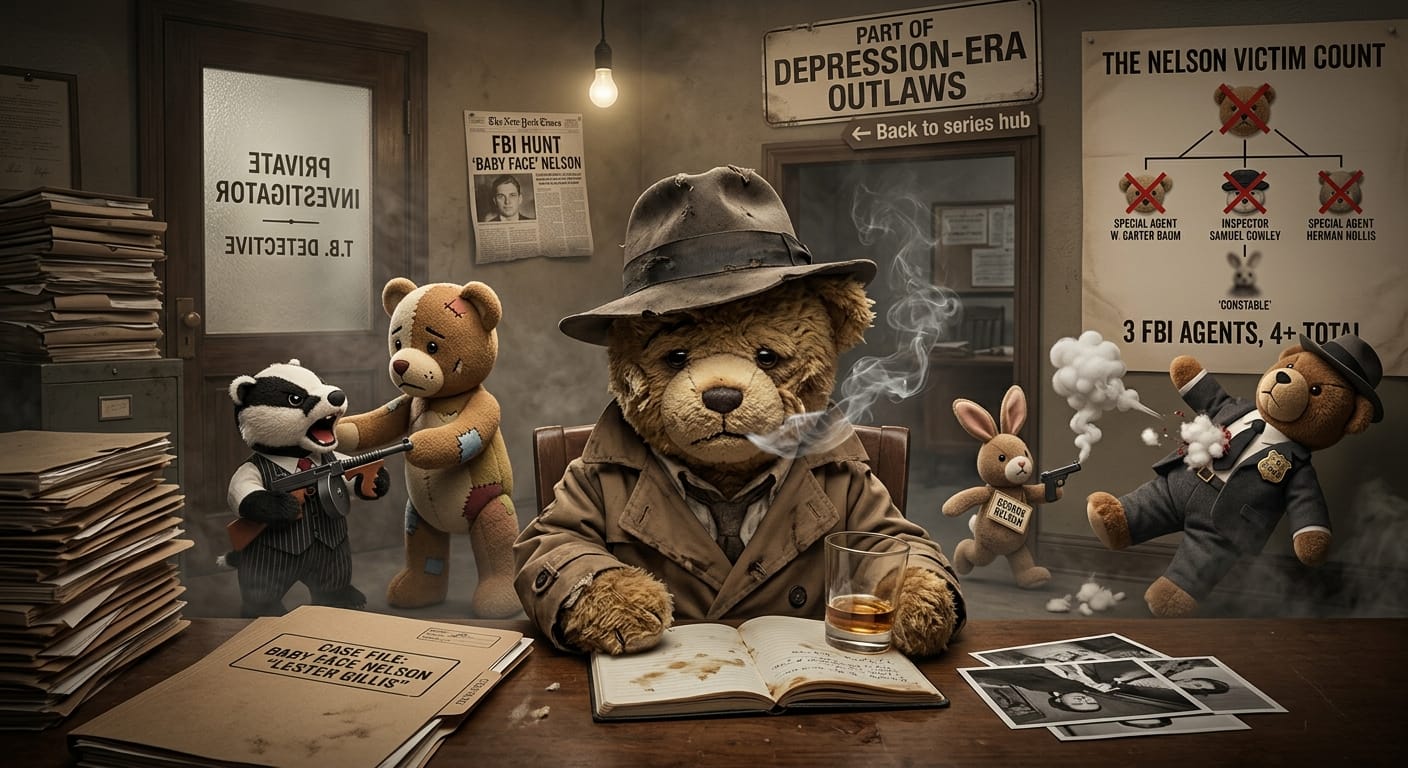
- Baby Face Nelson: The Most Dangerous Man in America
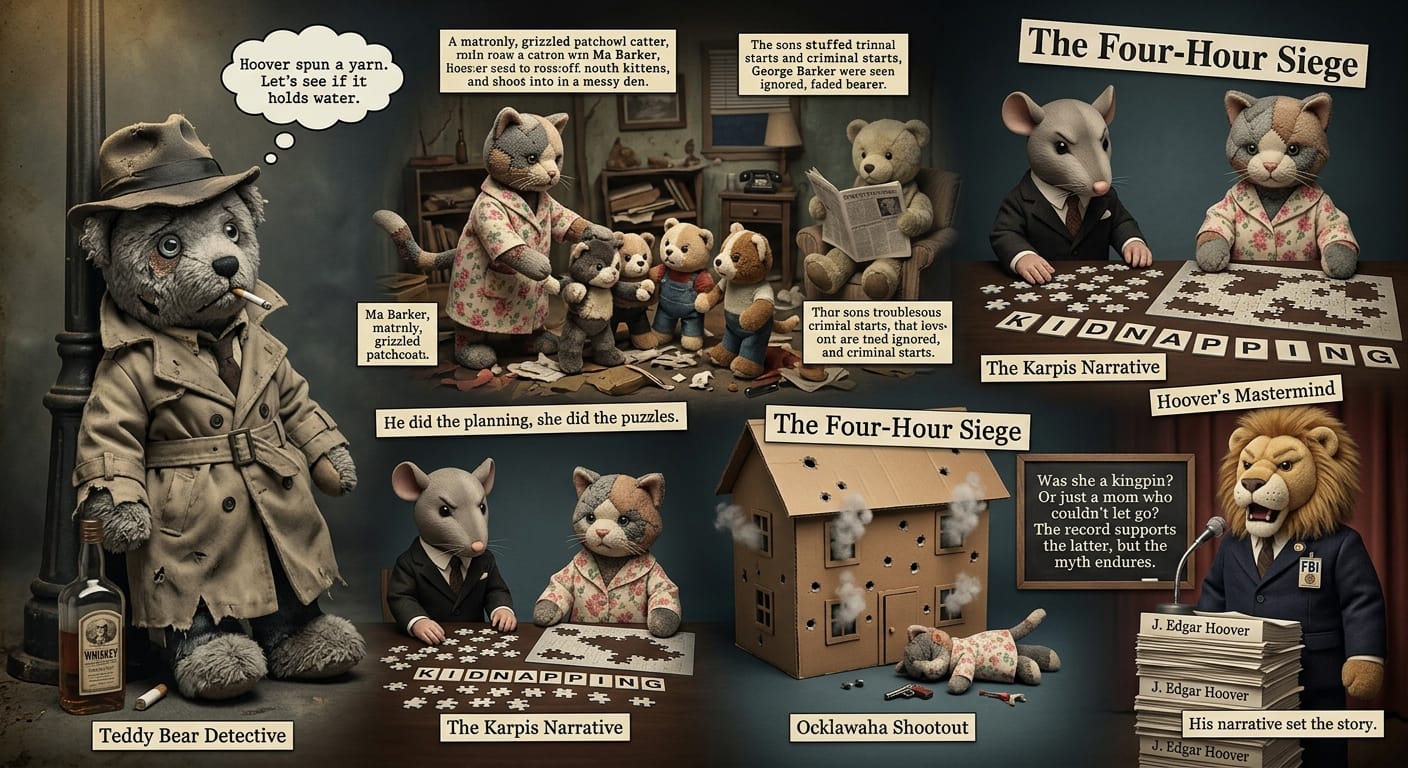
- Ma Barker: The Mother Who Ran a Criminal Empire (Maybe)
Banks Were the Enemy Because They Had Behaved Like One
By 1933, approximately 9,000 American banks had failed since the beginning of the Depression in 1929. Millions of depositors had lost savings they couldn’t recover. Farmers across the Midwest and Southwest had watched banks foreclose on land that had been in families for generations after agricultural prices collapsed. The bank was not an abstract institution — it was the specific entity that had taken things and given nothing back. Robbing a bank felt, to a significant portion of the American public, like poetic justice.
This doesn’t mean the public endorsed the killing of officers. The nuance was real and was expressed in contemporary polling and letters to newspapers: people could simultaneously disapprove of the violence and root for the robbers to escape. Dillinger’s courthouse escape using a carved wooden gun — if the story is accurate, which historians have questioned — was celebrated not because people wanted bank robbers loose but because it was a humiliation of an institution, the Indiana court system, that had failed to be fair. The story played better than the shooting.
Hoover Manufactured the Public Enemy to Expand the FBI
The Depression-era crime wave was not primarily a natural phenomenon. It was, in part, a political product manufactured by J. Edgar Hoover and the FBI’s publicity machine. Hoover needed public enemies — specifically, he needed violent, photogenic criminals that congressional appropriations committees could point to as justification for expanding FBI funding, jurisdiction, and authority. The Mann Act had given the Bureau a foothold in interstate crime. Hoover wanted more.
The “Public Enemy” designation — applied to Dillinger in 1934, then Floyd, then Nelson — was a press category before it was a legal one. It came from the Chicago Crime Commission, which had used it in 1930 for Al Capone, and Hoover adopted and nationalized it because it worked as media. A “Public Enemy Number One” was a story with a built-in resolution: the FBI would catch or kill him, and each resolution demonstrated the Bureau’s necessity.
What the designation required was that the criminals be dangerous enough to justify federal intervention but not so politically complex that their prosecution raised uncomfortable questions. Dillinger was ideal: he had robbed 24 banks and escaped from two jails, and his populism was shallow enough to be easily dismissed. Floyd’s potential connection to the Kansas City Massacre made him prosecutable on federal grounds. Ma Barker had to be retroactively made a mastermind to justify killing a 61-year-old woman.
The Robin Hood Template Never Really Fit
The Depression-era outlaws didn’t quite fit the Robin Hood template they were assigned, but the template was applied anyway because it was available and because it met an emotional need. Pretty Boy Floyd burning mortgage documents is unverified. Dillinger returning women’s purses during robberies is unverified. Bonnie and Clyde were not striking at the banks that had ruined rural America — they were robbing grocery stores and killing the officers who came for them. The folk hero story required softening the specific violence and inflating the economic symbolism.
Woody Guthrie’s “Pretty Boy Floyd,” written in 1939, is the most artistically accomplished expression of this template and the most transparent about what it’s doing. The song ends with an explicit comparison between Floyd’s robberies and the legal depredations of banks and lawyers — “some will rob you with a six-gun, and some with a fountain pen” — that moves the argument from the specific case (Floyd’s documented killings) to the general principle (the system is the real criminal). This is good folk song writing. It’s also a deliberate substitution of the general for the particular that required ignoring the particular.
What the Mythology Could Never Account For
The Depression-era outlaw mythology survived because the underlying grievances survived. The bank failures, the foreclosures, the felt injustice of economic systems that worked differently for different classes of Americans — these were real, and they didn’t end when the New Deal arrived or when World War II absorbed the Depression. The mythology found new applications: the 1967 Bonnie and Clyde film mapped the Depression-era outlaws onto 1960s counterculture, making them symbols of rebellion against conformity rather than against financial institutions.
The gap between the myth and the bodies it rests on is the permanent problem. Nelson’s three dead FBI agents, Floyd’s two dead Ohio officers, the nine law enforcement officers killed by Bonnie and Clyde — these are the specific costs of the specific people the mythology celebrates. The mythology has never adequately accounted for them because to do so would require admitting that the folk heroes’ war against the system was conducted mostly against the people at the bottom of the system, the deputies and patrolmen and small-town bank employees who had no more power than the outlaws they were trying to stop.
─────────
Sources:
- Burrough, Bryan. Public Enemies: America’s Greatest Crime Wave and the Birth of the FBI, 1933–34. Penguin Press, 2004.
- Guinn, Jeff. Go Down Together: The True, Untold Story of Bonnie and Clyde. Simon & Schuster, 2009.
- Potter, Claire Bond. War on Crime: Bandits, G-Men, and the Politics of Mass Culture. Rutgers University Press, 1998.
- Wallis, Michael. Pretty Boy: The Life and Times of Charles Arthur Floyd. St. Martin’s Press, 1992.
The Series