American Cults: Why They Form and How They Kill
Seven American cults — from Jonestown's 918 dead to NXIVM's branded women — reveal the same structural failure: a system that won't stop exploitation dressed as religion.
American Cults: Why They Form and How They Kill
The United States has produced more destructive cults than any other Western democracy, and the concentration isn’t accidental. The same features that define American civic life — religious freedom codified in the First Amendment, a cultural emphasis on individual reinvention, the sheer geographic vastness that allows communities to isolate themselves from oversight — create structural conditions that are uniquely hospitable to the formation and operation of groups that use spiritual authority as a mechanism of control, exploitation, and, in the worst cases, mass death.^1^
The seven groups profiled in this series span a century of American cult history, from the Manson Family’s Helter Skelter delusion in 1969 to NXIVM’s corporate-branded sexual exploitation exposed in 2017. They differ in almost every surface particular — theology, geography, membership demographics, the specific mechanisms of harm they employed. But underneath those differences, the structural dynamics are consistent enough to constitute a pattern, and the pattern reveals more about America than it does about any individual cult leader.^2^
In This Series
- Jonestown: 918 Dead in the Jungle
- The Manson Family: How a Dropout Became America’s Boogeyman
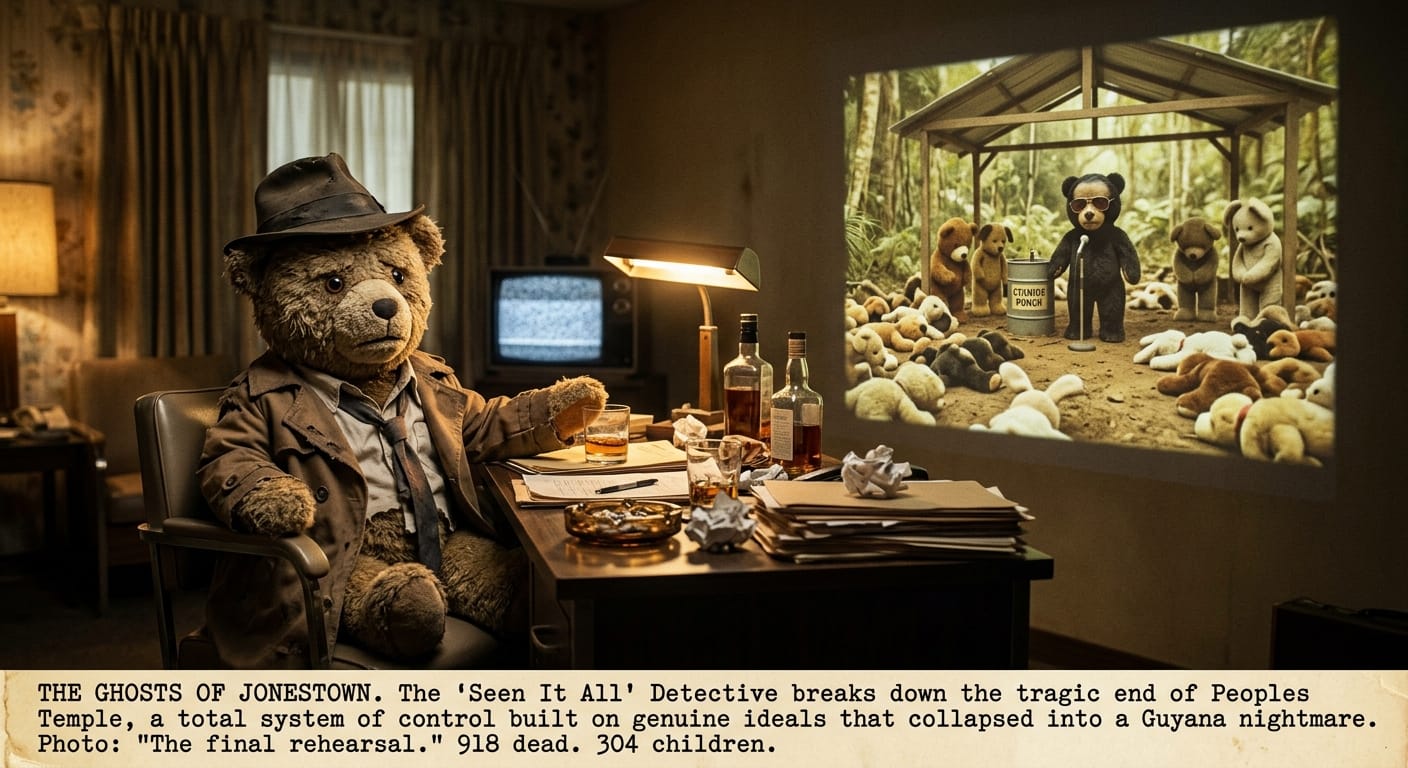
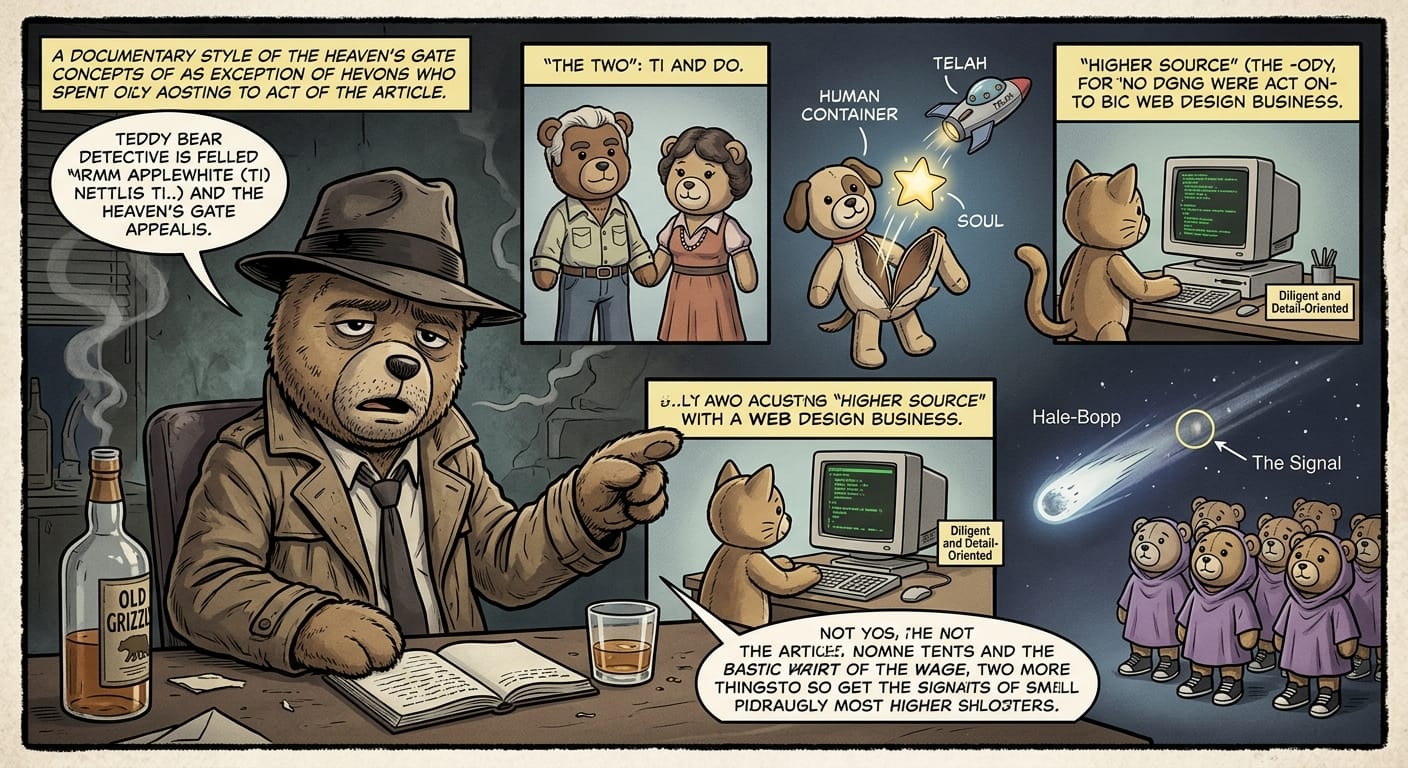
- Heaven’s Gate: The Cult That Killed Themselves to Catch a Comet
- Waco and David Koresh: The Siege That Defined an Era
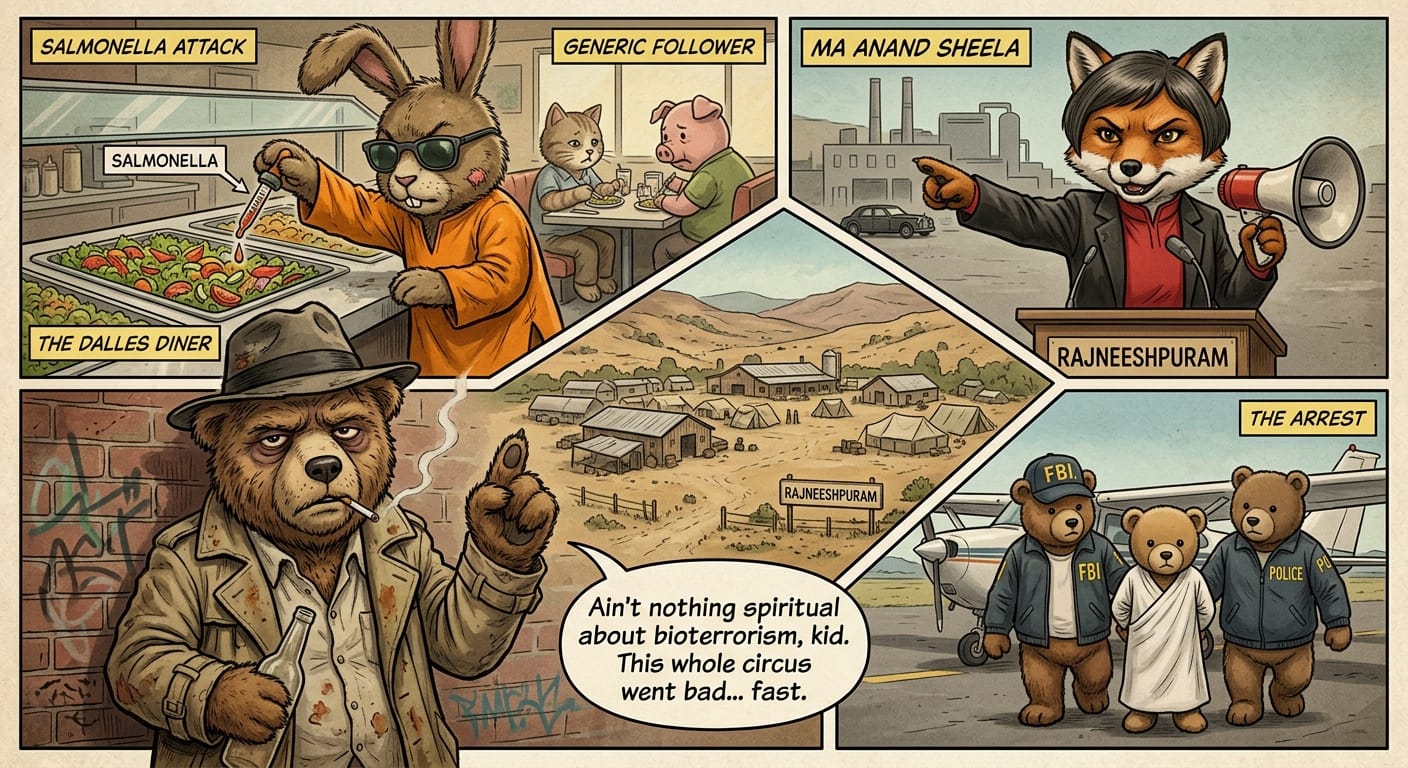
- The Rajneeshees: The Cult That Poisoned a Town
- The Children of God: The Cult That Weaponized Sex
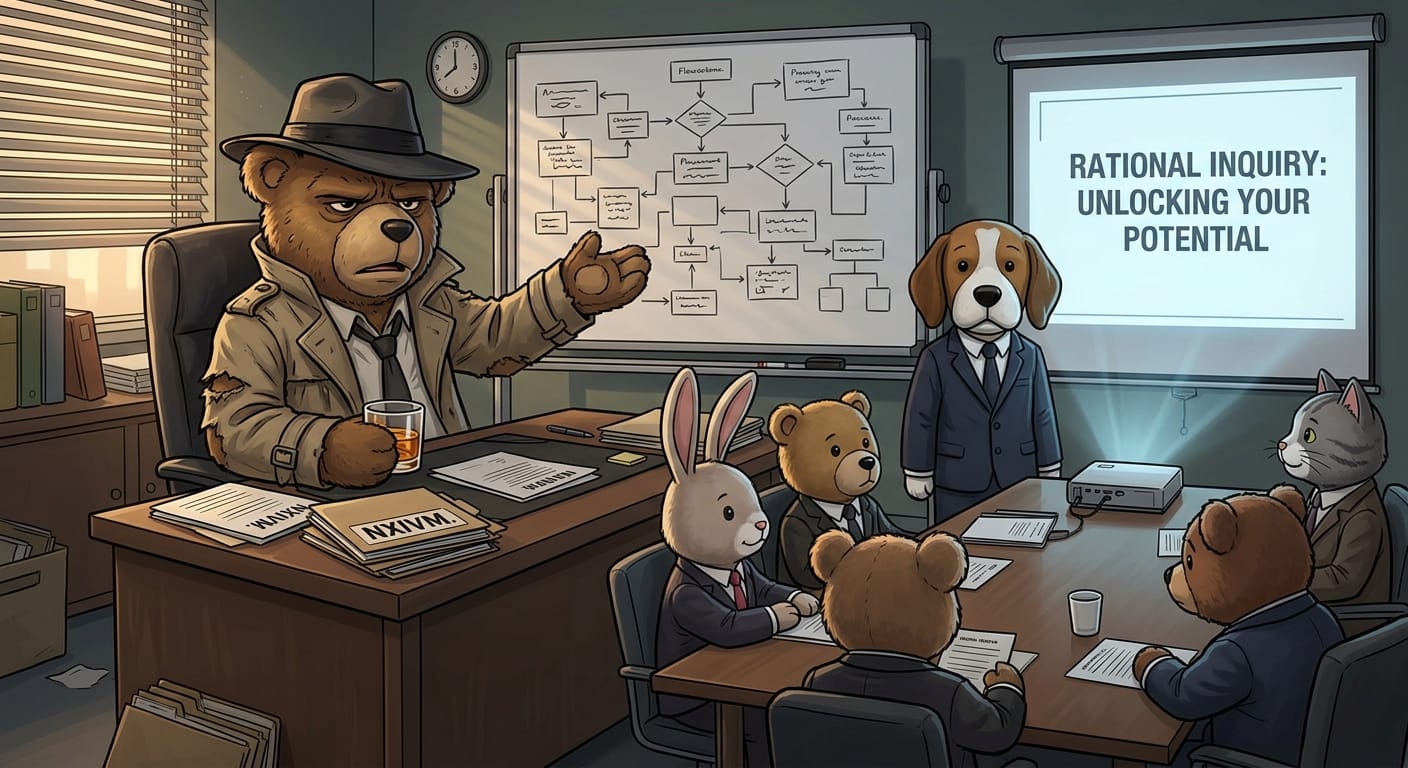
- NXIVM: The Self-Help Cult That Branded Women
Every Cult Follows the Same Developmental Arc
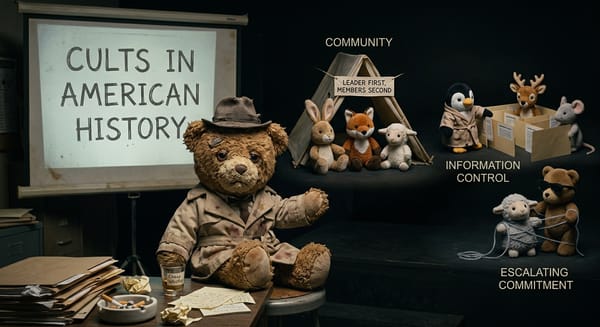
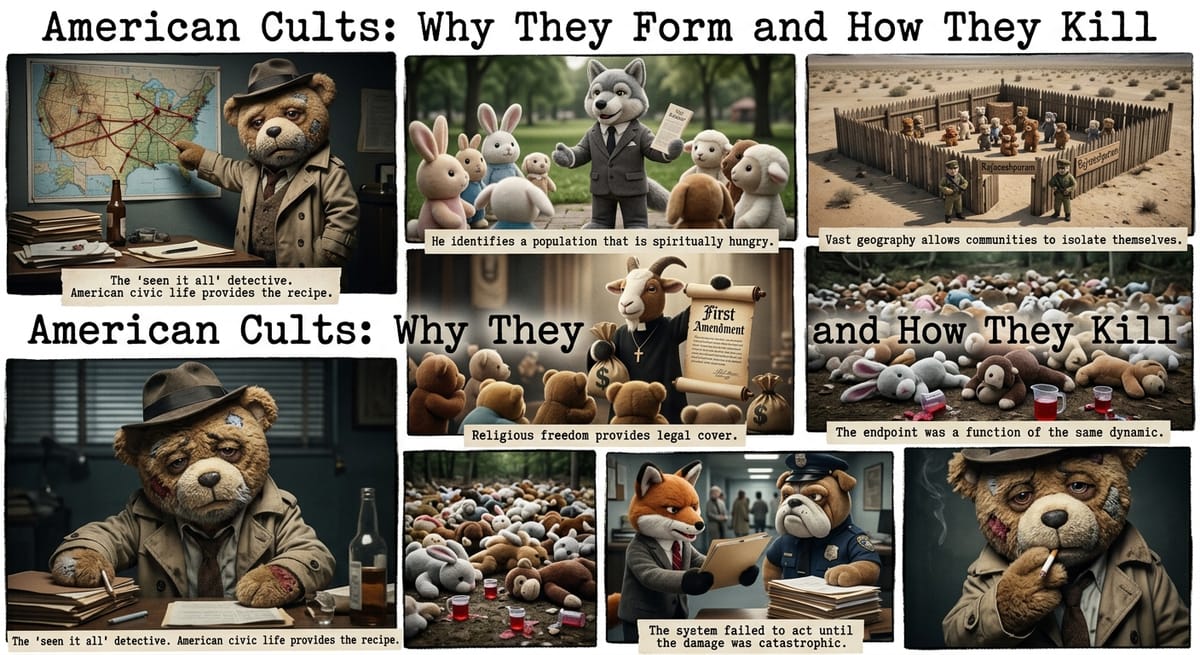
Every cult profiled in this series follows a recognizable developmental arc. A charismatic leader identifies a population that is spiritually hungry, emotionally vulnerable, or socially disconnected. The leader offers a framework — theological, philosophical, or therapeutic — that provides meaning, community, and a sense of purpose. The framework is initially compelling enough to attract sincere seekers, and the community that forms around it provides genuine benefits in its early stages: belonging, structure, shared mission.^1^
The transition from community to cult happens when the framework becomes a mechanism of control. Information is restricted. Questioning is redefined as failure. Contact with people outside the group is discouraged and eventually prohibited. The leader’s authority becomes absolute, and the group’s internal dynamics shift from mutual support to hierarchical compliance. The specific form the control takes varies — sexual exploitation at the Children of God and NXIVM, financial exploitation at virtually all of them, physical violence and isolation at Jonestown and Waco, bioterrorism at the Rajneeshee commune — but the underlying dynamic is consistent: the leader’s needs replace the members’ wellbeing as the organization’s operational priority.^3^
The endpoint varies. Jonestown ended in mass death. Waco ended in fire. Heaven’s Gate ended in coordinated suicide. The Manson Family ended in murder. The Children of God ended in a slow dissolution that left thousands of abuse survivors. NXIVM ended in federal prosecution. The Rajneeshees ended in deportation and imprisonment. But in every case, the endpoint was a function of the same dynamic: a closed system, insulated from external accountability, in which a leader with unchecked authority made decisions that destroyed the people who had trusted him.^2^
Why America Is So Good at Producing Cults
The American cult landscape is shaped by structural conditions that don’t exist in the same combination anywhere else. Religious freedom — enshrined in the First Amendment and enforced through a legal tradition that treats government interference in religious practice with extreme suspicion — provides legal cover that cult leaders exploit. Jim Jones operated as a church. David Koresh operated as a church. The Children of God operated as a missionary organization. In each case, the religious classification insulated the group from the kind of regulatory oversight that a secular organization engaging in the same practices would have faced.^1^
The cultural emphasis on reinvention provides a supply of seekers. Americans are, compared to citizens of other Western democracies, unusually mobile — geographically, economically, and spiritually. The social structures that might anchor people in communities and provide alternatives to cult membership — extended families, stable neighborhoods, religious institutions with long-standing relationships to their congregations — are weaker in the United States than in most European or East Asian societies. The result is a population that includes a significant number of people who are between communities, between identities, and vulnerable to leaders who offer the certainty and belonging that their current circumstances don’t provide.^3^
The geographic factor is practical rather than philosophical. The United States has large quantities of rural, sparsely populated land where communities can establish compounds with minimal oversight. Jonestown was in Guyana rather than the United States, but the principle is the same — isolation provides the physical infrastructure for control. Rajneeshpuram was built on sixty-four thousand acres of Oregon desert. The Branch Davidians operated a compound outside Waco. The Manson Family occupied a ranch in the Santa Susana Pass. The availability of isolating geography is a necessary condition for the kind of total control that distinguishes a destructive cult from a merely eccentric religious community.^2^
Who Actually Joins Cults?
The people who join cults are not, as the popular stereotype suggests, weak-minded or gullible. Research on cult membership consistently finds that recruits are disproportionately intelligent, idealistic, and going through periods of transition — college students, recent graduates, people recovering from loss or dislocation, individuals seeking spiritual growth. The vulnerability that cult leaders exploit is situational, not characterological, and the distinction matters because it means that cult recruitment can happen to anyone under the right circumstances.^1^
The institutional failures that allow cults to operate follow the same pattern as the institutional failures that enable other forms of organized violence in American history: fragmented oversight, marginalized populations, and a legal framework that creates gaps between what is known and what can be acted upon. The Peoples Temple was investigated by child protective services, by journalists, and by former members who reported abuses to law enforcement. The Children of God was raided by police in multiple countries. The Branch Davidians were the subject of an ATF investigation. NXIVM was reported to authorities by former members years before the prosecution. In every case, the information was available. In every case, the system failed to act on it until the damage was catastrophic.^2^
The thread that connects all seven cases is institutional — not individual. Individual cult leaders are idiosyncratic. The system that allows them to operate is structural, and the structural failures are consistent enough across five decades of American cult history to constitute a diagnosis: the country’s legal, regulatory, and social institutions are not designed to intervene in organizations that use religious or therapeutic authority as a mechanism of exploitation, and the cost of that design failure is measured in the bodies at Jonestown, the ashes at Waco, the beds at Rancho Santa Fe, and the scarred lives of thousands of survivors who are still processing what happened to them inside systems that the outside world failed to penetrate.
─────────
Sources:
- Singer, Margaret Thaler and Lalich, Janja. Cults in Our Midst: The Continuing Fight Against Their Hidden Menace. Jossey-Bass, 2003.
- Hassan, Steven. Combating Cult Mind Control. 4th ed., Freedom of Mind Press, 2018.
- Lifton, Robert Jay. Thought Reform and the Psychology of Totalism. University of North Carolina Press, 1989.
- ICSA (International Cultic Studies Association). Research reports and conference proceedings, 1979-present.
- FBI Behavioral Analysis Unit. Reports on domestic extremism and cult-related violence, 2000-2020.
The Series