Prohibition and the Birth of Organized Crime
Prohibition didn't create organized crime — it funded it at a scale that made everything that followed possible. Five articles covering Capone, Luciano, Schultz, the massacre, and the bootlegging industry.
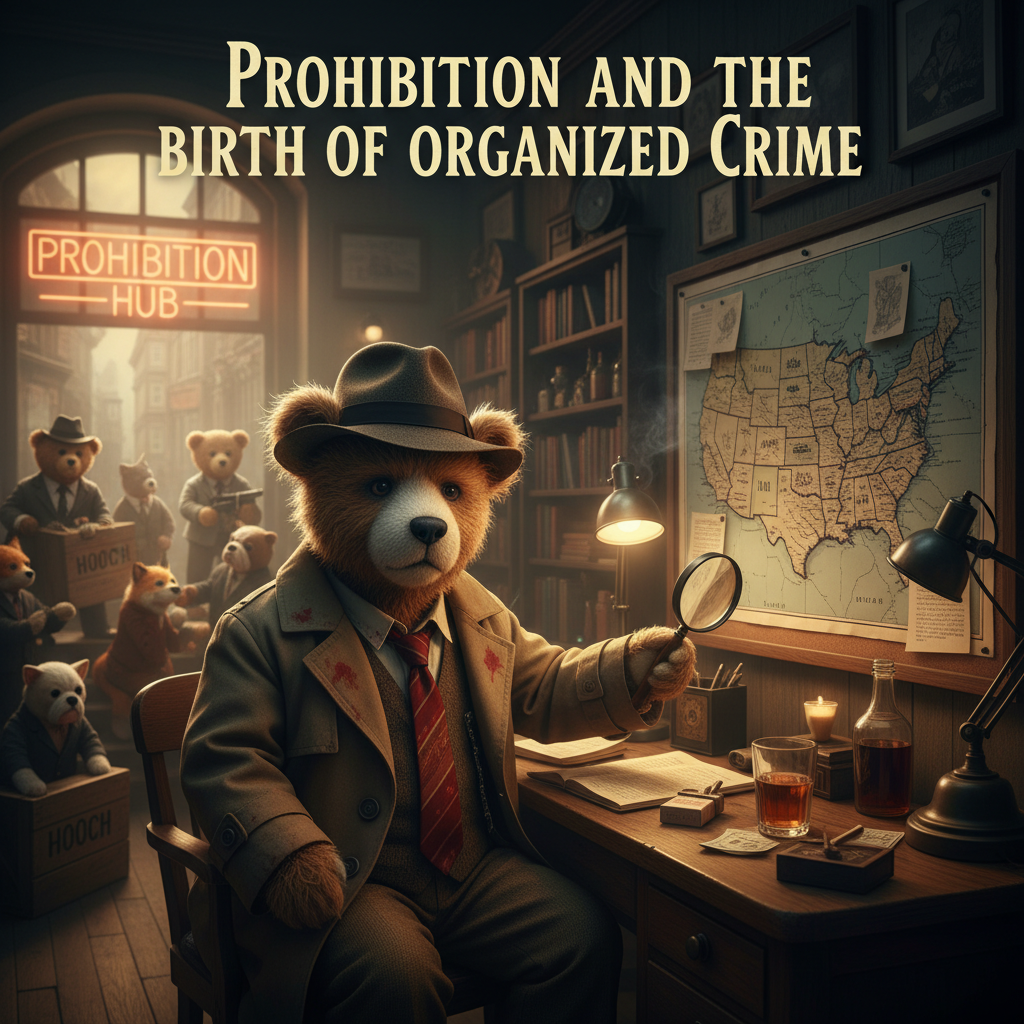
Prohibition and the Birth of Organized Crime
The Eighteenth Amendment didn’t create organized crime. Criminal organizations existed in American cities long before 1920 — on the waterfronts, in the gambling dens, in the political machines that ran cities like New York, Chicago, and New Orleans. What Prohibition created was a market worth hundreds of millions of dollars with no legal competition and no legal supply, and the existing criminal organizations were the only entities positioned to serve it.^1^
The thirteen years of Prohibition — January 1920 through December 1933 — did something that decades of slow institutional development couldn’t have accomplished: they forced the consolidation, professionalization, and national coordination of American organized crime. The men who emerged from that period were not the same as the men who had entered it.
In This Series
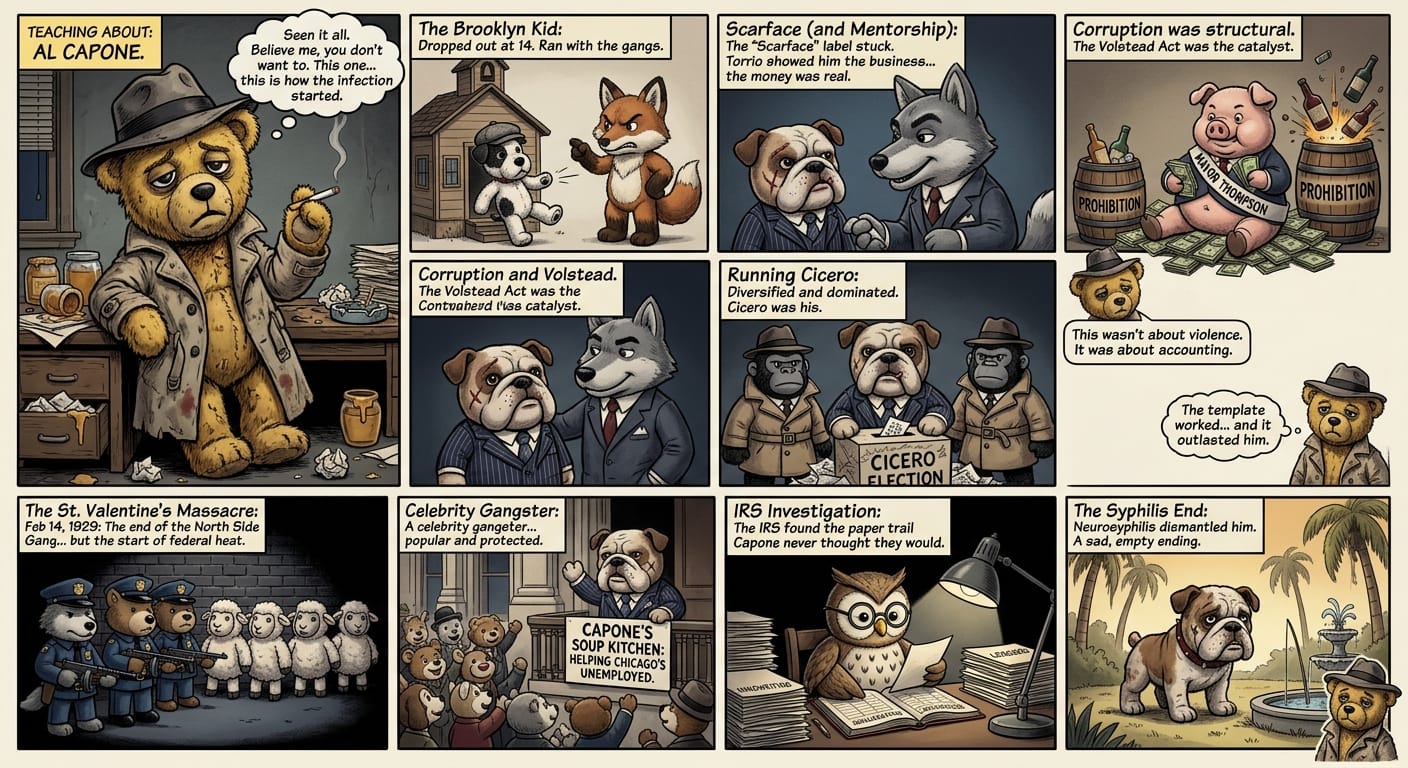
- Al Capone: How Chicago’s Most Famous Gangster Built an Empire
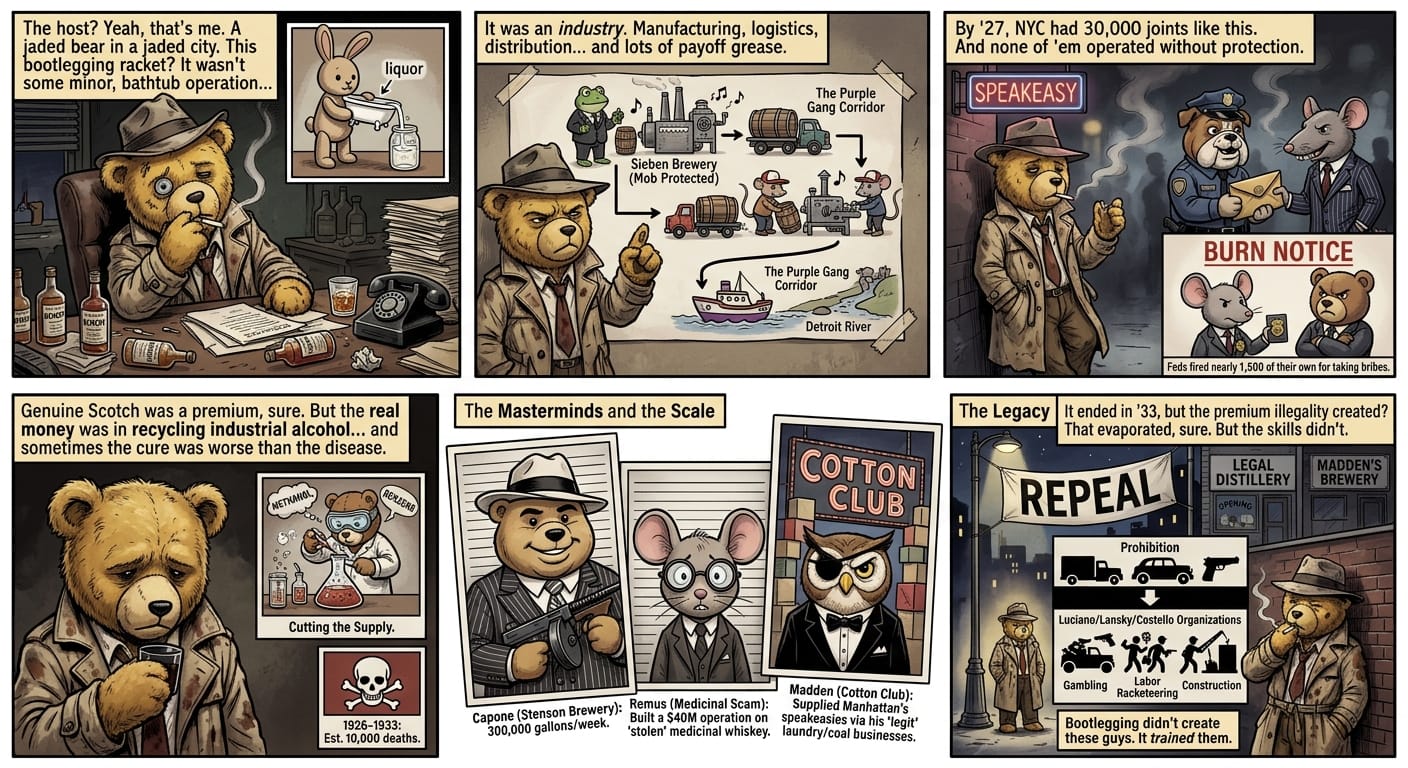
- Bootlegging Empires: The Business of Breaking the Law
- Dutch Schultz: The Beer Baron of the Bronx
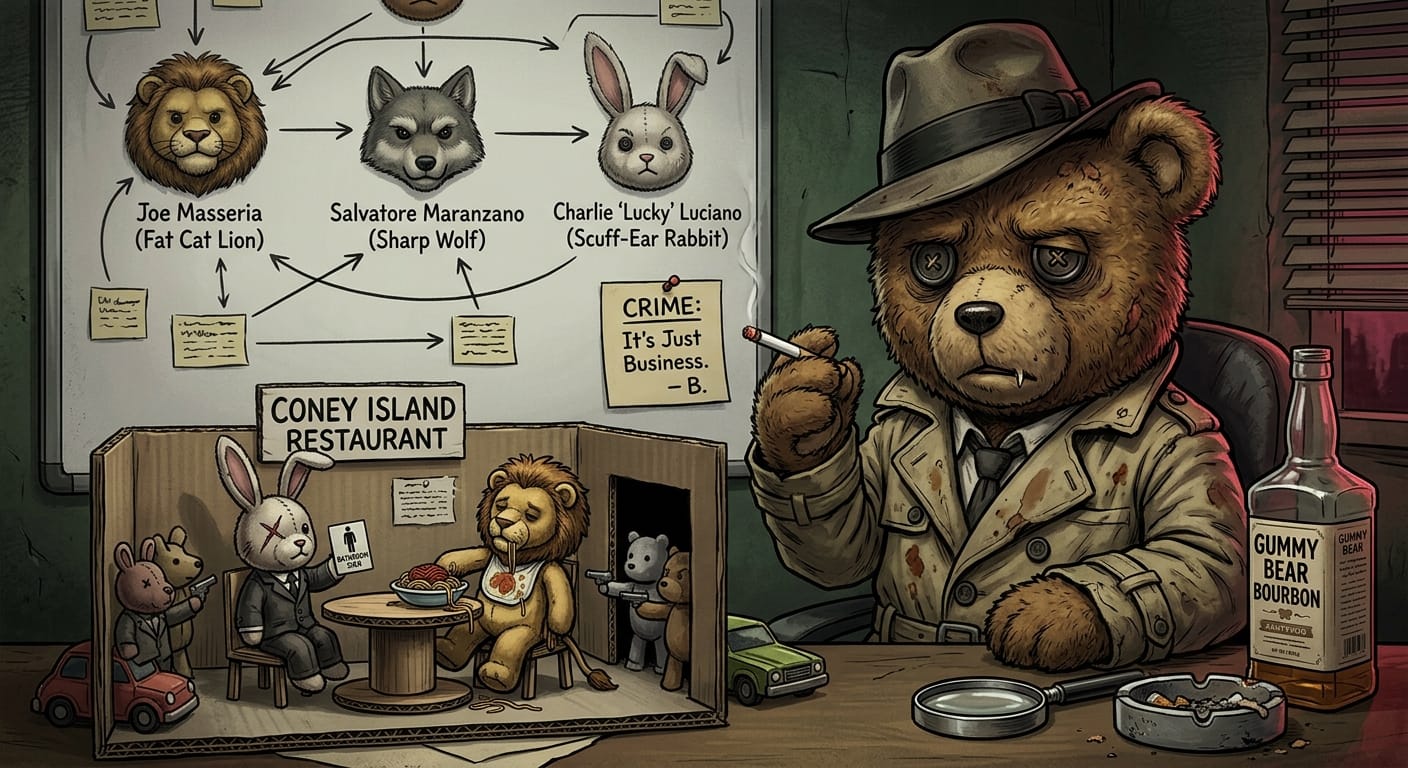
- Lucky Luciano: The Man Who Organized Crime
- The St. Valentine’s Day Massacre: The Hit That Shocked a Nation
The Same Pattern Runs Through Every Story
Five articles in this series cover five distinct figures and phenomena: Al Capone’s empire in Chicago, the St. Valentine’s Day Massacre, the bootlegging industry itself, Dutch Schultz’s Bronx and Harlem operation, and Lucky Luciano’s restructuring of New York’s criminal landscape. The specific stories are different. The underlying pattern is not.
In every case, Prohibition created a legal void that criminal organizations filled through capital investment, operational sophistication, and violence sufficient to protect territorial control. The bootleggers weren’t improvising. They were building vertically integrated businesses under conditions of extreme competitive risk, and the ones who survived long enough to matter were the ones who managed that risk through organizational discipline rather than raw aggression alone.
Capone’s operation generated $60 million per year at its peak and required an estimated $75 million annually in bribes to sustain.^1^ Those numbers only work if the underlying business is large enough, reliable enough, and disciplined enough to generate that kind of revenue consistently. Dutch Schultz applied the same logic to the Harlem numbers racket, hiring an accountant to optimize his payouts in real time. Lucky Luciano applied it to the structure of organized crime itself, creating the Commission as a mechanism for resolving disputes without the economic and political costs of open warfare.
The Government Made the Bootlegging Boom Possible
The story of Prohibition-era organized crime is also a story about government failure at every level. The Volstead Act created the legal framework for enforcement but provided almost no funding. The Prohibition Bureau, responsible for enforcing the act nationwide, employed approximately 1,500 agents for a country of 100 million people producing and consuming alcohol in quantities that made mockery of the law. Those agents were poorly paid, poorly screened, and positioned in jurisdictions where criminal organizations had already established deep relationships with local law enforcement.
The corruption was not incidental. In Chicago, police captains in bootlegging neighborhoods retired on salaries that couldn’t explain their assets. In New York, federal customs officials waved through shipments of Canadian and European whiskey for cash payments that exceeded their annual salaries. In Philadelphia, the entire vice squad was eventually found to be on the payroll of a single bootlegging syndicate. The Capone organization spent more on bribes per year than the federal government spent on Prohibition enforcement in Illinois.^1^
When the government finally took Capone down in 1931, it did so on tax evasion charges — not bootlegging, not murder, not the St. Valentine’s Day Massacre. The tax case worked because it didn’t require witnesses willing to testify about crimes they had participated in. That approach, developed against Capone, became a template for subsequent organized crime prosecution.
Why Violence Was a Business Cost, Not the Business
The St. Valentine’s Day Massacre is the defining image of the era because it made the violence visible to people who had been comfortable ignoring it. Seven men shot in a warehouse is more legible than the structural corruption that made Prohibition unenforceable. But the massacre was an outlier even in Capone’s Chicago, not a routine occurrence. Most of the violence of the Prohibition era was targeted and purposeful — the elimination of specific rivals, the enforcement of territorial agreements, the management of witnesses.
Dutch Schultz understood this intuitively. His proposal to murder Thomas Dewey was rejected by the Commission not because the other bosses were squeamish but because they understood that murdering a prominent public official would be so expensive in political and enforcement terms that it would cost more than it could possibly save. The Commission ordered Schultz killed instead. Violence as a last resort, managed collectively, and directed at competitors rather than public officials: that was the operational principle that let the enterprise persist.
Prohibition Ended, but the Organizations It Built Did Not
Prohibition ended in 1933. The specific revenue stream it had created — the massive premium on illegal liquor — disappeared with legalization. What didn’t disappear was the organizational infrastructure that bootlegging had built. The Luciano Commission continued functioning as the governing body of the New York families for more than fifty years. The Capone Outfit continued operating in Chicago into the 1980s. The regional mobs in Detroit, Cleveland, Kansas City, and elsewhere — all built or strengthened during the bootlegging era — persisted through multiple generations of leadership.
The men who had learned to manage a multi-city supply chain under conditions of legal prohibition applied those skills to gambling operations, labor racketeering, and eventually the heroin trade. The management talent that bootlegging had developed had market value in other criminal enterprises, and it was deployed there.
Prohibition is the origin story of modern American organized crime not because it invented the mob but because it funded it at a scale that made everything that followed possible.
─────────
Sources:
- Okrent, Daniel. Last Call: The Rise and Fall of Prohibition. Scribner, 2010.
- Bergreen, Laurence. Capone: The Man and the Era. Simon & Schuster, 1994.
- Raab, Selwyn. Five Families: The Rise, Decline, and Resurgence of America’s Most Powerful Mafia Empires. St. Martin’s Press, 2005.
The Series