American Drug Kingpins: The Narco Empires That Supplied a Nation
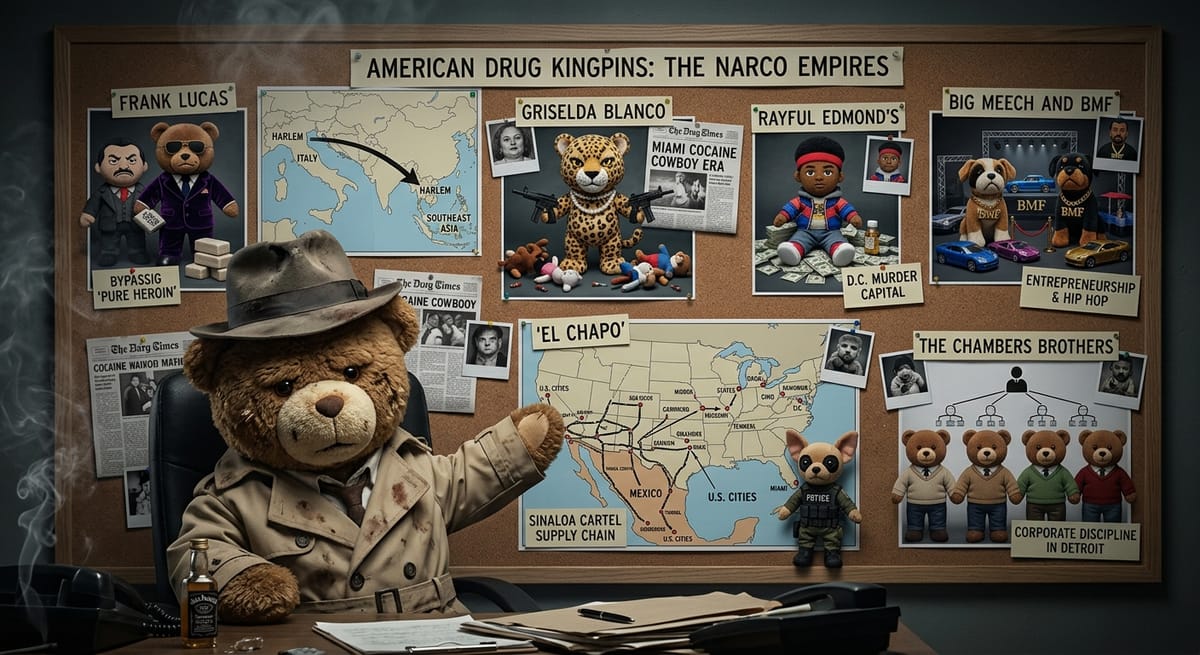
Frank Lucas Griselda Blanco Rayful Edmond Big Meech El Chapo and the Chambers Brothers built empires across four decades. The supply chain was always the business. The market was never dismantled.
American Drug Kingpins: The Narco Empires That Supplied a Nation
The six figures in this series — Frank Lucas, Griselda Blanco, Rayful Edmond, Big Meech, El Chapo, the Chambers Brothers — built drug empires across four decades and multiple cities. They were not the same kind of operator, did not use the same methods, and did not leave the same footprint. What they share is instructive: each identified a supply chain advantage, organized labor around it, used violence as a business tool when necessary, and operated in markets made profitable by the same underlying conditions — extraordinary American demand for illegal drugs, combined with the legal risk premium that made drug distribution extraordinarily lucrative for those willing to bear it.^1^
In This Series
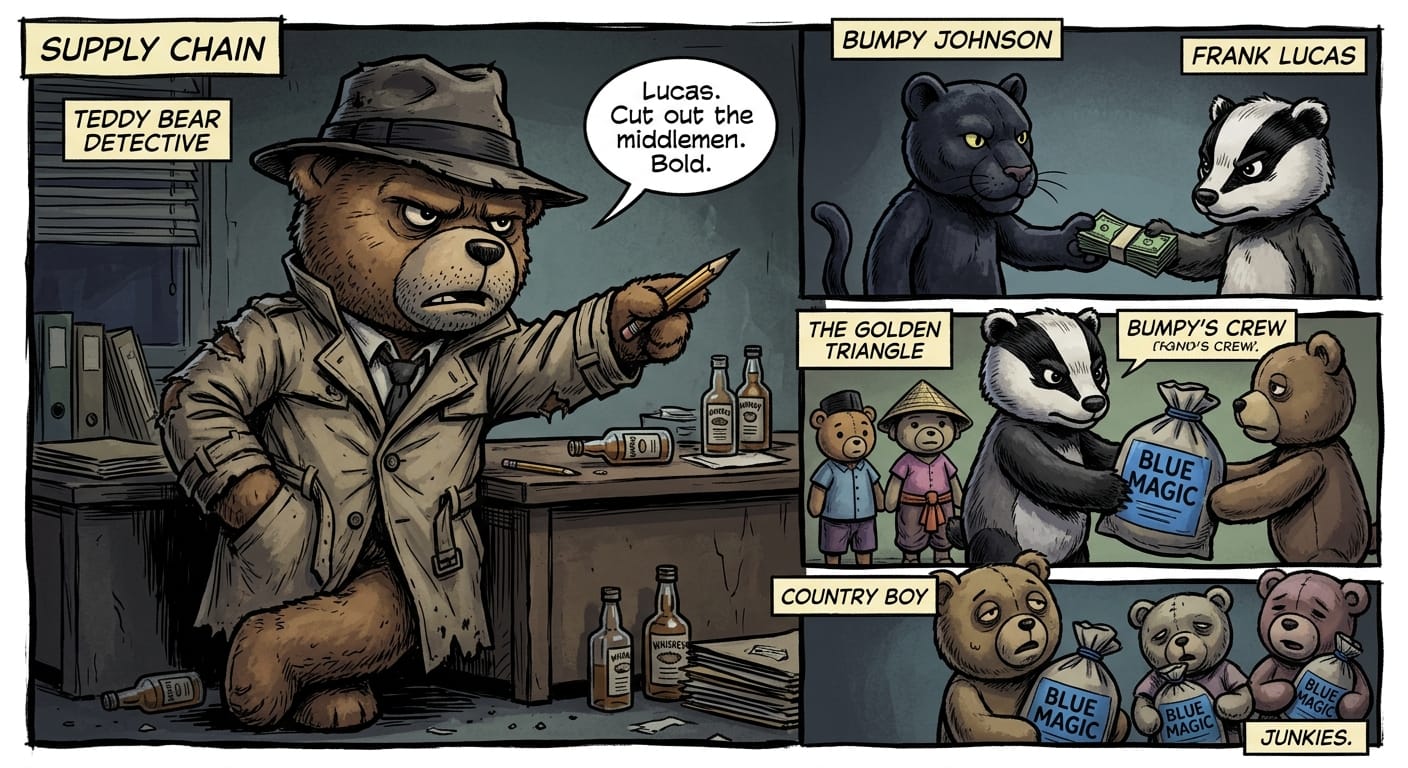
- Frank Lucas: The Real American Gangster — The Harlem heroin distributor who bypassed the Italian mob by buying directly from Southeast Asian producers, undercut every competitor, and dominated Harlem’s drug market with supply chain logic.
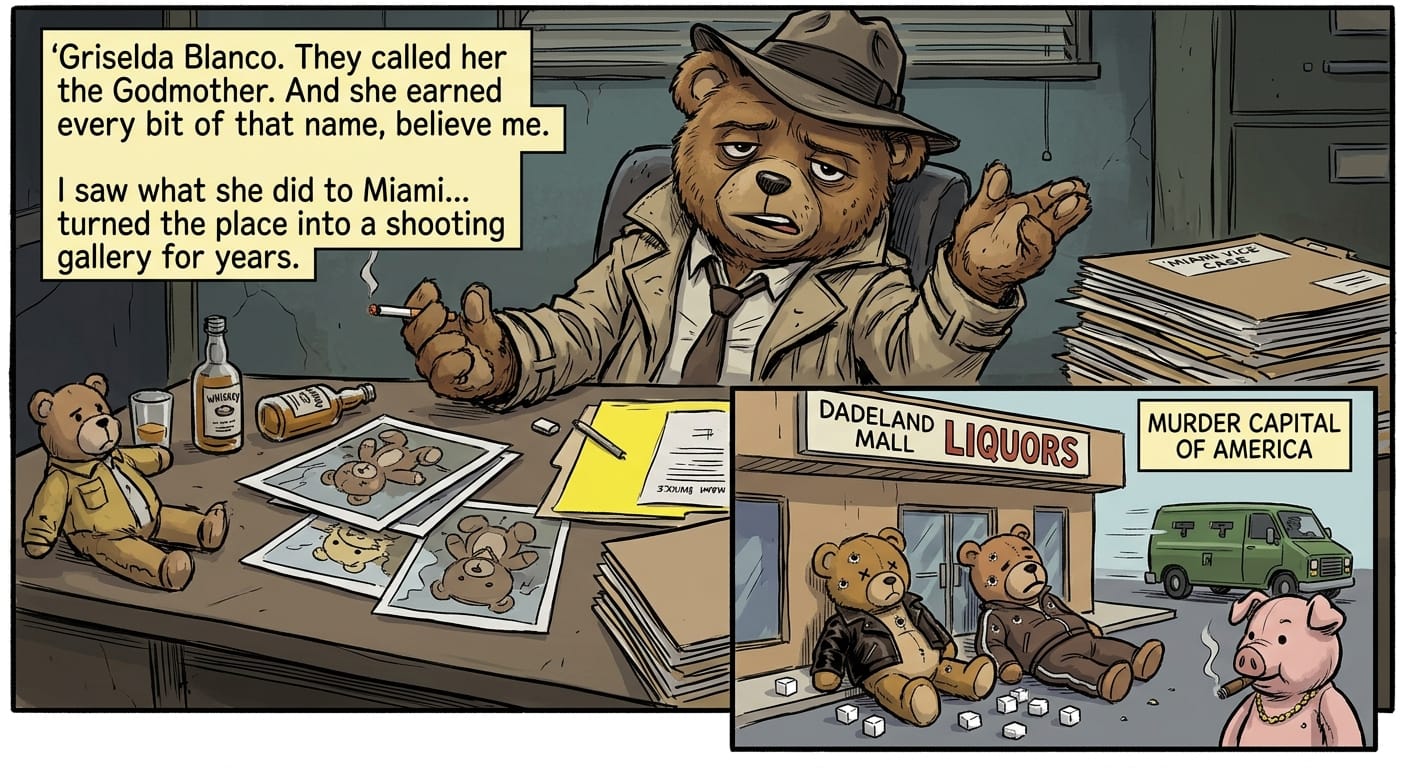
- Griselda Blanco: The Godmother of Cocaine — The Colombian operator who built Miami’s most violent cocaine empire during the Cocaine Cowboys era, attributed with at least 40 murders, and was ultimately killed in the city she grew up in.
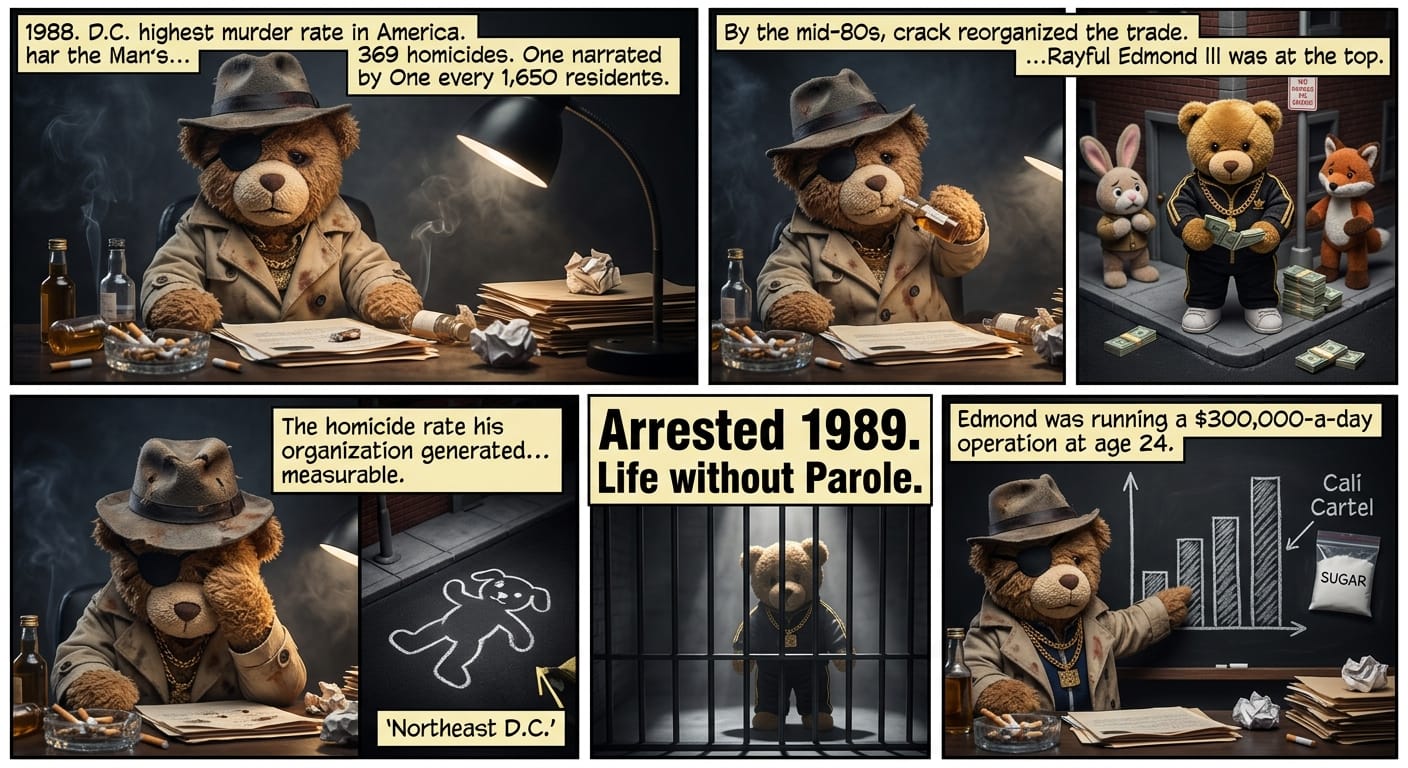
- Rayful Edmond: How One Man Made Washington, D.C. the Murder Capital — The D.C. crack distributor who ran a $300,000-a-day operation at age 24 and continued running his network from federal prison under special administrative measures.
- Big Meech and BMF: The Drug Empire That Went Hollywood — The Black Mafia Family’s deliberate integration of cocaine distribution with hip-hop celebrity culture — and how that visibility built the brand while documenting everything for the DEA.
- El Chapo on American Soil — The Sinaloa Cartel’s penetration of 50 U.S. cities, the two prison escapes that exposed Mexico’s institutional corruption, and the Brooklyn trial that put all of it on the record.
- The Chambers Brothers: How Four Brothers Took Over Detroit — Four brothers from Marianna, Arkansas who built a crack distribution empire employing 500 people with corporate-level operational discipline, and what the prosecution cost the community that supplied their labor.
The Supply Chain Is Always the Business
Frank Lucas’s insight in the late 1960s was supply chain. Harlem’s heroin trade ran through Italian mob wholesale distribution that charged what the market would bear. Lucas went to Southeast Asia, bought directly from producers, and delivered better product at lower cost. The margin he created was the business. His distribution network was the execution vehicle. The supply chain advantage was the moat.
Freeway Rick Ross, a decade later, had the same insight in reverse — his Colombian supply through Danilo Blandón gave him cocaine at prices that undercut every competitor in Los Angeles, and he built distribution that covered Southern California and extended into the Midwest. Griselda Blanco’s Cali Cartel connections gave her a similar positional advantage in Miami — not the cheapest or largest operator, but one with a supply relationship more reliable and at better terms than competing organizations could access.
El Chapo’s operation scaled this logic to the national level. The Sinaloa Cartel was not a street gang that grew. It was a supply organization built to serve a market — the United States — that consumed between $100 billion and $150 billion in illegal drugs annually. His value was the supply chain from the Golden Triangle to Mexico to 50 American cities. When he went to prison, the supply chain kept running.^3^
Violence Was a Variable, Not a Constant
These six operators used violence differently. Griselda Blanco was, by the accounts of investigators and cooperating witnesses, unusually quick to order killings — at least 40 attributed to her organization during her Miami years. Rayful Edmond’s Washington, D.C. operation generated significant violence, some directly attributed to his organization and some from the competitive dynamics his dominance created. Big Meech built BMF with a notably lower level of direct violence than contemporaries — the organization’s power came from volume and supply chain, not territorial enforcement.
Frank Lucas was more restrained than popular mythology suggests — his operation relied more on supply chain efficiency than on fear. El Chapo’s operation was extraordinarily violent in Mexico but produced relatively less direct violence in U.S. cities, where local wholesale buyers bore the territorial enforcement burden.
The variation matters because it complicates the narrative that drug kingpins are primarily defined by violence. Some are. Some run logistics companies. What they share is the legal context that makes violence a rational business tool when contracts cannot be enforced in court.
What They Left Behind
All six of these operators are either dead, imprisoned, or in supervised release. Their organizations are either gone or transformed beyond recognition. What remains is the market they served, still active, now supplied by different organizations using different products. The demand that Frank Lucas met in Harlem in 1970, and that Big Meech met in Atlanta in 2003, is still present. It is now supplied by fentanyl moving through the same border crossings El Chapo’s organization built. The kingpins were always replaceable. The market was not.^2^
─────────
Sources:
- Gugliotta, Guy and Jeff Leen. Kings of Cocaine: Inside the Medellín Cartel. Simon & Schuster, 1989.
- Webb, Gary. Dark Alliance: The CIA, the Contras, and the Crack Cocaine Explosion. Seven Stories Press, 1998.
- Grillo, Ioan. El Narco: Inside Mexico’s Criminal Insurgency. Bloomsbury, 2011.
The Series