LA Gangs: The War That Defined a City
The complete history of the Crips Bloods Tookie Williams the 1992 truce and Suge Knight — the gang war that shaped South Central Los Angeles.
LA Gangs: The War That Defined a City
Los Angeles built the conditions for its gang war decades before the first shot was fired. The Crips and Bloods emerged from neighborhoods that federal housing policy had deliberately concentrated, underfunded, and then policed like occupied territory. The city acted surprised at what grew.
In This Series
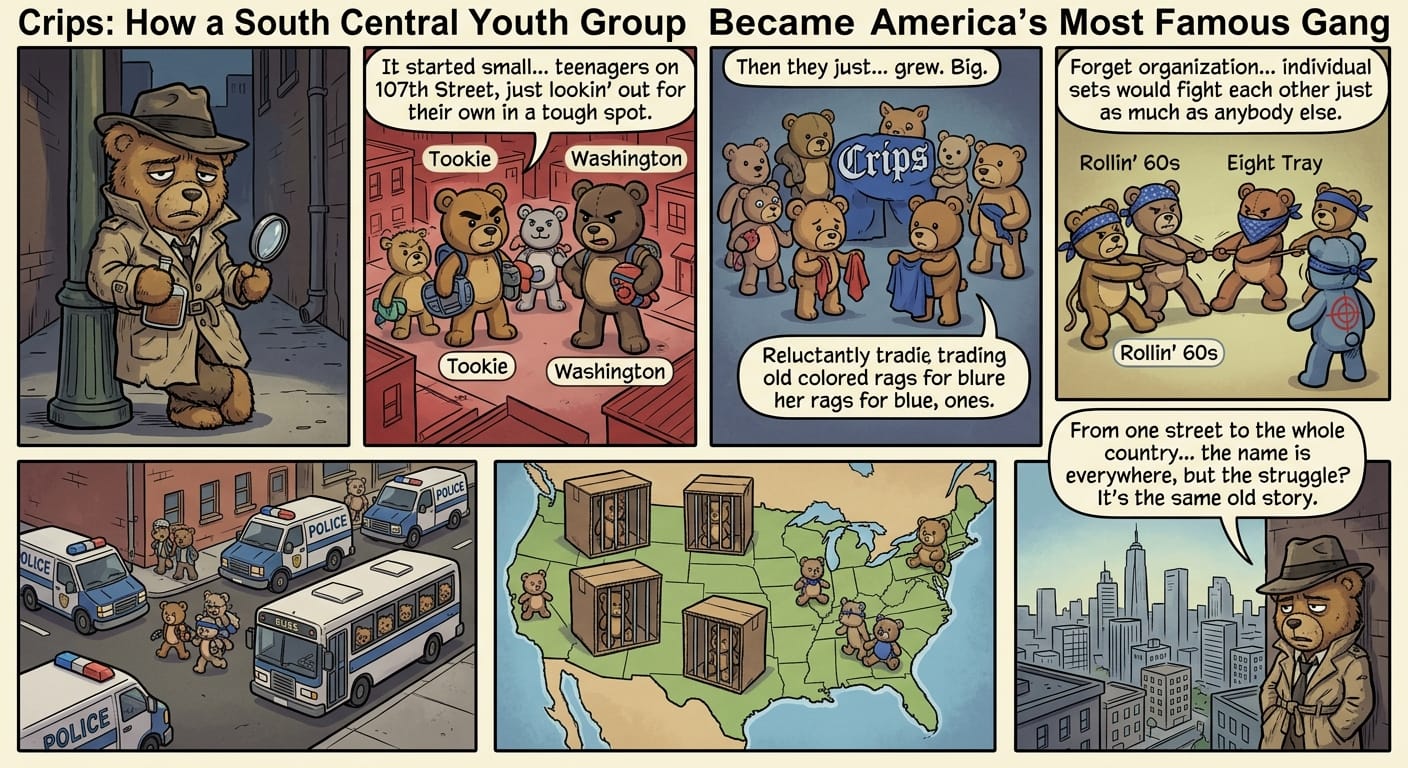
- The Crips: How a South Central Youth Group Became America’s Most Famous Gang
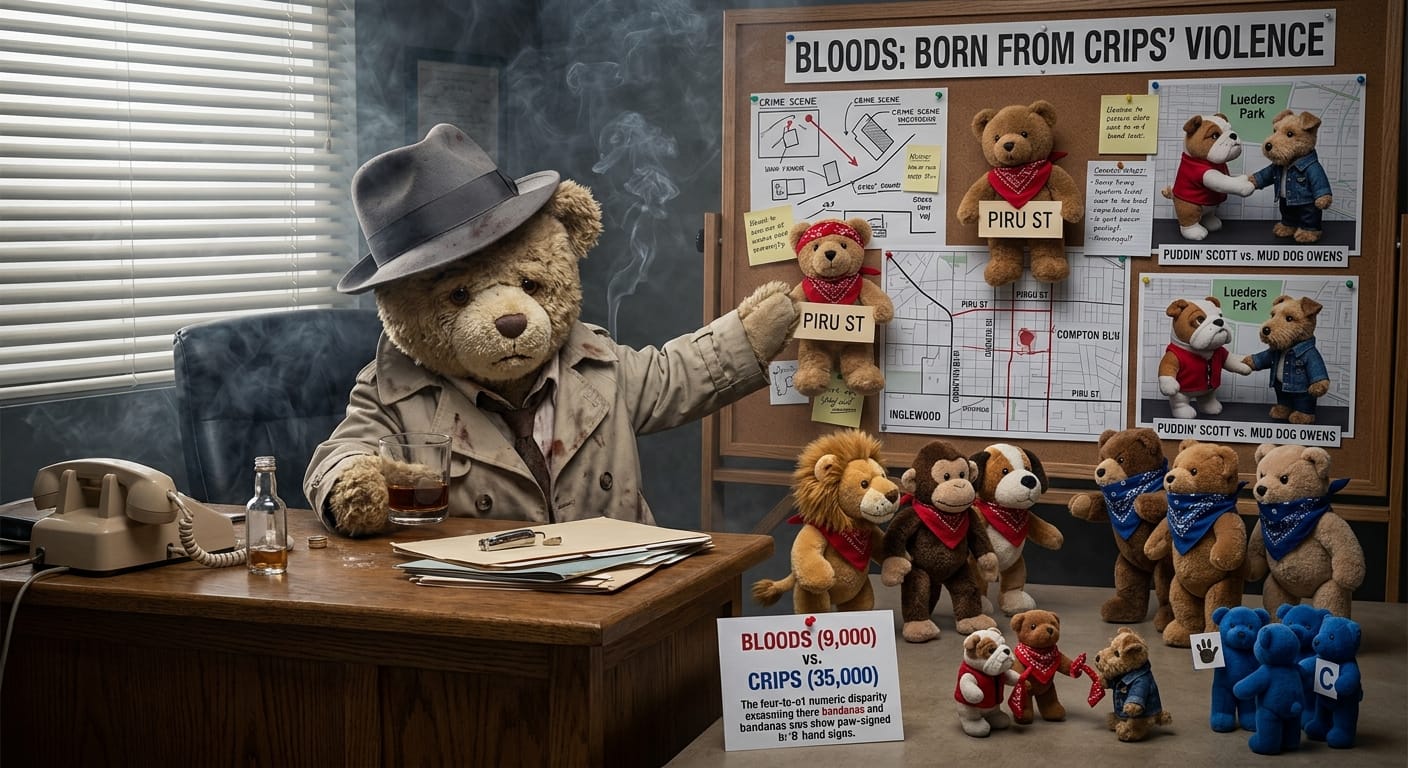
- The Bloods: Born From the Crips’ Own Violence
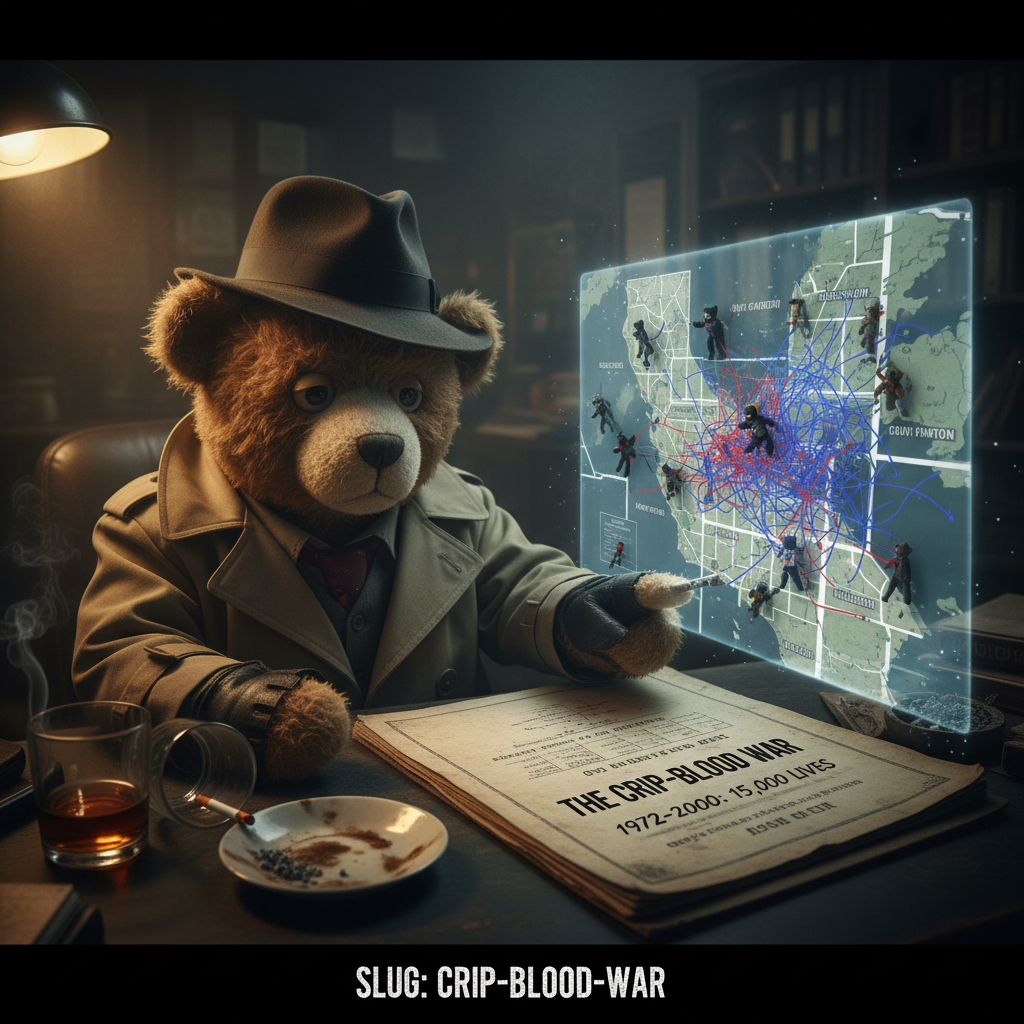
- The Crip-Blood War: Decades of Death on LA Streets
- Tookie Williams: Crip Founder, Death Row, Author, Executed
- Rodney King and the Gang Truce That Almost Worked
- Suge Knight and Death Row Records: Where Gangbanging Met the Music Industry
The Pattern
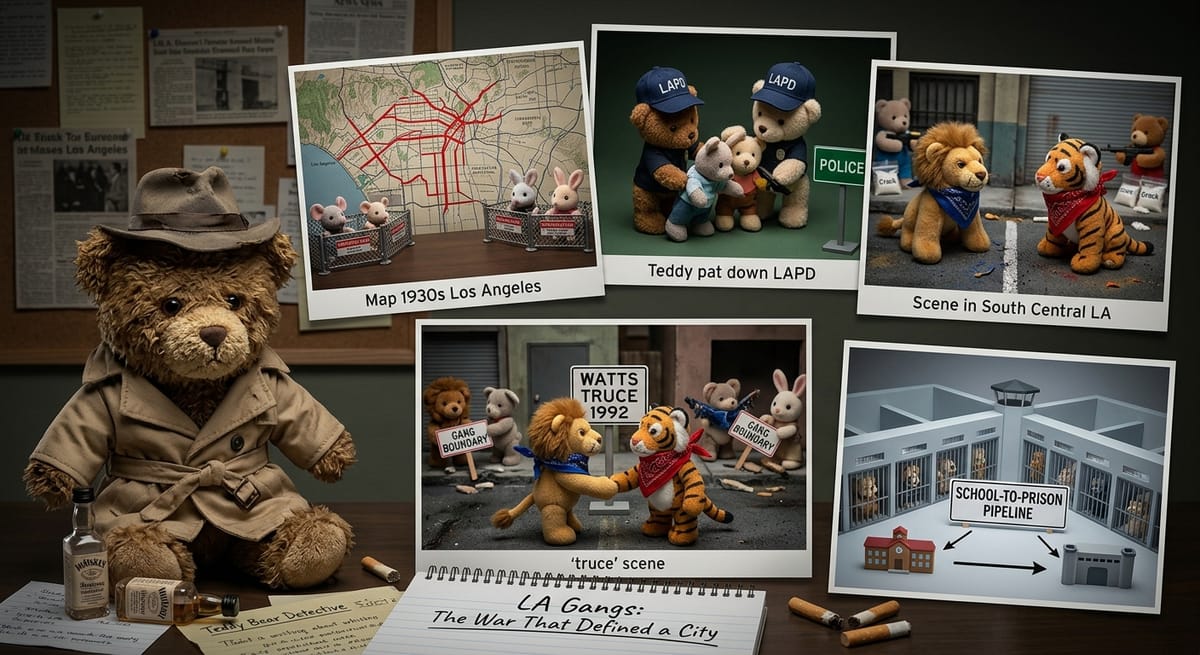
Every piece of this story starts before the gangs do. The Federal Housing Administration’s redlining maps of the 1930s concentrated Black Los Angeles into a narrow corridor of South Central, cutting Black families off from GI Bill mortgages, suburban wealth building, and the postwar economy that transformed the city for everyone else. The LAPD under Chief William Parker, appointed in 1950, ran South Central like an occupation — aggressive street stops, mass arrests, contempt for Black residents as a baseline institutional attitude. The schools were overcrowded. The manufacturing jobs that had brought Black workers to Los Angeles during World War II were automating or leaving. When Stanley Williams and Raymond Washington organized the first Crips on 107th Street in 1969, they were 15 and 17 years old operating in a neighborhood that the rest of Los Angeles had already written off.
What the Evidence Shows
The Crips formed as a protection crew and became a federation of autonomous sets that expanded through South Central and beyond through the 1970s. The Bloods formed in 1972 as a direct response to Crip pressure, anchored by the Piru Street Boys of Compton. Both gangs spread through the same mechanism — migration and incarceration — reaching hundreds of American cities by the late 1980s.
The crack cocaine epidemic of the mid-1980s transformed the conflict’s scale. Drug distribution money bought better weapons. Gang homicides in Los Angeles climbed from 271 in 1985 to 803 in 1992. The LAPD’s response — Operation Hammer, mass sweeps, Rampart Division corruption — made the violence worse rather than better by hardening gang identity inside prisons and destroying what remained of community trust in law enforcement.
The 1992 riots created a moment of clarity. The Watts gang truce, signed by Grape Street Crips and Bounty Hunter Watts Bloods three days before the Rodney King verdict, showed that the people closest to the violence were capable of ending it when they chose to. The 44 percent drop in gang homicides in Watts in the months after the truce showed what peace looked like. The city’s refusal to fund the $3.7 billion investment plan the truce organizers submitted showed what official priorities looked like.
Why LA’s Gang War Was Different
What made LA’s gang war distinctive wasn’t the violence itself — American cities have had gang violence for as long as they have had concentrated poverty. What was distinctive was the scale, the media attention, and the way the city and state responded. The Crips and Bloods became national symbols — for law enforcement budgets, for mandatory minimum sentencing, for the War on Drugs as it was actually implemented in Black neighborhoods. Politicians who’d never been to South Central cited the Crips and Bloods to justify policies that swept tens of thousands of people into California’s prisons, where the gangs were consolidated rather than disrupted.
The figures who moved through this story — Tookie Williams on death row writing children’s books, Suge Knight building a label where recording sessions required armed security, the Sherrills brothers negotiating peace in Nickerson Gardens — are all people shaped by the same geography, responding to the same structural conditions in radically different ways.
The Infrastructure the War Built
The Crip-Blood war produced an infrastructure — legal, correctional, cultural — that outlasted the peak violence of the early 1990s. Three-strikes sentencing laws, gang injunctions, gang databases containing hundreds of thousands of Los Angeles residents, the militarization of the LAPD, the school-to-prison pipeline in South Central — all of these were, in part, institutional responses to the Crips and Bloods that shaped the city long after the homicide rate declined. The war is officially over. The institutions it built are still operating.
Los Angeles built conditions for gang formation, responded to gang violence with policies that accelerated it, watched a community-generated truce reduce homicides, refused to fund what the truce required, and then declared victory when the violence eventually declined. The Crips and Bloods are still operating. South Central is still South Central. The argument about what the city owes the neighborhoods it abandoned is still unresolved.
─────────
Sources:
- Davis, Mike. City of Quartz: Excavating the Future in Los Angeles. Verso, 1990.
- Hayden, Tom. Street Wars: Gangs and the Future of Violence. The New Press, 2004.
- Cannon, Lou. Official Negligence: How Rodney King and the Riots Changed Los Angeles and the LAPD. Times Books, 1997.
The Series