James Garfield: Killed by a Man Who Wanted a Government Job
A man who wanted a government job fired the gun. A team of doctors who would not wash their hands spent eleven weeks finishing the work. The country got civil service reform out of it.
Part of Presidential Assassinations: ← Back to series hub
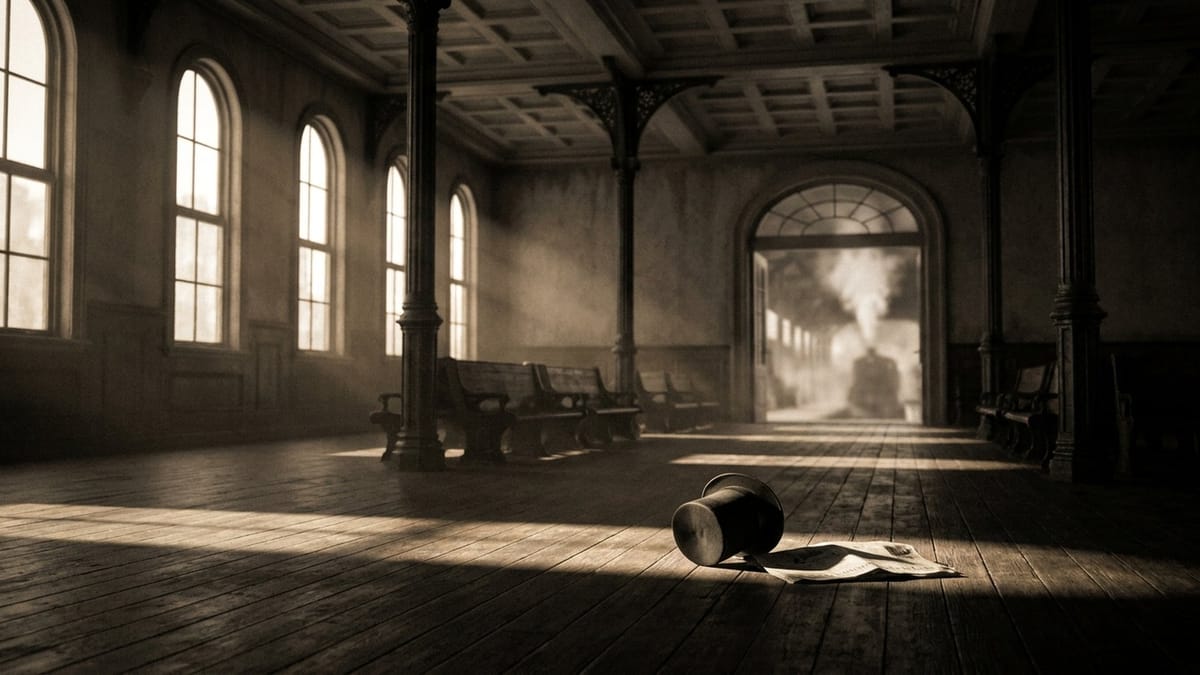
Charles Guiteau, a disappointed office-seeker, shot President James Garfield at the Baltimore and Potomac Railroad station in Washington on July 2, 1881. Garfield lived for 79 days, and his doctors, probing the wound with unwashed fingers and instruments in the wrong part of his body, very likely turned a survivable injury into a fatal infection; he died on September 19.1 2 Guiteau was hanged in 1882, and the murder pushed Congress to pass the Pendleton Civil Service Act, the law that ended the very spoils system Guiteau had hoped to cash in on.3 4
Quick facts
- Shot: July 2, 1881, about 9:30 a.m., Baltimore and Potomac Railroad station, Washington, D.C.1
- Assassin: Charles J. Guiteau, 395
- Weapon: .44 British Bulldog revolver5
- Days survived: 791
- Died: September 19, 1881, Elberon, New Jersey1 5
- Guiteau convicted: January 25, 18821
- Guiteau hanged: June 30, 18823
Guiteau Believed His Speech Had Won the Election
Charles J. Guiteau had tried theology, law, bill collecting and a stint in the utopian Oneida Community before he found politics.1 In 1880 he attached himself to the Stalwart wing of the Republican Party and wrote a speech called "Grant against Hancock." When Ulysses S. Grant lost the nomination to the dark horse James Garfield, Guiteau changed the title to "Garfield against Hancock" and handed out copies.1 He became convinced that this speech had won Garfield the presidency.
He wanted his reward: a consulship, first in Vienna, then, as a fallback, Paris.1 He was destitute, wearing the same clothes every day.1 On May 13 he was banned from the White House waiting room. The next day Secretary of State James G. Blaine told him, "Never speak to me again on the Paris consulship as long as you live."1
That was when the delusion turned violent. Guiteau decided a higher power had told him to remove the president so that Vice President Chester Arthur, a Stalwart, would take over. He borrowed $15, went to a Washington gun shop, and chose a .44 British Bulldog with an ivory grip because he thought it would look better in a museum after the assassination.1 5 He spent June stalking Garfield, and once held his fire because the president's ailing wife, Lucretia, was with him.1
July 2, 1881: Two Shots in a Railroad Station
Garfield was leaving Washington for Williams College, his alma mater, where he was due to give a speech before starting a vacation. His sons James and Harry were with him, and so was Blaine. Robert Todd Lincoln, the secretary of war and son of the last murdered president, was waiting at the station to see him off.1
Guiteau had had his shoes shined and hired a cab to take him to the police station afterward. He fired twice from behind. One bullet grazed Garfield. The other went into his back.1 Guiteau tried to leave and ran into a policeman, Patrick Kearney, coming in at the sound of gunfire, who arrested him.1 On the day Garfield died, Guiteau would write to Arthur: "Never think of Garfield's removal as murder. It was an act of God, resulting from a political necessity for which he was responsible."5
Seventy-Nine Days of 1881 Medicine
Garfield was carried back to the White House alive and conscious. A medical team quickly formed around him, led by a Civil War surgeon named Doctor Willard Bliss. Doctor was his actual first name, not a title.2 Bliss had pushed aside Garfield's regular physician and appointed himself in charge.1
The treatment was the kind given to wounded soldiers two decades earlier, according to Jake Wynn, former director of interpretation at the National Museum of Civil War Medicine.2 Doctors probed the wound for the bullet with fingers and instruments that had not been sterilized. Joseph Lister had shown in 1865 how to keep wounds and instruments clean with carbolic acid, but "Garfield's medical team were not followers of Lister's surgical techniques," Wynn says.2 (The earlier version of this page credited Lister with publishing "germ theory" in 1867. Lister's contribution was antiseptic surgical method, not germ theory itself.) Kenneth Ackerman, author of Dark Horse, says it was "bad practice even by 1880s standards," and frontier doctors who treated gunshot wounds regularly wrote to Lucretia Garfield begging her to keep the doctors out of the wound and let it heal.2
They were also looking in the wrong place. The doctors believed the bullet had gone to the right side of his body; it had veered left. Their probing "created a separate channel through Garfield's body that let infection spread internally," Wynn says.2
Alexander Graham Bell built a metal detector, an induction balance, specifically to find the bullet. It failed, partly because Garfield's bed had a metal frame and springs that confused the instrument, and partly because Bliss let Bell search only the right side, where Bliss insisted the bullet was. Bell's later tests suggested the device worked and would have found the bullet on the left.1 2
Garfield wasted away in the Washington summer heat. By most accounts his weight fell from about 210 pounds to about 130.1 Abscesses spread, and septic shock set in. On September 6 he was moved by train to a house at Elberon on the New Jersey shore in hope that sea air would help. He died there late on the night of September 19.1
Could Garfield Have Lived?
Most historians and physicians who have studied the case now think he probably would have, had his doctors done less.1
The autopsy was performed the next day by Dr. D. S. Lamb of the Army Medical Museum, with Bliss and the other attending physicians watching. (The earlier version of this page said Bliss performed it. The official bulletin names Lamb.) The bulletin found that the bullet had broken the right eleventh rib, passed through the spinal column in front of the spinal cord, fractured the first lumbar vertebra, and come to rest below the pancreas, about two and a half inches left of the spine, where it had become "completely encysted," walled off by the body.6
So the bullet did not land harmlessly, as the old version of this page claimed. It broke a vertebra. But it missed the spinal cord and the major organs, and the body had sealed it off. What the doctors had taken for the bullet's track, a long channel running from the wound down toward the right groin, turned out to be "due to the burrowing of pus from the wound." The bulletin gave the immediate cause of death as a secondary hemorrhage from an artery near the bullet's path, and blamed the "septic condition" on the suppurating tissue, especially the shattered bone.6
"I Did Not Kill the President. The Doctors Did That."
Guiteau understood the medical argument perfectly and tried to use it. "I did not kill the President," he said at trial. "The doctors did that. I merely shot him."3
The jury did not buy it. After a trial that ran nearly two months and often looked like a circus, with Guiteau planning a lecture tour and a run for president in 1884, the jury deliberated for about an hour and convicted him on January 25, 1882.1 3 5 His appeal failed.
On June 30, 1882, two days short of the anniversary of the shooting, Guiteau went to the gallows at the District of Columbia jail. He was allowed to recite a poem he had written, "I am Going to the Lordy." He had arranged to drop the paper as a signal when he was ready.3 The National Park Service notes that today he might well have been found not guilty by reason of insanity.3
Was Charles Guiteau Insane? The Diagnosis Nobody Could Agree On
Nobody at the trial doubted that Guiteau fired the gun. The whole fight was over his mind. The trial opened on November 14, 1881, and it turned into a showdown between two camps of American psychiatry.8 9 10
The legal bar was the M'Naghten rule, an English test from 1843: a defendant was insane only if he didn't understand what he was doing, or didn't know it was wrong.10 Guiteau had bought a revolver, practiced with it, stalked the president for weeks and written out his justifications in advance. He knew shooting the president was illegal. Under the usual reading of M'Naghten, as one trial historian put it, "Guiteau was a dead man."9
His family history did not help the prosecution's tidy picture. His mother, who suffered from psychosis, died shortly after his seventh birthday. John Humphrey Noyes, the founder of the Oneida Community, wrote to Guiteau's father calling Charles "insane," and his father later wrote that his son was "a fit subject for a lunatic asylum."9 At trial, Guiteau sang, gave speeches, insulted his own lawyers and called himself an "agent of the Deity."8 9 He drew his own distinction: he would accept "legal insanity," because God had taken away his free will, but "actual insanity" was an insult.9
The defense called a younger, European-trained wing of psychiatry. The neurologist Edward Spitzka testified he had "no doubt" Guiteau was insane and called him a "morbid egotist" with what he believed was a congenital malformation of the brain. On cross-examination the prosecution got Spitzka to admit his training was as a veterinary surgeon, and he shot back: "In the sense that I treat asses who ask me stupid questions, I am."9 The prosecution's star witness was John Gray, superintendent of the Utica asylum and editor of the American Journal of Insanity, who interviewed Guiteau for two days and testified he was "depraved," not insane.9 10 The court stuck with M'Naghten and rejected the looser "irresistible impulse" doctrine.10
Then came the brain. Dr. Daniel Lamb of the Army Medical Museum, the same pathologist who had examined Garfield, autopsied Guiteau after the hanging.11 The examiners found no clear pathology that proved insanity. The most obvious finding was a hugely enlarged spleen, consistent with the malaria the jail doctor had reported.8 They did note abnormalities in the dura, the membrane around the brain, and some modern pathologists think his brain may have been affected by chronic malaria and possibly syphilis.12
So what was his diagnosis? The honest answer is that nobody can diagnose a man who died in 1882, and every label is a theory. Public and medical opinion shifted after the hanging, and almost all neurologists came to see him as seriously mentally ill.9 In 1950 a University of Pennsylvania physician wrote that Guiteau "undoubtedly was insane," probably from "a combination of paranoid schizophrenia and neurosyphilis."10 To a modern reader, his grandiosity and his certainty that God had picked him look a lot like delusional thinking, but that's an impression, not a chart. The National Park Service's view is the most practical one: tried today, he might well have been found not guilty by reason of insanity.3
One more detail that sounds made up and isn't. Guiteau nearly didn't live to be hanged. In September 1881 a jail guard named William Mason fired at him and missed, and during the trial a drunk farmer rode up beside the prison van and fired a pistol through the bars, putting a hole in Guiteau's coat.9
Where the Evidence Is Now
The case never really left the building. Lamb collected Garfield's shattered vertebrae at the autopsy, and they're still in the National Museum of Health and Medicine in Silver Spring, Maryland, with a dowel marking the bullet's path through the twelfth thoracic and first lumbar vertebrae.11 Bones from that spine were shown to the jury at Guiteau's trial.9 Portions of Guiteau's brain survive too, at the same museum and at the Mütter Museum in Philadelphia, among its 1,800 wet specimens.8 12 The president and the man who shot him, both autopsied by the same Army pathologist, ended up in the same museum's collections.
The Office-Seeker Who Killed the Spoils System
Here is the irony that keeps Garfield's death from being merely sad. On January 16, 1883, President Chester Arthur, the Stalwart Guiteau thought he was helping, signed the Pendleton Civil Service Reform Act. Arthur had become an ardent reformer after the assassination.4 The act required that covered federal jobs be filled on merit through competitive exams, barred firing covered employees for political reasons, banned requiring political contributions, and created the Civil Service Commission to enforce it all.4
At first it covered only about 10 percent of the government's 132,000 jobs. Its reach grew until it applied to most federal positions.4 Garfield himself had called for civil service reform, and Congress passed the act partly as a memorial to him.1 A man killed the president because he could not get a patronage job, and the result was a law designed to make sure nobody like him ever got one.
Garfield, born in a log cabin in Ohio in 1831, had been a preacher, a college president, a Union major general and a nine-term congressman, and he was president for barely four months before he was shot.7 1 His death is harder to process than Lincoln's because there is no clean villain, only a deluded man with a gun and a roomful of confident doctors. Twenty years later, an anarchist's bullet killed William McKinley and put Theodore Roosevelt in the White House, and for other near misses see our page on attempted assassinations.
Timeline: From the Railroad Station to the Pendleton Act
- 1880: Guiteau rewrites his "Grant against Hancock" speech as "Garfield against Hancock" and decides it won the election.1
- May 14, 1881: Secretary of State Blaine tells him never to raise the Paris consulship again.1 9
- July 2, 1881: Guiteau shoots Garfield at the Baltimore and Potomac station.1
- July to September 1881: Doctors probe for the bullet on the wrong side; Bell's induction balance fails to find it.1 2
- September 6, 1881: Garfield is moved by train to Elberon, New Jersey.1
- September 19, 1881: Garfield dies; the autopsy the next day finds the bullet on the left, encysted.1 6
- November 14, 1881: Guiteau's trial opens in Washington.8 9
- January 25, 1882: The jury convicts him after about an hour.1 9
- May 22, 1882: His appeals are rejected.9
- June 30, 1882: Guiteau is hanged at the District of Columbia jail.3
- January 16, 1883: President Arthur signs the Pendleton Civil Service Reform Act.4
Frequently Asked Questions
Who shot James Garfield and why? Charles J. Guiteau, a mentally unstable office-seeker, shot him on July 2, 1881. Guiteau believed a campaign speech he wrote had won Garfield the election and that he deserved a European consulship in return. When he was turned away, he decided that removing Garfield would put the Stalwart Chester Arthur in power and serve what he called a political necessity.1 5
How long did Garfield live after being shot? Seventy-nine days. He was shot on July 2 and died on September 19, 1881, at Elberon, New Jersey.1
Did Garfield's doctors kill him? Not on their own, but most historians and physicians think they turned a survivable wound into a fatal one. They probed with unwashed fingers and instruments, searched the wrong side of his body, and created new channels for infection; their own autopsy blamed his death on sepsis and a hemorrhage near the bullet's track.1 2 6
Where was Garfield shot? At the Baltimore and Potomac Railroad station in Washington, D.C., as he left for a trip to Williams College.1 The station was later demolished, and the West Building of the National Gallery of Art now stands on the site.1
Was Charles Guiteau insane? The jury said no under the 1880s M'Naghten test, because he planned the shooting and knew it was illegal. Most neurologists later concluded he was seriously mentally ill, and a 1950 medical writer suggested paranoid schizophrenia combined with neurosyphilis. His brain autopsy found no proof either way, so any diagnosis today is an educated guess.8 9 10
What happened to Charles Guiteau? He was convicted of murder on January 25, 1882, after a chaotic trial in which he blamed the doctors. He was hanged in Washington on June 30, 1882, after reciting a poem he had written called "I am Going to the Lordy."1 3
What changed because of Garfield's death? The assassination built support for the Pendleton Civil Service Reform Act of 1883, which began replacing patronage with merit hiring and competitive exams for federal jobs.4
Part of Presidential Assassinations: ← Back to series hub
Related reading: Lincoln's assassination · McKinley's assassination · Attempted assassinations · Presidential Assassinations hub
─────────
Sources:
- "Assassination of James A. Garfield." Wikipedia. en.wikipedia.org
- "How did James Garfield die? The medical mistakes that killed the forgotten U.S. president." National Geographic. nationalgeographic.com
- National Park Service. "The Execution of Charles Guiteau." nps.gov
- National Archives. "Pendleton Act (1883)." Milestone Documents. archives.gov
- Doenecke, Justus. "James A. Garfield: Death of the President." Miller Center, University of Virginia. millercenter.org
- "Official Bulletin of the Autopsy on the Body of President Garfield." September 20, 1881. The American Presidency Project. presidency.ucsb.edu
- "James A. Garfield." Wikipedia. en.wikipedia.org
- Reznick, Jeffrey S., and Lenore Barbian. "'The President is Somewhat Restless...': Aftermath." Circulating Now, National Library of Medicine. circulatingnow.nlm.nih.gov
- Linder, Douglas O. "The Trial of Charles Guiteau: An Account." Famous Trials, UMKC School of Law. famous-trials.com
- "The Insanity Defense and the Trial of Guiteau." Oskar Diethelm Library, Weill Cornell Medical College. oskardiethelm.omeka.net
- Spatola, Brian. "Army Medical Museum Pathologist still has a Hand in Collections Today." National Museum of Health and Medicine, 2019. medicalmuseum.health.mil
- "History of Medicine: Brain of an Assassin." Columbia Surgery, 2015. columbiasurgery.org
Further reading (books cited on the earlier version of this page):
- Ackerman, Kenneth D. Dark Horse: The Surprise Election and Political Murder of President James A. Garfield. Carroll & Graf, 2003.
- Millard, Candice. Destiny of the Republic: A Tale of Madness, Medicine and the Murder of a President. Doubleday, 2011.
- Rutkow, Ira. James A. Garfield. Times Books / Henry Holt, 2006.
- Skowronek, Stephen. Building a New American State: The Expansion of National Administrative Capacities, 1877-1920. Cambridge University Press, 1982.