Jordan Belfort: The Real Wolf of Wall Street
Jordan Belfort's Stratton Oakmont defrauded retail investors of $200 million. He was ordered to pay $110.4 million in restitution. By 2013 when the movie came out he had paid back less than $12 million.
Jordan Belfort: The Real Wolf of Wall Street
Jordan Belfort pleaded guilty to securities fraud and money laundering in 1999 for running a massive pump-and-dump scheme through Stratton Oakmont, the brokerage firm he founded on Long Island in 1989. The firm defrauded investors of approximately $200 million. Belfort was sentenced to four years in federal prison, served 22 months, and was ordered to pay $110.4 million in restitution to victims. By 2013, when Martin Scorsese’s film made him famous, he had paid back less than $12 million. The movie made $392 million at the box office. Belfort sold the rights to his memoir for $1 million.
Part of Financial Crimes — ← Back to series hub
How Belfort Turned Cold Calls Into a $200 Million Scheme
Belfort grew up in Queens, New York, briefly attended the University of Maryland, and entered the securities industry in the late 1980s. He quickly discovered that penny stocks — cheap shares of small, usually worthless companies — offered extraordinary margins for anyone willing to sell them aggressively to retail investors. His talent was the phone. He could sell anything to anyone.
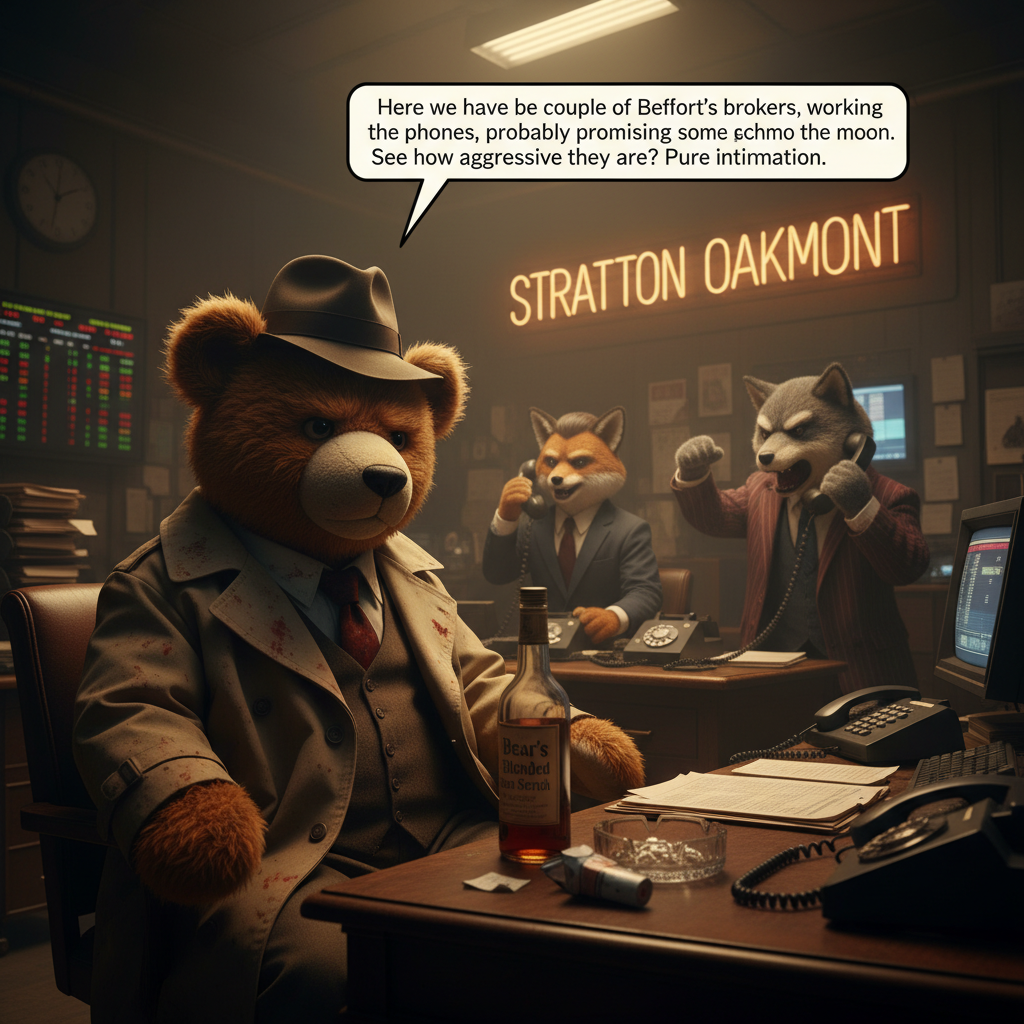
At Stratton Oakmont, he assembled a team of mostly young, mostly uneducated men from Long Island and trained them in high-pressure sales tactics that had nothing to do with the quality of what they were selling. At its peak, Stratton had over 1,000 brokers and controlled stocks representing billions in market capitalization.^1^
The Pump-and-Dump Mechanism
The pump-and-dump works like this: acquire large positions in a thinly traded stock, usually a microcap or penny stock; have brokers call retail investors — people with savings and retirement accounts, often older and financially unsophisticated — and sell them the stock with aggressive, misleading pitches; as investors buy in, the stock price rises; when the price peaks, sell the firm’s position into the retail buying pressure; the stock collapses; the retail investors are left holding worthless shares; the operator keeps the profit.^1^
Stratton Oakmont ran this scheme repeatedly. The firm took companies public through initial public offerings in which Stratton controlled the allocation and distribution, then manipulated the aftermarket to artificially inflate prices. The IPOs were fraud: the companies Stratton underwrote were often shells or near-shells presented to investors as legitimate opportunities. Stratton collected massive underwriting fees and dumped the stock. Among the companies whose stock Stratton manipulated was one that would later become significant: Steve Madden Ltd., the shoe company. Steve Madden himself was convicted of securities fraud in 2002 and sentenced to 41 months in prison.
The Retired Teacher Who Lost $100,000
The retail investors who bought Stratton Oakmont’s recommendations were not wealthy sophisticates. They were people responding to cold calls from brokers who sounded confident and authoritative. One investor, a retired teacher named Gloria Gaines, lost $100,000 she had saved over decades. Belfort’s own memoir, which he wrote to sell movie rights, treats these people primarily as marks — their gullibility a source of comic anecdote rather than moral weight.^2^
The $110.4 million restitution order was meant to compensate these investors. As of 2013, Belfort’s payments totaled less than $12 million — and he was earning substantial speaking fees and income from the memoir deal while owing that money. A federal judge threatened him with re-imprisonment in 2014 for failing to turn over sufficient income to the restitution fund.
What the Movie Did to the Victims
The Wolf of Wall Street, released in December 2013, generated significant public controversy over whether it glorified what it depicted. The more relevant fact is that Belfort earned money from the movie while his victims had not been made whole. The Federal Bureau of Prisons’ Inmate Financial Responsibility Program requires inmates to pay restitution from earnings while incarcerated. No similar mechanism exists for the post-prison period, short of contempt proceedings.^3^
Belfort has built a substantial career as a motivational speaker and sales trainer, charging tens of thousands of dollars for appearances and selling online courses. The branding leans into the notoriety. He has continued to dispute the $110.4 million restitution figure, arguing that his profits from the scheme were significantly smaller than prosecutors claimed.
This restitution enforcement gap is not specific to Belfort — it’s a feature of how financial crime sentencing works that systematically advantages perpetrators over victims. The same pattern appears with Michael Milken, who served 22 months before receiving a presidential pardon while his victims were not made whole, and with Bernie Madoff, where the bankruptcy trustee spent more than a decade pursuing clawbacks that returned only partial recovery.
The NASD permanently barred Belfort and many Stratton brokers from the securities industry, and the firm was shut down in 1996. What enforcement couldn’t reach was the reputational marketplace that turned the story of a $200 million fraud into an entertainment franchise. The victims are an unnamed mass. The perpetrator is the protagonist. The investors he defrauded did not share in that.
─────────
Sources:
- United States v. Belfort, No. 99-cr-196 (E.D.N.Y. 1999).
- Belfort, Jordan. The Wolf of Wall Street. Bantam Dell, 2007.
- Lewis, Al. “The Lies of the ‘Wolf of Wall Street.’” The Wall Street Journal, December 30, 2013.
- Raab, Selwyn. “U.S. Shuts Down Brokerage and Indicts Key Officials on Fraud Counts.” The New York Times, September 25, 1996.