Coast to Coast: How American Street Gangs Went National
MS-13 Tango Blast the Latin Kings and the Netas each spread by different routes — but all trace back to the same starting condition: institutional failure.

Coast to Coast: How American Street Gangs Went National
American street gangs go national through two mechanisms — migration and incarceration — neither of which requires any strategic decision by gang leadership. When families relocate, gang affiliation travels with them. When inmates transfer between state and federal facilities, gang identity travels with the inmates. When deportees are removed to countries they barely remember, they carry their American gang membership and build new chapters in new geography. This series covers the gangs that spread farthest from their origins and the systems that spread them.
In This Series
- MS-13: From Salvadoran Refugees to America’s Most Feared Gang
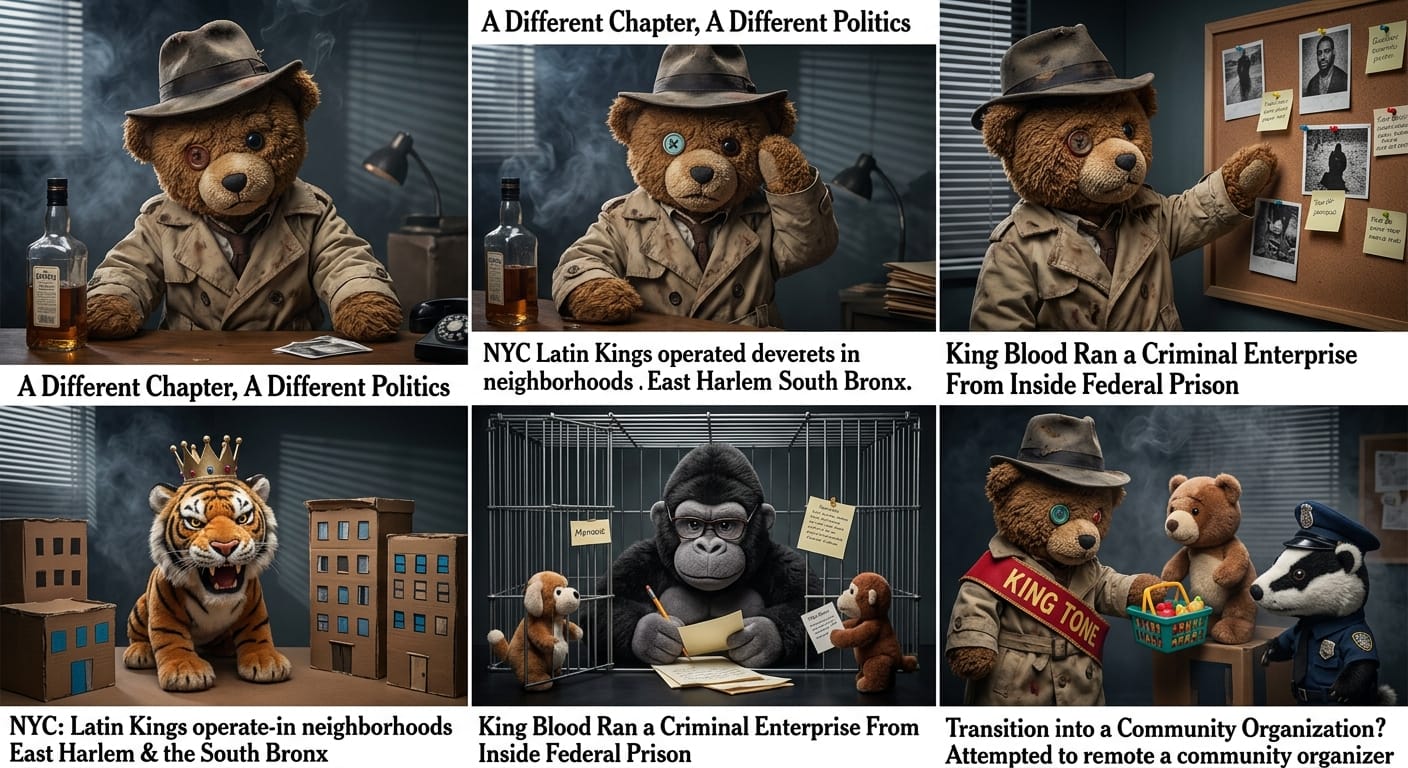
- The Latin Kings in New York
- The Netas: Born in Puerto Rico’s Prisons
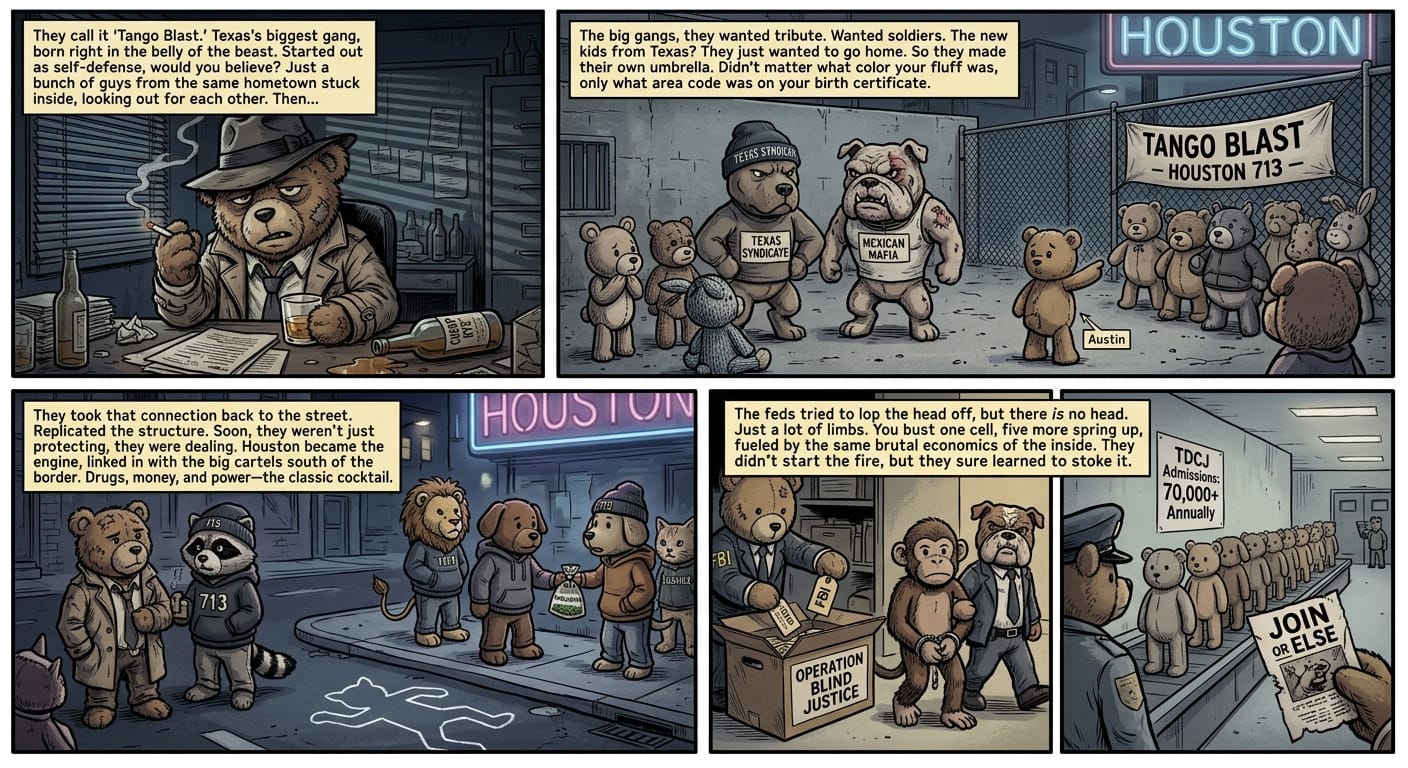
- Tango Blast: Texas’s Prison-Born Supergang
- The Fresno Bulldogs: California’s Homegrown Gang
How Does a Local Gang Become a National Organization?
The gangs in this series represent distinct models of national spread. MS-13 spread through deportation and diaspora, operating today in 46 states and across Central America with an estimated 10,000 to 40,000 U.S. members by 2018 FBI estimates. The Latin Kings in New York developed parallel to but independently from the Chicago chapter, sharing identity markers while building separate leadership, structure, and politics. The Netas moved from Puerto Rico’s Oso Blanco penitentiary to the mainland through the Puerto Rican diaspora, becoming dominant in Hartford and the Bronx before federal prosecutions fractured their leadership.
The Fresno Bulldogs took the opposite path: they stayed local. Operating entirely within Fresno County and refusing affiliation with either Norteños or Sureños, the Bulldogs demonstrated that California’s north-south prison gang binary has exceptions — and that local identity can be more durable than broader ideological alignment. Tango Blast went further in the other direction, building a city-based model so decentralized that federal prosecutors couldn’t find a command structure to indict.
The Same Founding Conditions Appear in Every Case
What each of these gangs has in common is the origin point: concentrated poverty plus inadequate institutional support equals gang formation. Salvadoran refugees in MacArthur Park in 1985 had no community networks and faced violence from established gangs. Puerto Ricans in Oso Blanco in 1970 had no protection inside a violent prison system. Mexican-Americans in the Central Valley in 1970 had no representation in either the Norteño or Sureño framework. Texas Hispanics in TDCJ facilities in the late 1990s had no protection from established prison gangs without giving up autonomy they weren’t willing to give.
In each case, the gang was the institutional response to an institutional failure. That’s not a justification for the violence the gangs produced. It is an explanation for why the gangs formed, why they persisted, and why law enforcement prosecution alone has never ended one.
The Organizational Lesson Prosecution Taught These Gangs
The national spread of gang identity tracks the national spread of the conditions that produce gangs. Wherever Salvadoran immigrants concentrated, MS-13 eventually appeared. Wherever Puerto Rican communities formed in the Northeast, the Latin Kings or Netas followed. The pattern is so consistent that it functions as a diagnostic: show the map of gang presence and you are looking, approximately, at the map of immigrant concentration, economic exclusion, and inadequate institutional investment.
The gangs that adapted best to national spread — MS-13’s clique model, Tango Blast’s city-chapter model — did so by avoiding the centralized structures that law enforcement could target. That adaptation is itself a lesson in what decades of prosecution has taught criminal organizations about organizational resilience.
There is no version of American gang history in which prosecution solved the problem. The gangs in this series have been prosecuted, deported, interdicted, infiltrated, and convicted across decades, and every one of them is still operating. The ones that collapsed — usually through successful RICO prosecutions of centralized leadership — were replaced by more decentralized versions of themselves. The only variable that reliably reduces gang presence is economic investment in the communities that produce gang members. That investment is consistently described as too expensive. The alternative has been tried for sixty years.
─────────
← Back to Street Gangs in American History
Sources:
- Federal Bureau of Investigation. National Gang Threat Assessment. National Gang Intelligence Center, 2018.
- Cruz, José Miguel. Gang Networks and the Political Economy of Crime in Central America. Latin American Politics and Society, 2010.
- Kontos, Louis, David Brotherton, and Luis Barrios, eds. Gangs and Society: Alternative Perspectives. Columbia University Press, 2003.
The Series